


Exploring the Impact of First Trimester Elevated Lipoprotein(a) Levels on Preeclampsia, Preterm Delivery, and Fetal Growth Restriction
- PMID: 40565880
- PMCID: PMC12194701
- DOI: 10.3390/jcm14124134
Exploring the Impact of First Trimester Elevated Lipoprotein(a) Levels on Preeclampsia, Preterm Delivery, and Fetal Growth Restriction
Abstract
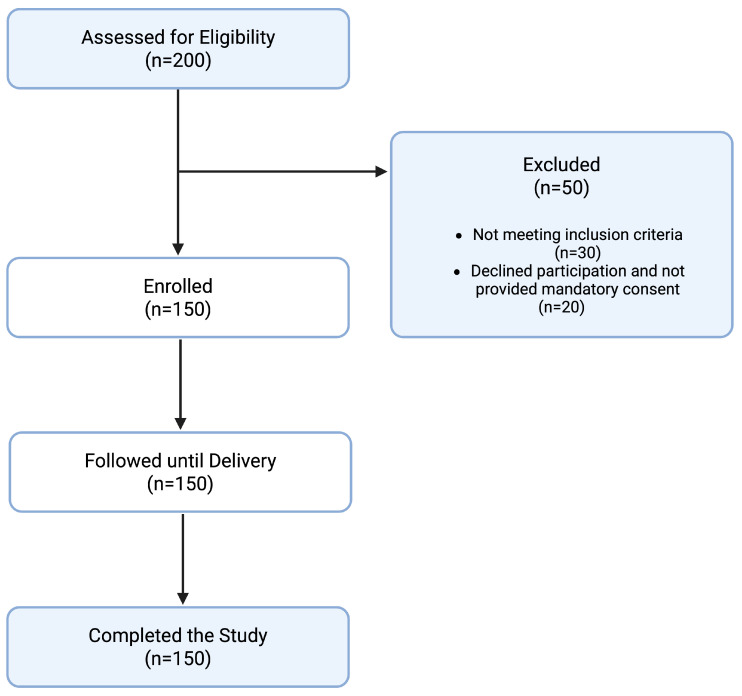
Background/Objectives: Preeclampsia (PE), characterized by its complex and multisystemic nature, significantly compromises the health outcomes of both mothers and their newborns. According to recent research, its underlying pathophysiological mechanisms may be influenced by abnormalities in lipid metabolism. The purpose of this study is to assess the association between unfavorable pregnancy outcomes and increased lipoprotein(a) levels in the first trimester and the subsequent risk of PE. Methods: A prospective cohort study comprising 150 pregnant women with a gestational age of less than 12 weeks and no history of PE was carried out at the University Hospital of Ioannina. In the first trimester, lipoprotein(a) levels were assessed, and individuals were monitored for the emergence of preeclampsia, preterm birth, gestational hypertension without proteinuria, and fetal growth limitation. Selection bias was minimized through the use of sequential sampling and rigorous inclusion and exclusion criteria. Associations were assessed using logistic regression analysis. Results: Women with elevated lipoprotein(a) levels had a considerably greater risk of PE than those with normal levels (64.7% vs. 15.5%, p < 0.001). Additionally, elevated lipoprotein(a) was linked to higher odds of fetal growth restriction (p < 0.001), gestational hypertension without proteinuria (p = 0.024), and premature delivery (p = 0.009). These results imply that early lipoprotein(a) screening during pregnancy may help identify women who are at high risk for PE and its associated negative consequences. Conclusions: The association between PE and elevated first-trimester lipoprotein(a) levels highlights the necessity for a deeper understanding of the underlying pathophysiological mechanisms, which could ultimately improve outcomes for both mothers and newborns.
Keywords: first trimester; gestational hypertensive disorders; lipoprotein(a); pre-eclampsia; pregnancy.
Conflict of interest statement
The authors declare no conflicts of interest.
Figures
References
-
- Zouganeli I., Moustakli E., Potiris A., Christodoulaki C., Arkoulis I., Kathopoulis N., Theofanakis C., Domali E., Panagopoulos P., Drakakis P., et al. Genetic Variations in Vascular Endothelial Growth Factor and Their Impact on Preeclampsia: Insights into Risk, Severity, and Pregnancy Outcomes. Curr. Issues Mol. Biol. 2025;47:199. doi: 10.3390/cimb47030199. - DOI - PMC - PubMed
-
- Emerging Risk Factors C., Erqou S., Kaptoge S., Perry P.L., Di Angelantonio E., Thompson A., White I.R., Marcovina S.M., Collins R., Thompson S.G., et al. Lipoprotein(a) concentration and the risk of coronary heart disease, stroke, and nonvascular mortality. JAMA. 2009;302:412–423. doi: 10.1001/jama.2009.1063. - DOI - PMC - PubMed
LinkOut - more resources
Full Text Sources
