


Effects of Neuromuscular Priming with Spinal Cord Transcutaneous Stimulation on Lower Limb Motor Performance in Humans: A Randomized Crossover Sham-Controlled Trial
- PMID: 40565887
- PMCID: PMC12194619
- DOI: 10.3390/jcm14124143
Effects of Neuromuscular Priming with Spinal Cord Transcutaneous Stimulation on Lower Limb Motor Performance in Humans: A Randomized Crossover Sham-Controlled Trial
Abstract
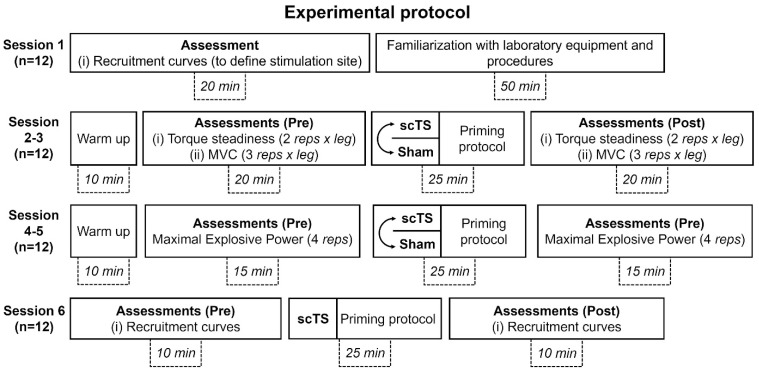
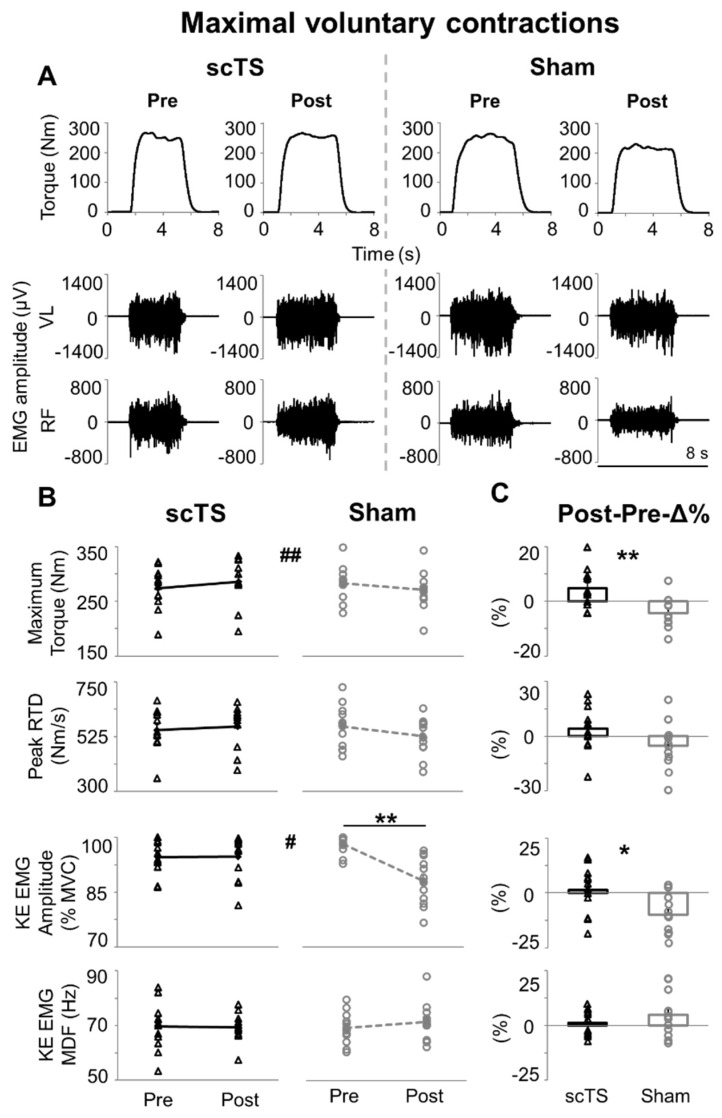
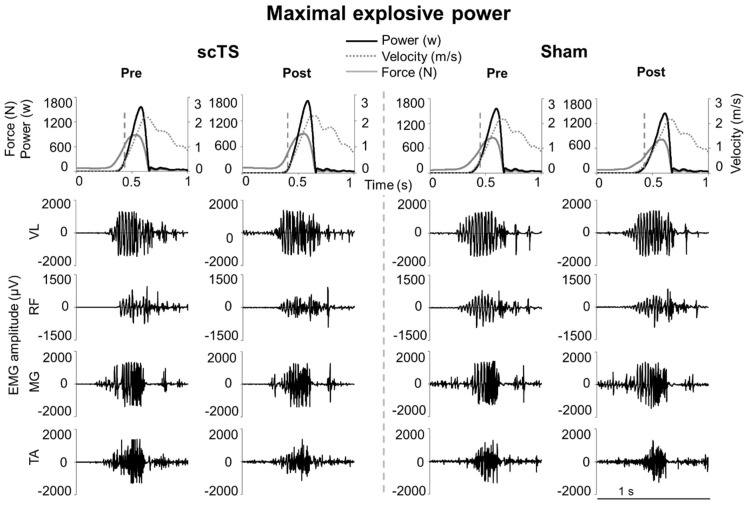
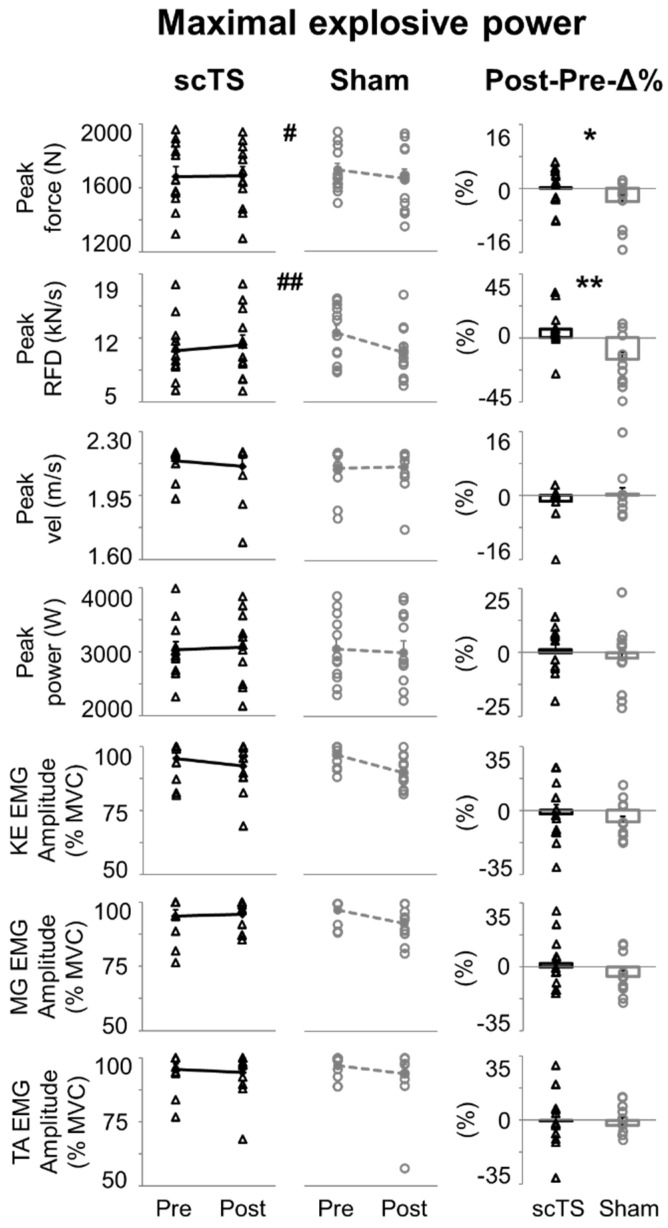
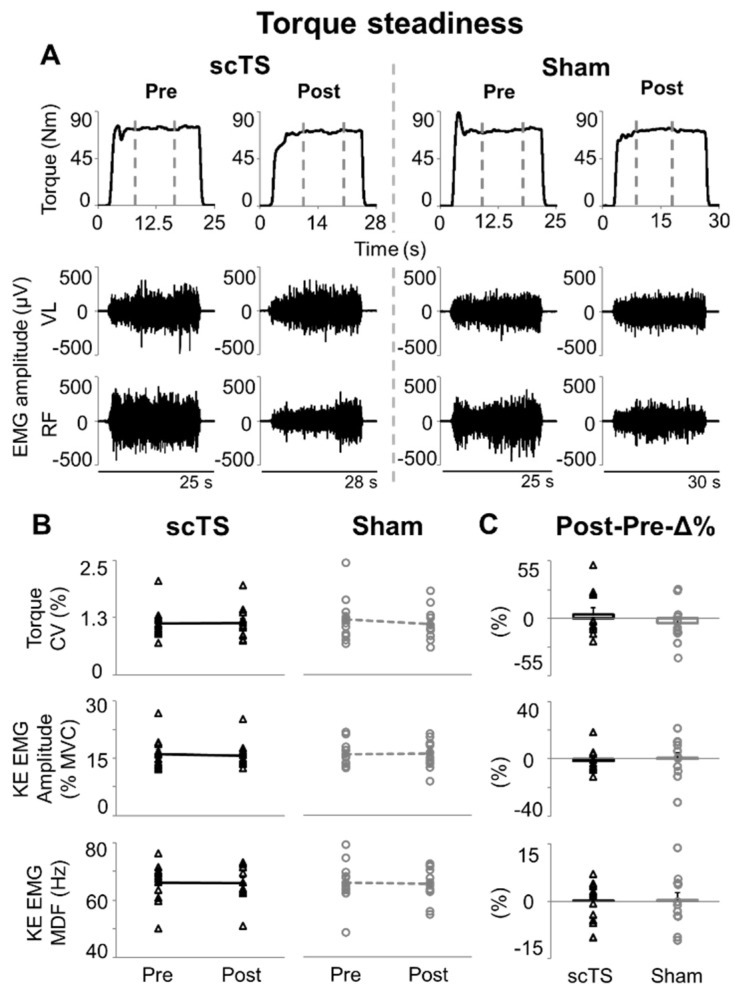
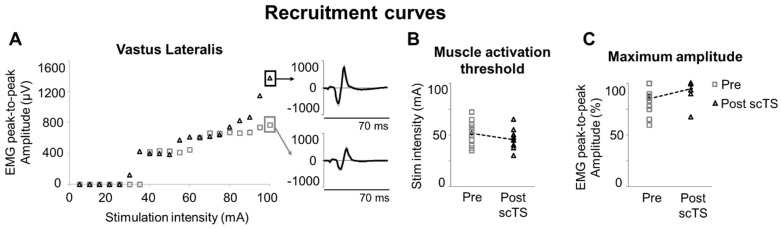
Background: Lower limb motor output contributes to determining functional performance in many motor tasks. This study investigated the effects of non-invasive spinal cord transcutaneous stimulation (scTS) applied during an exercise-based priming protocol on lower limb muscle force and power generation. Methods: Twelve young, physically active male volunteers (age: 22.7 ± 2.1 years) participated in this randomized crossover, sham-controlled study. The maximal voluntary contraction and low-level torque steadiness of knee extensors, as well as the maximal explosive extension of lower limbs, were assessed before and after the priming protocol with scTS or sham stimulation over a total of four experimental sessions. Further, characteristics of evoked potentials to scTS related to spinal circuitry excitability were assessed in the supine position before and after the scTS priming protocol. The exercise component of the ~25 min priming protocol consisted of low-volume, low- and high-intensity lower limb motor tasks. Results: scTS priming protocol tended to increase or maintain maximum isometric torque during knee extension (4.7%) as well as peak force (0.2%) and rate of force development (6.0%) during explosive lower limb extensions, whereas sham priming protocol tended to decrease them (-4.3%, -3.3%, and -15.1%, respectively). This resulted in significant interactions (p = 0.001 to 0.018) and medium-large differences between scTS and sham protocols. These findings were associated with meaningful trends of some neurophysiological variables. Conversely, priming protocols did not affect low-level torque steadiness. Conclusions: scTS counteracted the unexpected fatigue induced by the exercise-based priming protocol, supporting lower limb performance during maximal efforts. Future studies are warranted to assess the implementation of scTS with optimized exercise-based priming protocols during training and rehabilitation programmes that include high-intensity neuromuscular efforts.
Keywords: electromyography; maximal explosive power; maximal voluntary contraction; motor control; neuromodulation.
Conflict of interest statement
Authors have no competing financial interests. The results of the study are presented clearly, honestly, and without fabrication, falsification, or inappropriate data manipulation.
Figures
References
Grants and funding
LinkOut - more resources
Full Text Sources
