


Pelvic Floor Rehabilitation After Prostatectomy: Baseline Severity as a Predictor of Improvement-A Prospective Cohort Study
- PMID: 40565928
- PMCID: PMC12193967
- DOI: 10.3390/jcm14124180
Pelvic Floor Rehabilitation After Prostatectomy: Baseline Severity as a Predictor of Improvement-A Prospective Cohort Study
Abstract
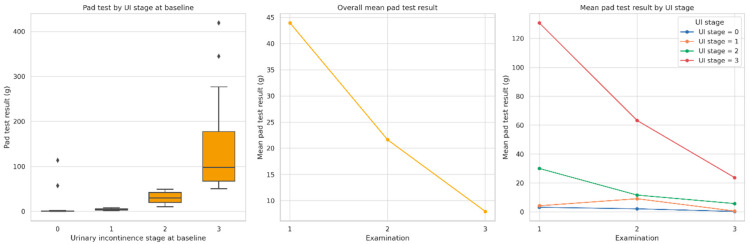
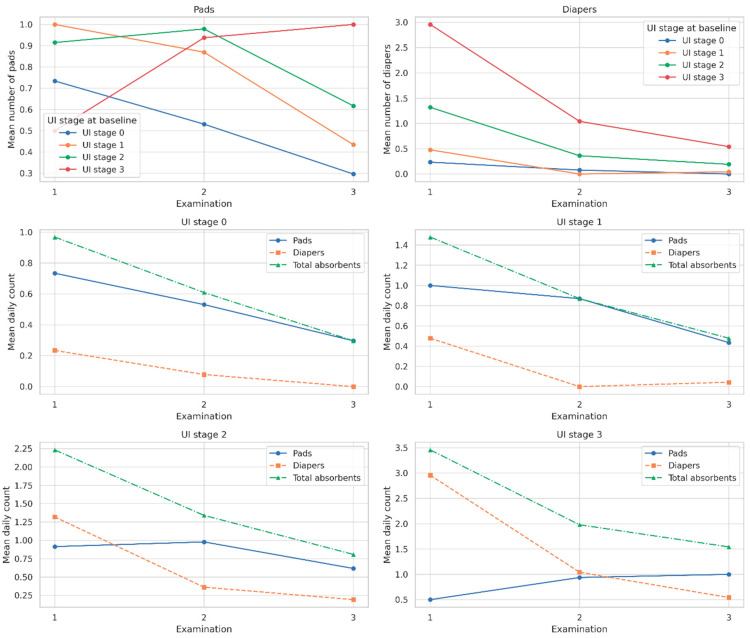
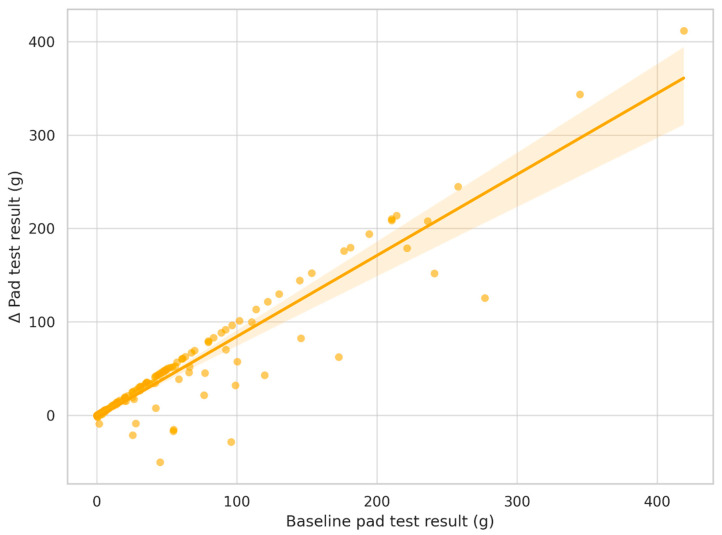
Background/Objectives: Urinary incontinence (UI) is a frequent and distressing complication after radical prostatectomy (RP). Pelvic floor muscle training (PFMT) is widely recommended as first-line rehabilitation, yet the clinical factors influencing its effectiveness remain incompletely understood. Methods: This prospective cohort study included 182 men undergoing RP who completed a standardized physiotherapy program involving pelvic floor muscle exercises, biofeedback (BFB), and ultrasound-guided training. UI severity was assessed using the 1-h pad test and recorded absorbent product use. Outcomes were evaluated at three time points: one month, three months, and six months post-catheter removal. A multiple linear regression model was used to identify the predictors of continence improvement, defined as the change in pad test result between baseline and six months. Results: Pad test results and absorbent use decreased significantly across all UI severity stages (p < 0.0001). The greatest absolute improvement was observed in patients with severe incontinence at baseline (UI stage 3: mean reduction from 130.8 g to 23.7 g). Regression analysis revealed that only the baseline pad test result was significantly associated with the magnitude of improvement (β = 0.91; 95% CI: 0.85-0.97, p < 0.001; R2 = 0.89). Age, BMI, and time to rehabilitation were not significant predictors. Conclusions: Pelvic floor rehabilitation after RP is effective in improving continence, including in patients with severe baseline symptoms. The baseline pad test value emerged as the strongest predictor of rehabilitation response, highlighting the importance of initial assessment. These findings support the use of PFMT in clinical practice and emphasize the need for individualized treatment planning based on baseline UI severity.
Keywords: incontinence; pelvic floor physical therapy; prostate cancer; prostatectomy.
Conflict of interest statement
The authors report no conflicts of interest in this work.
Figures
References
-
- Averbeck M.A., Woodhouse C., Comiter C., Bruschini H., Hanus T., Herschorn S., Goldman H.B. Surgical Treatment of Post-Prostatectomy Stress Urinary Incontinence in Adult Men: Report from the 6th International Consultation on Incontinence. Neurourol. Urodyn. 2019;38:398–406. doi: 10.1002/nau.23845. - DOI - PubMed
-
- Mungovan S.F., Carlsson S.V., Gass G.C., Graham P.L., Sandhu J.S., Akin O., Scardino P.T., Eastham J.A., Patel M.I. Preoperative Exercise Interventions to Optimize Continence Outcomes Following Radical Prostatectomy. Nat. Rev. Urol. 2021;18:259–281. doi: 10.1038/s41585-021-00445-5. - DOI - PMC - PubMed
LinkOut - more resources
Full Text Sources
