


How does cognition determine an individual's fitness? A systematic review of the links between cognition, behaviour and fitness in non-human animals
- PMID: 40566909
- PMCID: PMC12198897
- DOI: 10.1098/rstb.2024.0118
How does cognition determine an individual's fitness? A systematic review of the links between cognition, behaviour and fitness in non-human animals
Abstract
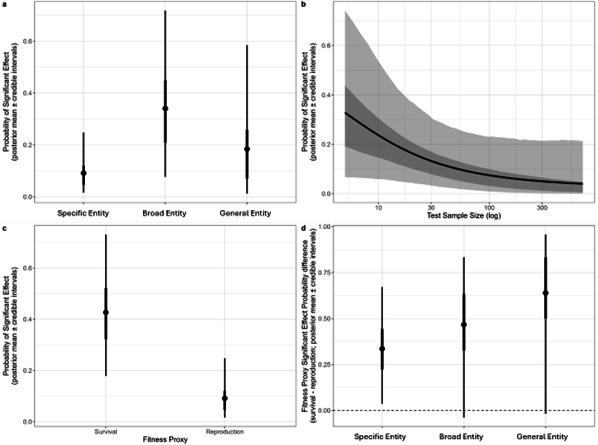
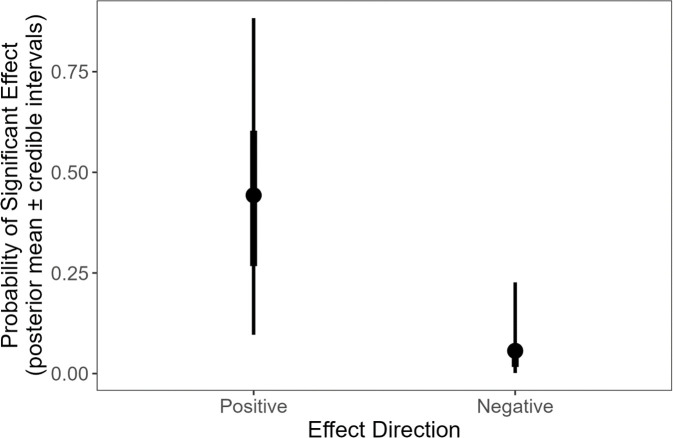
Recent efforts to understand the evolution of cognition have adopted a within-species approach where cognitive performance, and its effects on behaviour, is correlated with fitness benefits and, if related, is assumed to be selected for. We reviewed 45 studies taking this approach, involving 26 species and describing 211 relationships between behavioural measures of cognition and fitness, to explore broader patterns underlying the evolution of cognition. First, we explored patterns in the strength and direction of selection. We found generally weak support for a relationship between cognition and fitness, with >70% of raw published relationships being statistically non-significant, with an even smaller likelihood once co-variates were accounted for. Where significant relationships were found, they were predominantly, but not exclusively, positive, with individuals exhibiting faster learning or more accurate memory also displaying greater (proxy) fitness. Second, we tested how selection might act under different circumstances. A relationship with fitness was more likely when general, rather than specific cognitive entities were considered, and when the fitness measure corresponded to survival rather than reproductive output. Consequently, the study of within-species cognitive evolution remains in its early stages, with evidence that is both incomplete and inconclusive. However, it potentially offers a powerful opportunity to explore the structure of cognition, trade-offs, constraints and the way that it links to behaviours.This article is part of the Theo Murphy meeting issue 'Selection shapes diverse animal minds'.
Keywords: cognition; cognitive ecology; cognitive performance; fitness; reproductive output; survival.
Conflict of interest statement
We declare we have no competing interests.
Figures
References
-
- Dukas R (ed). 1998. Cognitive ecology: the evolutionary ecology of information processing and decision making. Chicago, IL: University of Chicago Press. - PubMed
-
- Thornton A, Isden J, Madden JR. 2014. Toward wild psychometrics: linking individual cognitive differences to fitness. Behav. Ecol. 25, 1299–1301. ( 10.1093/beheco/aru095) - DOI
Publication types
MeSH terms
LinkOut - more resources
Full Text Sources
