


Characteristics and trends of unintentional injuries among children and adolescents in Kunshan, China: a hospital-based retrospective study, 2018-2023
- PMID: 40567957
- PMCID: PMC12187780
- DOI: 10.3389/fpubh.2025.1606347
Characteristics and trends of unintentional injuries among children and adolescents in Kunshan, China: a hospital-based retrospective study, 2018-2023
Abstract
Objective: This study aimed to characterize the epidemiological trends and mechanisms of pediatric unintentional injuries in Kunshan, China (2018-2023) and to develop time series models to predict future trends.
Methods: A retrospective analysis was conducted on 77,379 pediatric unintentional injury cases, stratified by age, gender, and injury categories. Subgroup analyses targeted children under 5 years. To adjust for pandemic-related disruptions, separate comparisons between 2018 and 2023 were performed. Time series analysis employed an ARIMA model, with model selection based on information criteria and residual diagnostics, and a non-COVID-19 dataset (2018, 2019, and 2023) for forecasting future trends.
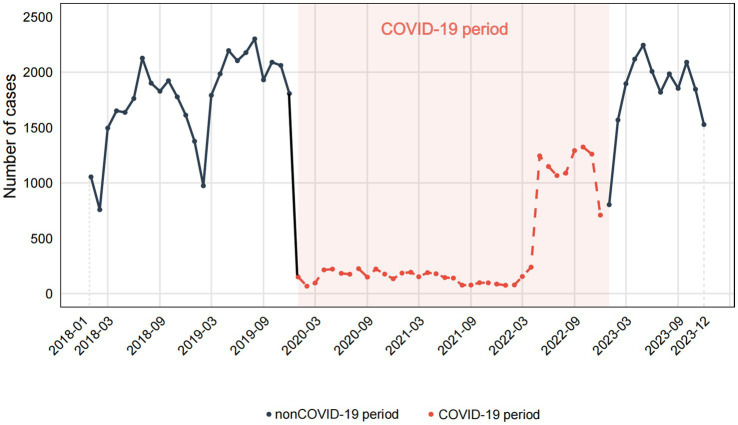
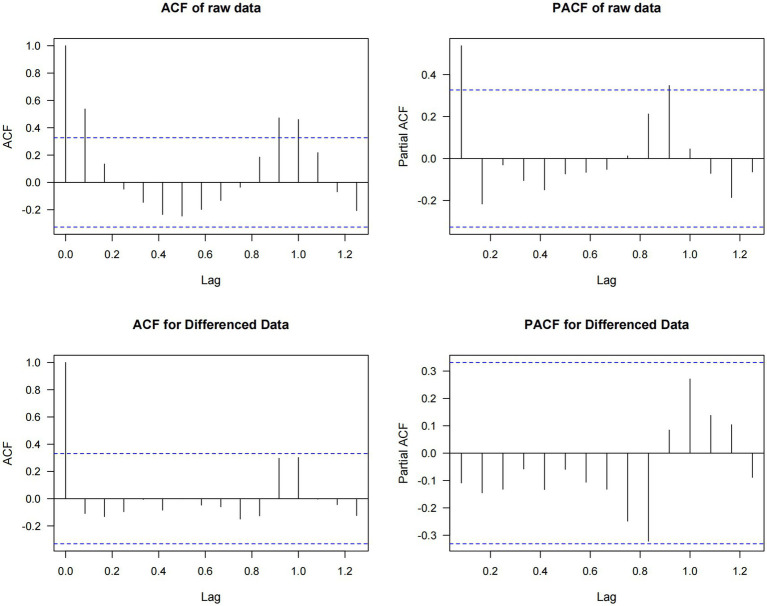
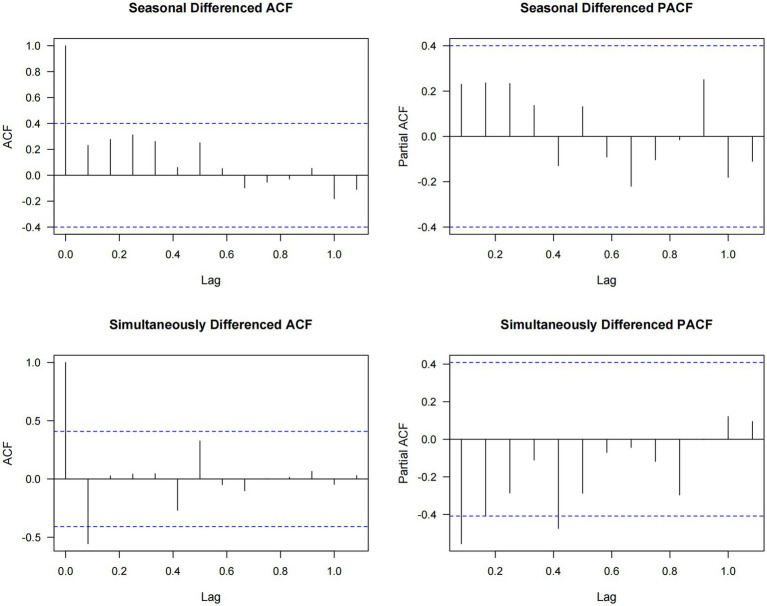
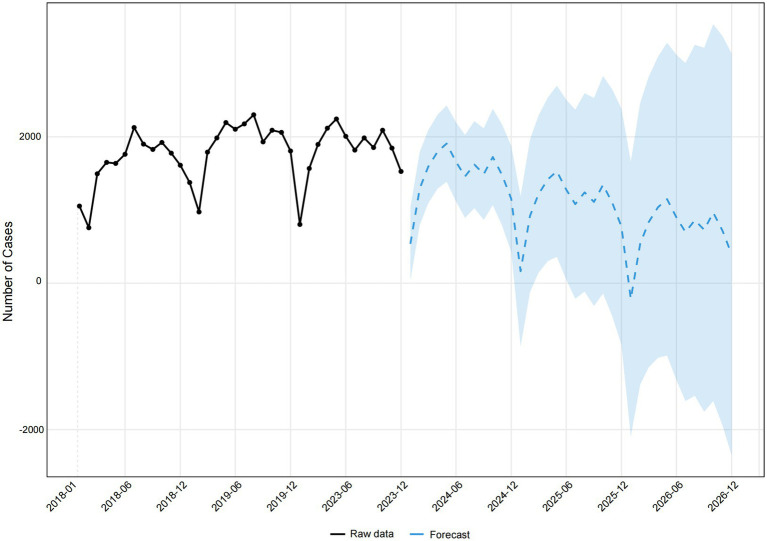
Results: Males constituted 62.76% of cases, with a mean age of 5.37 ± 3.55 years. The primary age groups were 3-6 years and 6-12 years, which accounted for 60% of the total population. Falls (21.36%) and transport injuries (4.00%) predominated, with limbs being the most injured body part (59.08%). Contusions/abrasions (41.54%) and sprains/strains (31.21%) were common. Subgroup analysis was performed in children under 5 years old, with 22,110 being males (57.5%) and 16,291 being females (42.5%). Among this group, falls and burns were identified as the most frequent incidents. Unintentional injury cases decreased significantly during COVID-19 (2020-2022). The refined ARIMA(1,1,2) (0,1,1)[12] model, excluding pandemic effects, achieved a mean absolute percentage error of 6.46% while revealing seasonal patterns and predicting a slight downward trend for 2024-2026.
Conclusion: Pediatric unintentional injuries in Kunshan exhibited gender and age-specific patterns, with COVID-19 altering injury profiles. The ARIMA model can capture the seasonal patterns of unintentional injuries to a certain extent, facilitating public health planning and intervention strategies.
Keywords: ARIMA model; children and adolescents; epidemiological trends; time series analysis; unintentional injury.
Copyright © 2025 Shen, Hua, Gu, Tao, Zhang, Huang, Yuan, Wang, Huang and Li.
Conflict of interest statement
The authors declare that the research was conducted in the absence of any commercial or financial relationships that could be construed as a potential conflict of interest.
Figures
References
-
- Agoston AM, Bleacher J, Smith A, Edwards S, Routly M. Longitudinal associations between pain, risk for posttraumatic stress disorder, posttraumatic stress symptoms, and pain characteristics in children after unintentional injury. Clin J Pain. (2024) 40:400–8. doi: 10.1097/AJP.0000000000001212, PMID: - DOI - PubMed
MeSH terms
LinkOut - more resources
Full Text Sources
Medical
