


Global, regional and national burden of depressive disorders in adolescents and young adults, 1990-2021: systematic analysis of the global burden of disease study 2021
- PMID: 40567978
- PMCID: PMC12187749
- DOI: 10.3389/fpubh.2025.1599602
Global, regional and national burden of depressive disorders in adolescents and young adults, 1990-2021: systematic analysis of the global burden of disease study 2021
Abstract
Background: To promote evidence-based policymaking, this research attempts to investigate global trends in depressive disorders among individuals aged 15-39 from 1990 to 2021, determine risk factors, and forecast the next trends from 2022 to 2050.
Methods: Data from the Global Burden of Disease (GBD) 2021 database were analyzed to look at the global, national, and regional burden of depressive disorders among individuals aged 15-39 from 1990 to 2021. Incidence rates, disability-adjusted life years (DALYs), and contributions of various risk factors to DALYs were also examined in this research. All incidence and disability-adjusted life year (DALY) rates were calculated per 100,000 population and are presented with corresponding 95% uncertainty intervals (UIs). The burden of disease through 2050 was projected using Bayesian age-period-cohort (BAPC) modeling.
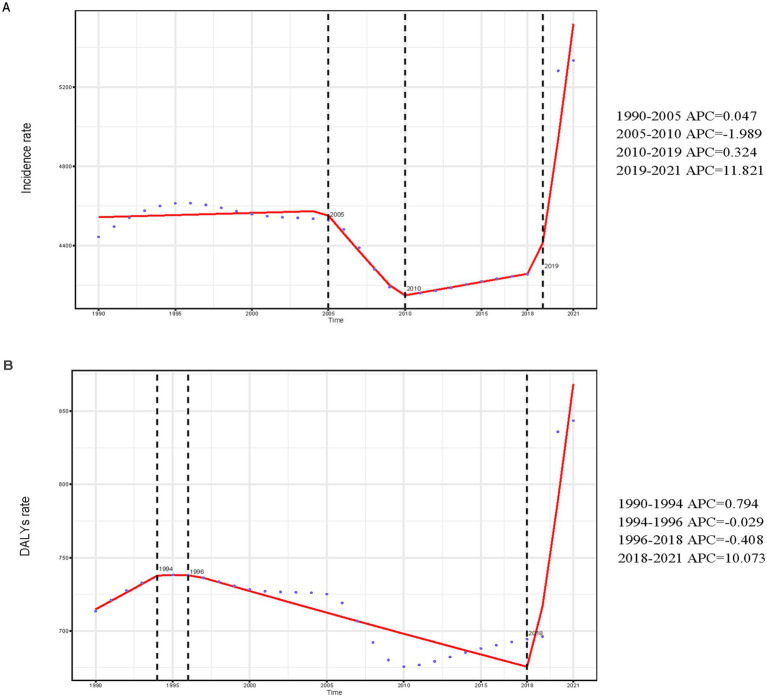
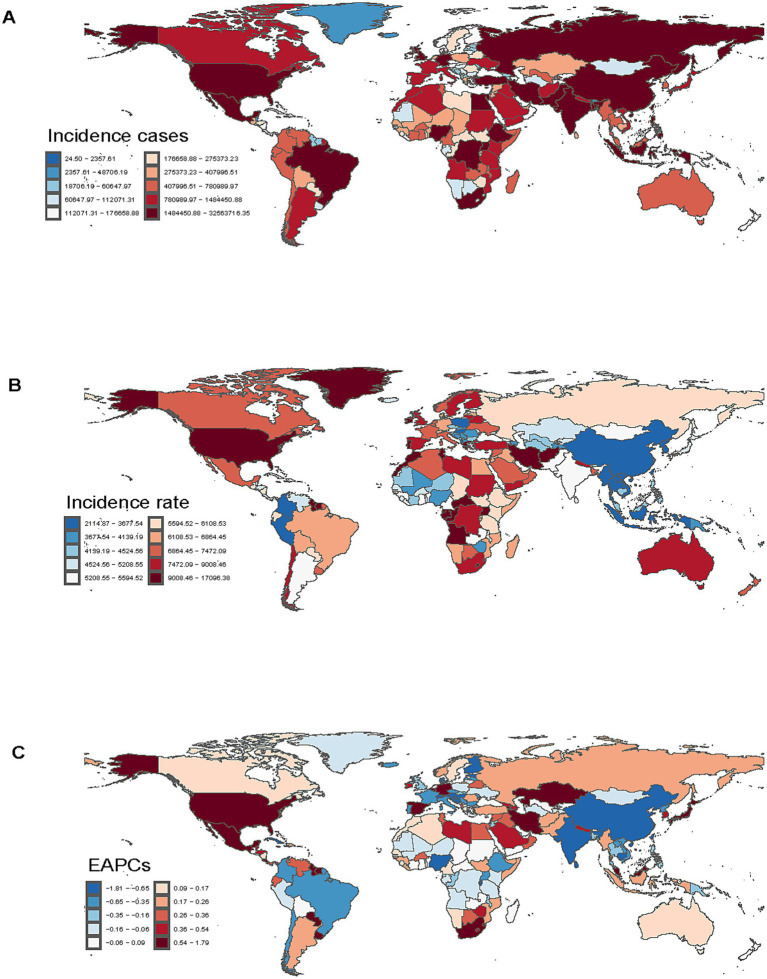
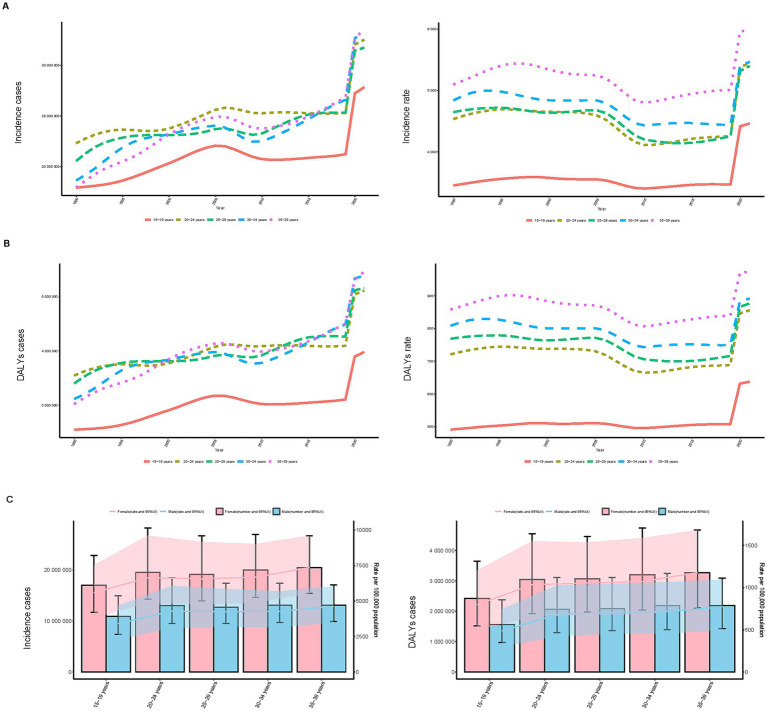
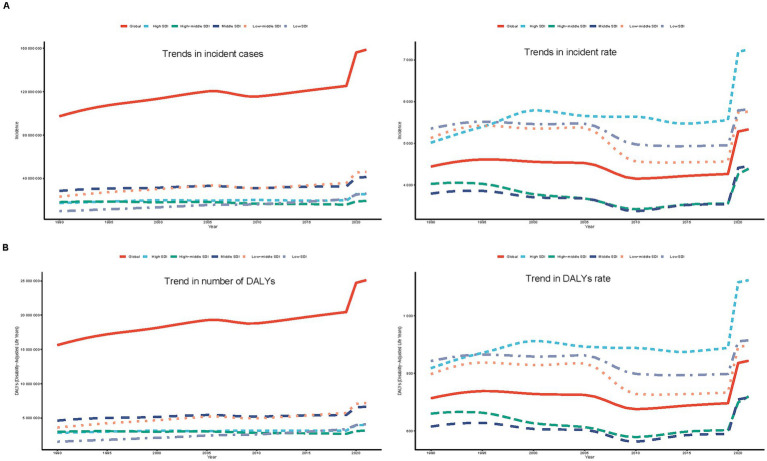
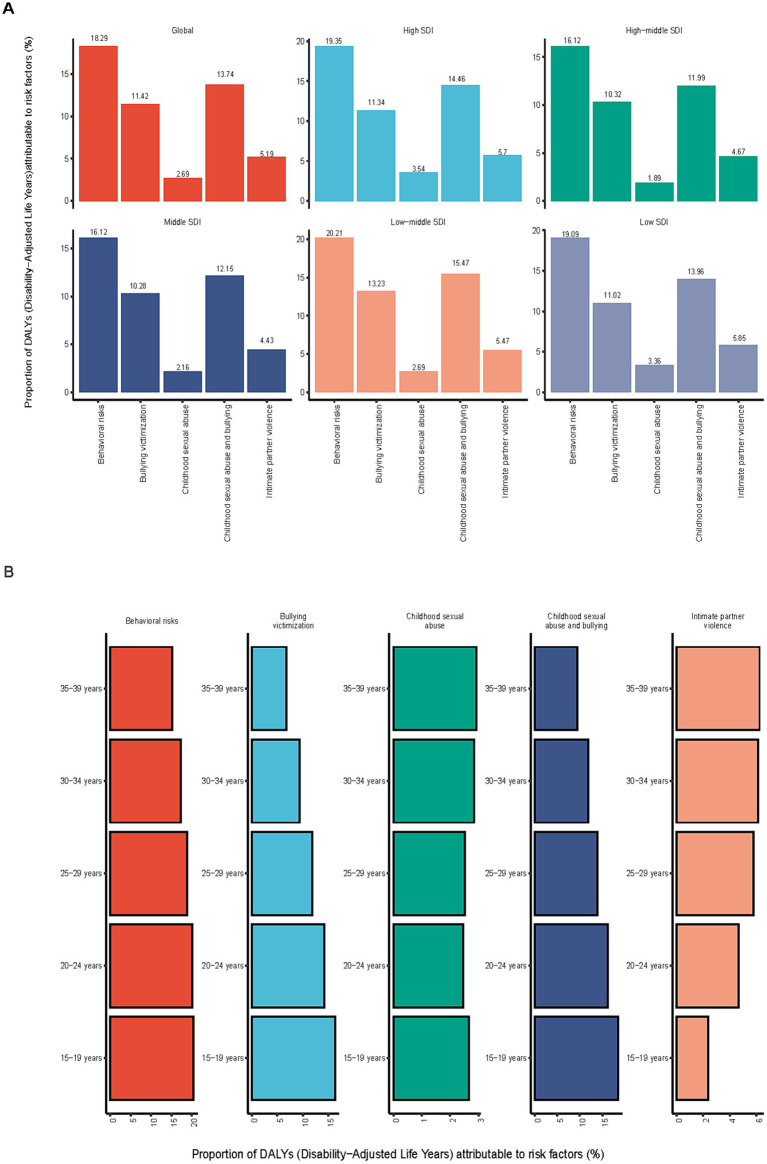
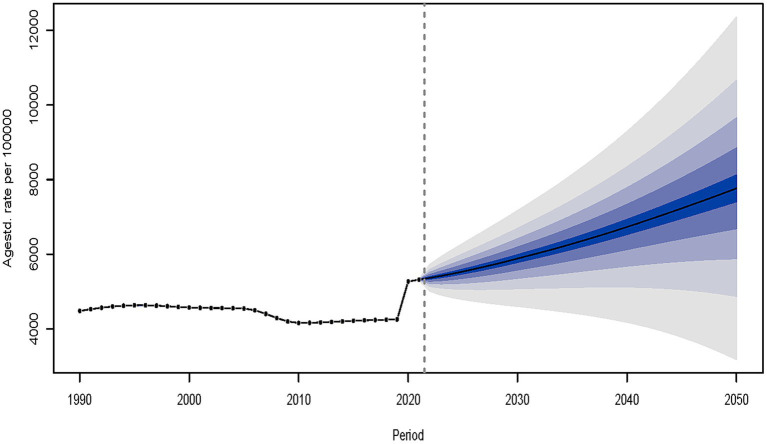
Results: Globally, the incidence in 2021 was estimated at 158,696,139.89 cases (95% UI, 129,182,271.23-197,238,491.78), with associated DALYs totaling 25,093,054.94 (95% UI, 16,739,757.06-35,139,293.90). Between 1990 and 2021, the incidence rose by 62.91% (95% UI, 57.91-68.12%), while DALYs increased by 60.46% (95% UI, 55.99-64.91%). The highest estimated annual percentage changes (EAPCs) for both incidence [2.63%; 95% confidence interval (CI), 2.45-2.82%] and DALYs (2.72%; 95% CI, 2.57-2.88%) were identified in low Socio-demographic Index (SDI) regions. Western Europe had the most cases (9,939,816.39; 95% UI, 8,081,380.82-12,409,843.00) among the 21 geographic regions examined in 2021. Globally, India exhibited the most significant burden in 2021, with incident cases reaching 32,241,303.32 (95% UI, 26,251,449.50-39,943,511.76). Furthermore, the largest burden of DALYs was observed in India, amounting to 5,034,818.12 (95% UI, 3,363,390.70-7,076,632.70). The global burden was primarily attributed to several significant risk factors, including exposure to behavioral risks, experiences of bullying victimization, incidents of childhood sexual abuse, experiences of childhood sexual abuse and bullying, as well as intimate partner violence. Projections extending to 2050 indicate an ongoing upward trend in the incidence rate within this demographic group during this period.
Conclusion: Overall, the burden of depressive disorders in this population has shown a marked increase, especially in low-SDI regions. A comprehensive understanding of the epidemiology of depressive disorders among adolescents and young adults is essential to enhance disease prevention and control efforts.
Keywords: depressive disorders; disability-adjusted life years; global burden of disease; incidence; risk factors.
Copyright © 2025 Zhao, Lou, Tao, Wang and Xu.
Conflict of interest statement
The authors declare that the research was conducted in the absence of any commercial or financial relationships that could be construed as a potential conflict of interest.
Figures
References
-
- World Health Organization (WHO) , (2023). Depressive disorder (depression). Available online at: https://www.who.int/news-room/fact-sheets/detail/depression (Accessed February15, 2025).
-
- GBD 2019 Mental Disorders Collaborators . Global, regional, and national burden of 12 mental disorders in 204 countries and territories, 1990-2019: a systematic analysis for the global burden of disease study 2019. Lancet Psychiatry. (2022) 9:137–50. doi: 10.1016/S2215-0366(21)00395-3 - DOI - PMC - PubMed
-
- Piao J, Huang Y, Han C, Li Y, Xu Y, Liu Y, et al. Alarming changes in the global burden of mental disorders in children and adolescents from 1990 to 2019: a systematic analysis for the global burden of disease study. Eur Child Adolesc Psychiatry. (2022) 31:1827–45. doi: 10.1007/s00787-022-02040-4, PMID: - DOI - PubMed
MeSH terms
LinkOut - more resources
Full Text Sources
Medical
