


NK-type large granular lymphocyte leukemia comes of age
- PMID: 40568352
- PMCID: PMC12194722
- DOI: 10.1002/hem3.70161
NK-type large granular lymphocyte leukemia comes of age
Abstract
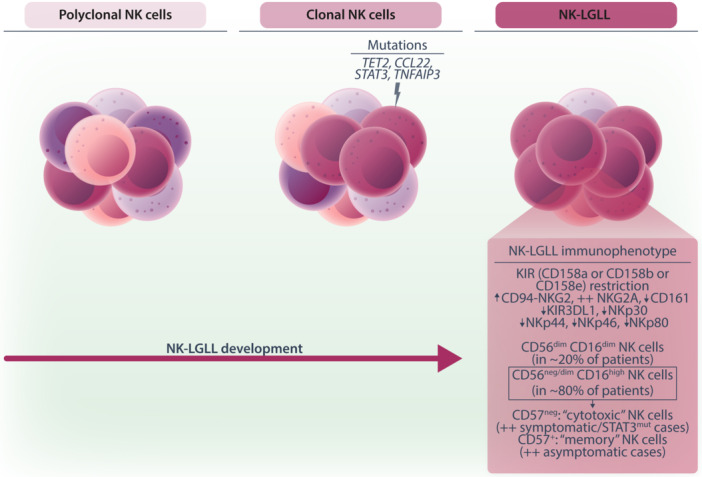
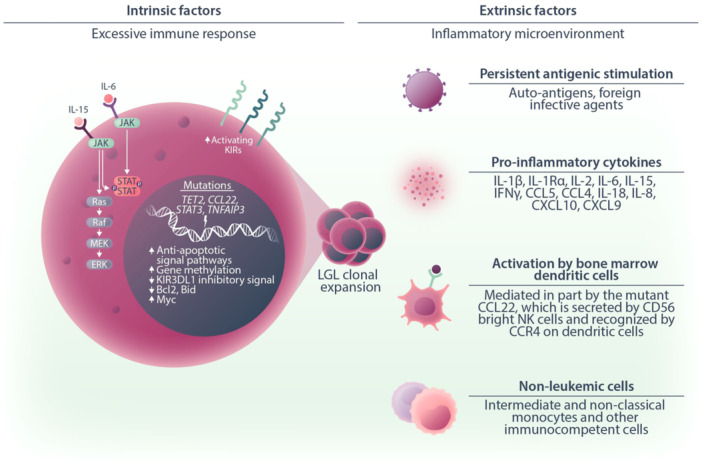
NK-large granular lymphocyte leukemia (NK-LGLL) is a lymphoid malignancy driven by constitutive activation of cellular pathways and chronic inflammation, underscoring the central role of the microenvironment in the disease's pathogenesis. Patients with NK-LGLL typically present with an expansion of mature NK cells displaying large granular lymphocyte morphology, a restricted killer Immunoglobulin-like receptor pattern and genetic lesions, including TET2, CCL22, and STAT3 mutations. NK-LGLL generally follows an indolent clinical course and rarely progresses to a stage requiring treatment. The rarity of the disease has significantly hampered precise diagnosis, a deeper understanding of its pathogenesis, the assessment of appropriate clinical trials, and even its classification. This review aims to present the latest insights into genetic, biological, and clinical features of this disorder. In particular, recent advances in genetics and epigenetics, along with emerging knowledge into the role of microenvironment, have uncovered new vulnerabilities in leukemic cells. These findings may have a meaningful impact on defining genomic-driven disease subsets and hold promise for improving outcomes in large granular lymphocyte leukemia patients through the development of personalized, innovative therapies.
© 2025 The Author(s). HemaSphere published by John Wiley & Sons Ltd on behalf of European Hematology Association.
Conflict of interest statement
The authors declare no conflicts of interest.
Figures
References
-
- Semenzato G, Calabretto G, Barilà G, Gasparini VR, Teramo A, Zambello R. Not all LGL leukemias are created equal. Blood Rev. 2023;60:101058‐101071. - PubMed
-
- Marchand T, Lamy T, Loughran TP Jr. A modern view of LGL leukemia. Blood. 2024;144(18):1910‐1923. - PubMed
-
- Chan W, Link S, Mawle A, Check I, Brynes R, Winton E. Heterogeneity of large granular lymphocyte proliferations: delineation of two major subtypes. Blood. 1986;68(5):1142‐1153. - PubMed
-
- Swerdlow SH, Campo E, Harris NL, et al. The 2008 Revision of the World Health Organization Classification of Lymphoid Neoplasms. 4th ed. IARC; 2008.
-
- Morice WG, Cheng CL, Loughran TP Jr, et al. T‐large granular lymphocytic leukemia. In: WHO Classification of Tumours Editorial Board, eds. Haematolymphoid Tumours. WHO Classification of Tumours Editorial Board. 5th ed. IARC; 2024:665‐666.
Publication types
LinkOut - more resources
Full Text Sources
Miscellaneous