


Evaluating state-based network dynamics in anhedonia
- PMID: 40568360
- PMCID: PMC12172927
- DOI: 10.1016/j.ynirp.2024.100225
Evaluating state-based network dynamics in anhedonia
Abstract
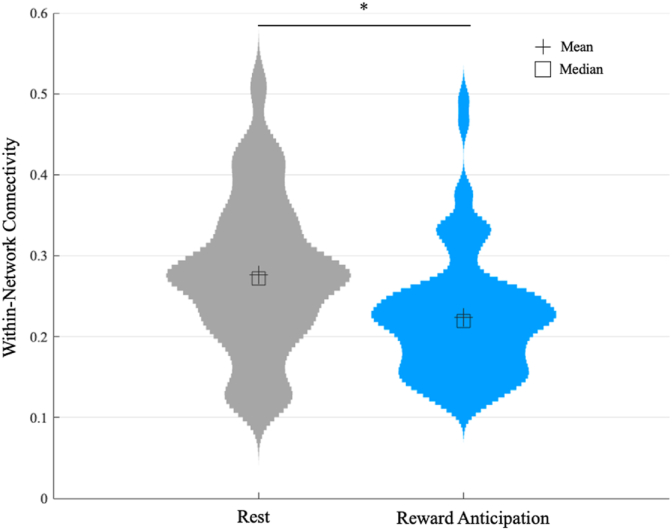
Anhedonia is a transdiagnostic clinical syndrome associated with significant clinical impairment. In spite of this, a clear network-level characterization of anhedonia does not yet exist. The present study addressed this gap in the literature by taking a graph theoretical approach to characterizing state-based (i.e., reward anticipation, rest) network dynamics in a transdiagnostic sample of adults with clinically significant anhedonia (n = 77). Analyses focused on three canonical brain networks: the Salience Network (SN), the Default Mode Network (DMN) and the Central Executive Network (CEN), with hypotheses focusing on the role of saliency-mapping in anhedonia. Contrary to hypotheses, no significant relation was found between the SN and anhedonia symptom severity. Exploratory results revealed a significant association between anhedonia severity and DMN reorganization from rest to reward anticipation. Specifically, greater anhedonia severity was associated with less reward-related reorganization. This finding suggests that anhedonia severity may be associated with DMN hyposensitivity, such that individuals with more severe anhedonia may have a difficult time disengaging from their internal world in the context of potentially rewarding experiences. Although preliminary, this finding challenges the centrality of the SN in anhedonia severity and suggests the importance of the DMN. Clinical implications and future directions are explored.
Keywords: Anhedonia; Default mode network; Graph theory; Network dynamics; Reward; Salience network.
Conflict of interest statement
The authors declare that they have no known competing financial interests or personal relationships that could have appeared to influence the work reported in this paper.
Figures


References
-
- American Psychiatric Association . 1994. Diagnostic and Statistical Manual of Mental Disorders: DSM-IV.
-
- American Psychiatric Association . fifth ed. American Psychiatric Publishing; 2013. Diagnostic and Statistical Manual of Mental Disorders.
-
- Arrondo G., Segarra N., Metastasio A., Ziauddeen H., Spencer J., Reinders N.R., Dudas R.B., Robbins T.W., Fletcher P.C., Murray G.K. Reduction in ventral striatal activity when anticipating a reward in depression and schizophrenia: a replicated cross-diagnostic finding. Front. Psychol. 2015;6 doi: 10.3389/fpsyg.2015.01280. - DOI - PMC - PubMed
Grants and funding
LinkOut - more resources
Full Text Sources
Miscellaneous