


Eosinophil count and treatment response in COPD patients
- PMID: 40569402
- PMCID: PMC12342202
- DOI: 10.4103/lungindia.lungindia_630_24
Eosinophil count and treatment response in COPD patients
Abstract
Background and objective: Eosinophils are an integral part of lung defence against microbes. It is also responsible for untoward hyper immune responses responsible for lung diseases including Chronic Obstructive Pulmonary Disease (COPD). To compare COPD patients with high and low Absolute Eosinophil Count (AEC) regarding their frequency of exacerbations, and response to treatment.
Materials and methods: Prospective observational study. Patients were divided into 2 groups above and below the mean AEC and followed up for 6 months, during when their frequencies of exacerbations were followed up. At the end of 6 months, symptomatology and lung function were reassessed.
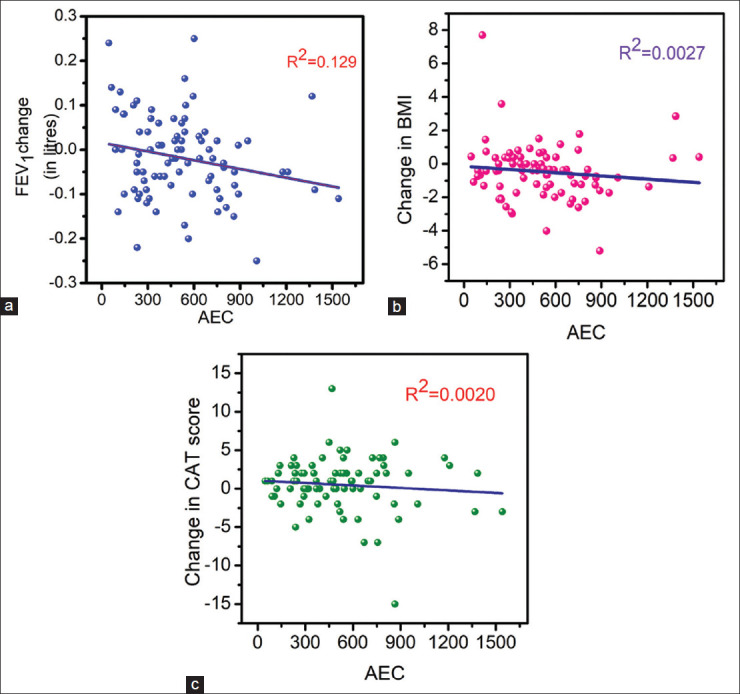
Results: Those with high AEC had a shorter time to first exacerbation. These patients also needed significantly greater number of inpatient admissions during the study period. Fall in FEV1 was also significantly higher in this group. There was no significant difference in changes in BMI, CAT or MMRC scores, between these groups.
Conclusion: Patients with high AEC are at higher risk of exacerbations, as well as loss of lung function.
Keywords: COPD; disease exacerbations; eosinophils.
Copyright © 2025 Indian Chest Society.
Conflict of interest statement
There is no conflict of interests
Figures
References
-
- 2024 GOLD Report - Global Initiative for Chronic Obstructive Lung Disease - GOLD. Available from: https://goldcopd.org/2024-gold-report/ . [Last accessed on 2024 Nov 09]
-
- GOLD-2019-v1.7-FINAL-14Nov2018-WMS.pdf [Internet] Available from: https://goldcopd.org/wp-content/uploads/2018/11/GOLD-2019-v1.7-FINAL-14N... . [Last accessed on 2025 May 29]
-
- Kiran CR, Kumari AK, Nair S, George TP. Eosinophil count in COPD-Do we need different cut-offs for our population? Pulmon. 2021;23:151–6.
LinkOut - more resources
Full Text Sources
Miscellaneous
