


Untapped potential of post-exposure prophylaxis in sub-Saharan Africa: a comparative analysis of PEP implementation planning in Kenya, Mozambique, Nigeria, Uganda and Zambia
- PMID: 40569874
- PMCID: PMC12231652
- DOI: 10.1002/jia2.26471
Untapped potential of post-exposure prophylaxis in sub-Saharan Africa: a comparative analysis of PEP implementation planning in Kenya, Mozambique, Nigeria, Uganda and Zambia
Abstract
Introduction: In 2023, over 210,000 new HIV acquisitions occurred in Kenya, Mozambique, Nigeria, Uganda and Zambia. While uptake of oral pre-exposure prophylaxis (oral PrEP) and coverage of voluntary medical male circumcision increased significantly over the past decade, post-exposure prophylaxis (PEP) has received less attention and remains an underused HIV prevention intervention. In 2024, the World Health Organization (WHO) released new guidance emphasizing the need for timely access to PEP, including through community-based channels and task-sharing to mitigate barriers such as stigma and ensure timely access. We conducted a comparative analysis of PEP implementation planning to understand how PEP is currently integrated into HIV prevention programmes, and to identify barriers and opportunities for optimizing the impact of PEP in the method mix.
Methods: We analysed Global Fund country proposals from Grant Cycle 6 (GC6) (2021-2023) and Grant Cycle 7 (GC7) (2024-2026) for five countries in Africa with high HIV burden and established PrEP programmes: Kenya, Mozambique, Nigeria, Uganda and Zambia. To understand how PEP implementation planning evolved across these two cycles, we used quantitative and qualitative analysis to identify trends. We extracted all PEP activities, coding them by focal population and activity type.
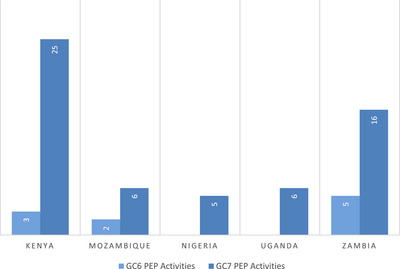
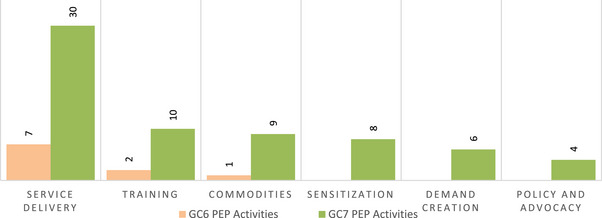
Results: We found over a five-fold increase in the number of PEP activities in GC7 compared to GC6, where there were only 10 PEP activities, and an expanded population focus, including people in prisons and pregnant and breastfeeding people. Proposals increasingly emphasized PEP not only as an intervention for occupational and sexual violence exposures but as a vital component of comprehensive HIV prevention strategies. Proposals described strategies for increasing access to PEP through differentiated service delivery models, including community-led and pharmacy-delivered approaches. However, PEP activities were not well defined, with PEP often included in product lists without articulating product-specific activities to address barriers or increase access.
Conclusions: All five countries demonstrated an increased focus on PEP from GC6 to GC7. While this reflects an ambition to expand access to PEP, product-specific activities were not clearly articulated. Practical guidance and tools, as well as focused cross-country learning to support the operationalization of WHO's recommendations, will be critical to increasing access and achieving impact.
Keywords: adolescent girls and young women; combination HIV prevention; differentiated service delivery; key populations; post‐exposure prophylaxis; sub‐Saharan Africa.
© 2025 The Author(s). Journal of the International AIDS Society published by John Wiley & Sons Ltd on behalf of International AIDS Society.
Conflict of interest statement
The authors declare no competing interests.
Figures
References
-
- UNAIDS . AIDSinfo [Internet]. Unaids.org. 2023. Accessed February 28, 2025. https://aidsinfo.unaids.org/
-
- World Health Organization . Antiretroviral therapy for HIV infection in adults and adolescents: recommendations for a public health approach. Geneva: World Health Organization; 2006. - PubMed
-
- World Health Organization . Responding to intimate partner violence and sexual violence against women: WHO clinical and policy guidelines. Geneva: World Health Organization; 2013. - PubMed
-
- World Health Organization . Consolidated guidelines on the use of antiretroviral drugs for treating and preventing HIV infection. Geneva: World Health Organization; 2013. - PubMed
Publication types
MeSH terms
Grants and funding
LinkOut - more resources
Full Text Sources
Medical
Miscellaneous
