


Daily electric field treatment improves functional outcomes after thoracic contusion spinal cord injury in rats
- PMID: 40571679
- PMCID: PMC12202812
- DOI: 10.1038/s41467-025-60332-0
Daily electric field treatment improves functional outcomes after thoracic contusion spinal cord injury in rats
Abstract
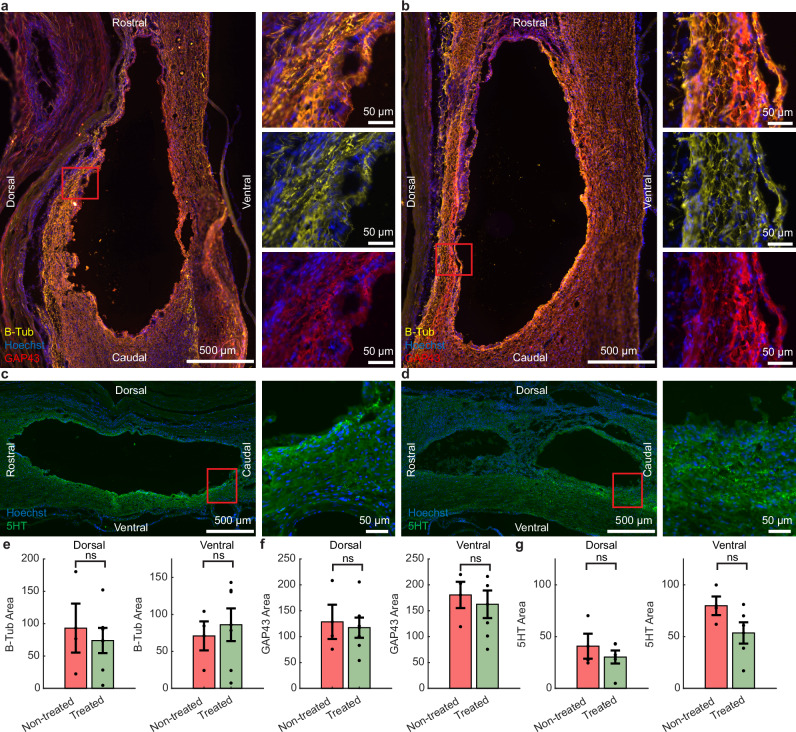
Spinal cord injury (SCI) can cause permanent loss of sensory, motor, and autonomic functions, with limited therapeutic options available. Low-frequency electric fields with changing polarity have shown promise in promoting axon regeneration and improving outcomes. However, the metal electrodes used previously were prone to corrosion, and their epidural placement limited the penetration of the electric field into the spinal cord. Here, we demonstrate that a thin-film implant with supercapacitive electrodes placed under the dura mater can safely and effectively deliver electric field treatment in rats with thoracic SCI. Subdural stimulation enhanced hind limb function and touch sensitivity compared to controls, without inducing a neuroinflammatory response in the spinal cord. While axon density around the lesion site remained unchanged after 12 weeks, in vivo monitoring and electrochemical testing of electrodes indicated that treatment was administered throughout the study. These results highlight the promise of electric field treatment as a viable therapeutic strategy for achieving long-term functional recovery in SCI.
© 2025. The Author(s).
Conflict of interest statement
Competing interests: The authors declare no competing interests.
Figures




References
-
- Courtine, G. & Sofroniew, M. V. Spinal cord repair: advances in biology and technology. Nat. Med. 25, 898–908 (2019). - PubMed
-
- Shapiro, S. A review of oscillating field stimulation to treat human spinal cord injury. World Neurosurg.81, 830–835 (2014). - PubMed
-
- Minev, I. R. et al. Electronic dura mater for long-term multimodal neural interfaces. Science347, 159–163 (2015). - PubMed
-
- Rowald, A. et al. Activity-dependent spinal cord neuromodulation rapidly restores trunk and leg motor functions after complete paralysis. Nat. Med.28, 260–271 (2022). - PubMed
MeSH terms
Grants and funding
- 18/895/CatWalk Spinal Cord Injury Trust
- 14/184/A/Manatu Hauora | Health Research Council of New Zealand (HRC)
- 1941/Neurological Foundation of New Zealand
- HT9425-23-1-0492/United States Department of Defense | United States Army | Army Medical Command | Congressionally Directed Medical Research Programs (CDMRP)
LinkOut - more resources
Full Text Sources
Medical
