


Engineering and Exploiting Immobilized Peptide Organocatalysts for Modern Synthesis
- PMID: 40572483
- PMCID: PMC12196377
- DOI: 10.3390/molecules30122517
Engineering and Exploiting Immobilized Peptide Organocatalysts for Modern Synthesis
Abstract
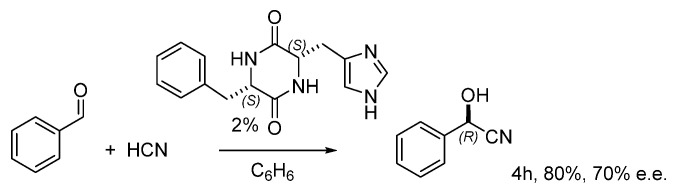
Short- and medium-sized peptides have long been used as effective and versatile organocatalysts. In the early 80s, Inoue used diketopiperazines in the Strecker reaction, while Juliá and Colonna reported the epoxidation of chalcone catalyzed by poly-L-Ala. Since then, a variety of peptide-catalyzed reactions have been described. However, peptide synthesis typically implicates the use of toxic reagents and generates wastes; therefore, peptide recycling is expected to significantly improve the overall sustainability of the process. Easy recovery and recycling of peptide catalysts can be expediently attained by covalent binding, inclusion, or adsorption. In addition, immobilization can significantly accelerate the screening of new peptide catalysts. For these reasons, diverse supports have been tested, including natural or synthetic polymers, porous polymeric networks, inorganic porous materials, organic-inorganic hybrid materials, and finally metal-organic frame-works.
Keywords: PEG; absorption; asymmetric catalysis; green chemistry; peptide organocatalyst; polystyrene; silica; β-turn.
Conflict of interest statement
The authors declare no conflicts of interest.
Figures








References
-
- Kuster T.H.R., Schnitzer T. Peptide catalysis: Trends and opportunities. Chem. Catalysis. 2025;5:101339. doi: 10.1016/j.checat.2025.101339. - DOI
-
- Juliá S., Masana J., Vega J.C. “Synthetic enzymes”. Highly stereoselective epoxidation of chalcone in a triphasic toluene-water-poly[(S)-alanine] system. Angew. Chem. Int. Ed. 1980;19:929–931. doi: 10.1002/anie.198009291. - DOI
-
- De Marco R., Tolomelli A., Greco A., Gentilucci L. Controlled solid phase peptide bond formation using N-carboxyanhydrides and PEG resins in water. ACS Sustain. Chem. 2013;1:566–569. doi: 10.1021/sc400058r. - DOI
Publication types
MeSH terms
Substances
LinkOut - more resources
Full Text Sources
