


Prognostic Immune and Nutritional Index as a Predictor of Survival in Patients Undergoing Curative-Intent Resection for Gastric Cancer
- PMID: 40572703
- PMCID: PMC12194960
- DOI: 10.3390/medicina61061015
Prognostic Immune and Nutritional Index as a Predictor of Survival in Patients Undergoing Curative-Intent Resection for Gastric Cancer
Abstract
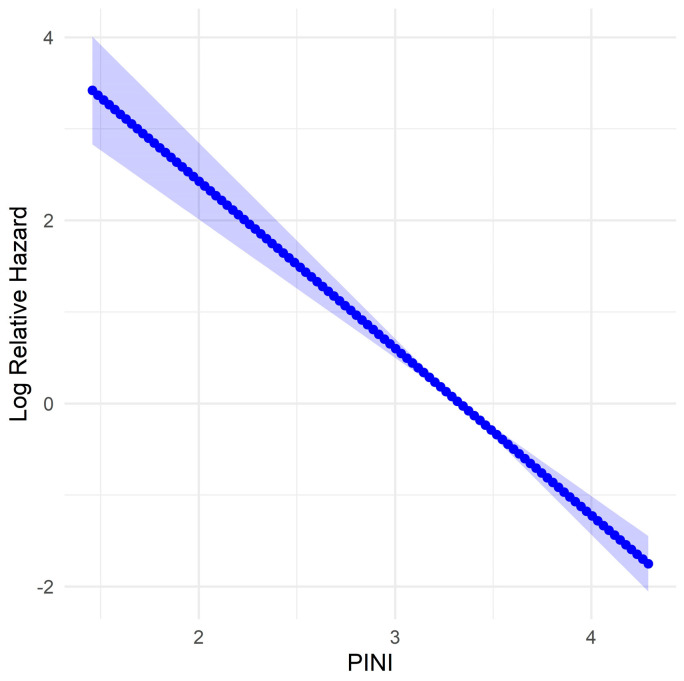
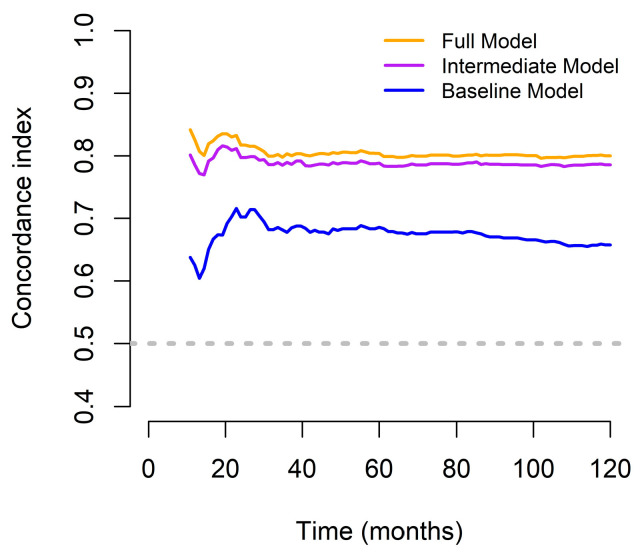
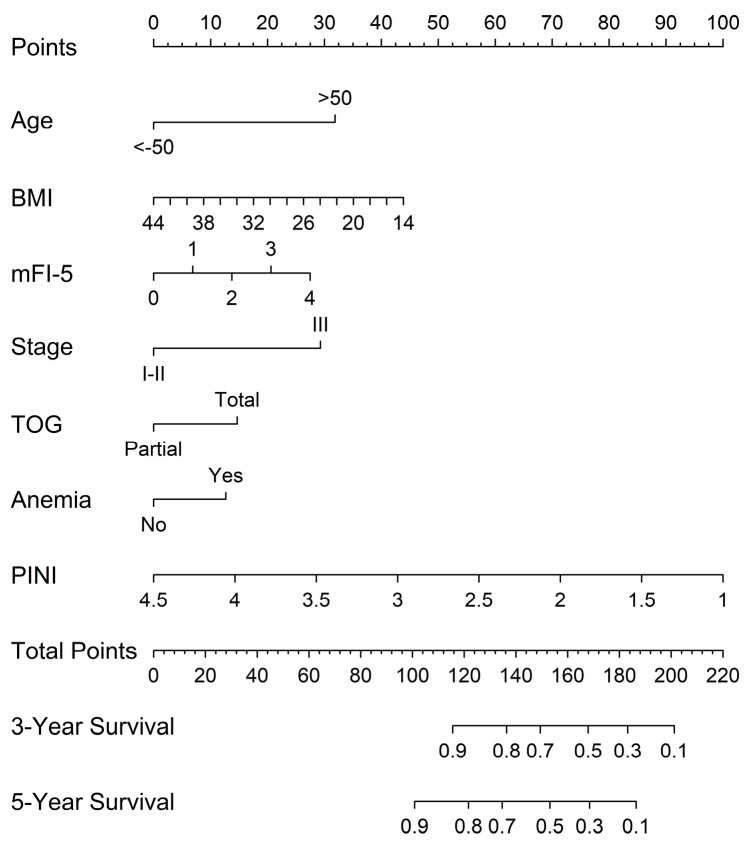
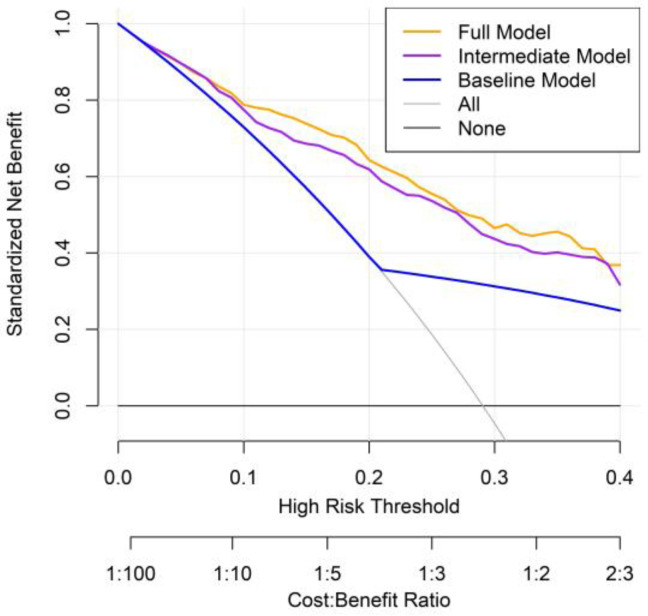
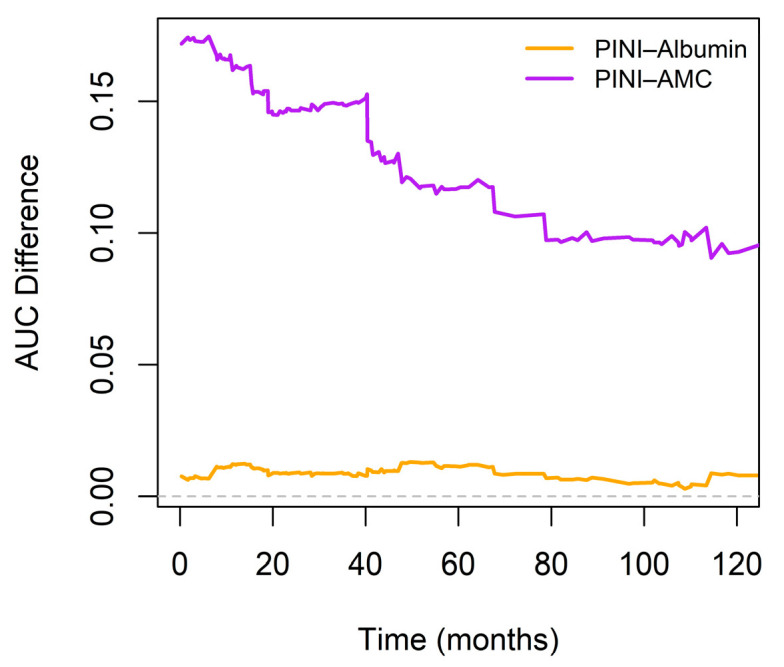
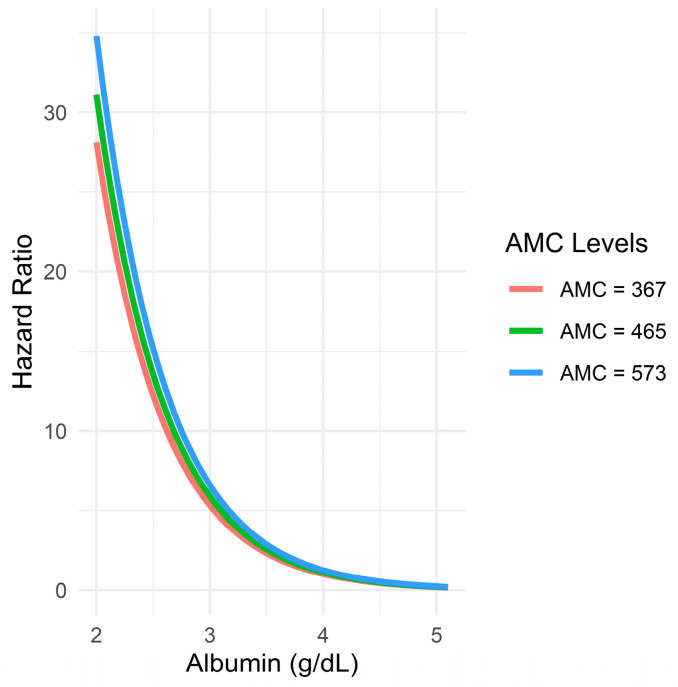
Background and Objectives: The prognostic immune and nutritional index (PINI) was reported to be clinically relevant for colorectal cancer prognosis. Herein, the utility of PINI as a prognostic factor for the survival of patients with gastric cancer (GC) was investigated. Materials and Methods: We retrospectively analyzed 492 patients with stage I-III GC, predominantly of Asian descent, who underwent curative-intent gastrectomy. Multivariate Cox regression analysis identified independent predictors of overall survival (OS). Model performance was evaluated using the concordance index (C-index), integrated area under the curve (iAUC), time-dependent AUC, integrated discrimination improvement (IDI), and continuous net reclassification improvement (cNRI). Results: The PINI score-calculated as [albumin (g/dL) × 0.9] - [absolute monocyte count (/μL) × 0.0007]-was found to be independently associated with OS (p < 0.001). Additional independent prognostic factors included age, body mass index, 5-factor modified frailty index, tumor-node-metastasis (TMN) stage, gastrectomy type, and anemia. The full model that included all significant covariates outperformed the baseline TNM model, showing significantly higher C-index and iAUC values (both p < 0.001). Compared with an intermediate model, which excluded PINI, the full model demonstrated a superior C-index and iAUC (both p = 0.004). Although the observed improvements in AUC, IDI, and cNRI at 3 years were not statistically significant, the full model achieved significant gains in all three metrics at 5 years, underscoring the added long-term prognostic value of the PINI. Conclusions: PINI is a significant independent predictor of survival in patients with GC who underwent curative-intent surgery. Its inclusion in prognostic models enhances the long-term predictive accuracy for survival, supporting its potential role in guiding personalized postoperative management. External validation in larger multi-ethnic prospective cohorts is essential to confirm its generalizability and to establish its role in routine clinical practice.
Keywords: gastrectomy; monocytes; serum albumin; stomach neoplasm.
Conflict of interest statement
The authors declare no conflicts of interest. The funders had no role in the study design, collection, analyses, interpretation of data, writing of the manuscript, or decision to publish the results.
Figures
References
-
- Kanematsu K., Nakayama Y., Tanabe M., Morita J., Nagasawa S., Yamada T., Ogata T., Oshima T. Hazard rates of recurrence for gastric cancer after curative resection: Implications for postoperative surveillance. Gastric Cancer Off. J. Int. Gastric Cancer Assoc. Jpn. Gastric Cancer Association. 2025;28:275–282. doi: 10.1007/s10120-024-01576-5. - DOI - PMC - PubMed
-
- Kakeji Y., Ishikawa T., Suzuki S., Akazawa K., Irino T., Miyashiro I., Ono H., Suzuki H., Tanabe S., Kadowaki S., et al. A retrospective 5-year survival analysis of surgically resected gastric cancer cases from the Japanese Gastric Cancer Association nationwide registry (2001–2013) Gastric Cancer Off. J. Int. Gastric Cancer Assoc. Jpn. Gastric Cancer Association. 2022;25:1082–1093. doi: 10.1007/s10120-022-01317-6. - DOI - PubMed
-
- Kang W., Zeng H., Xiong J., Li Y., Jin P., Shao X., Hu H., Wang B., Xie Y., Tian Y. Survival of patients with gastric cancer surgically treated at the National Cancer Center of China from 2011 to 2018 according to stage at diagnosis. J. Natl. Cancer Cent. 2022;2:132–138. doi: 10.1016/j.jncc.2022.07.002. - DOI - PMC - PubMed
-
- Kim H.H., Han S.U., Kim M.C., Hyung W.J., Kim W., Lee H.J., Ryu S.W., Cho G.S., Song K.Y., Ryu S.Y. Long-term results of laparoscopic gastrectomy for gastric cancer: A large-scale case-control and case-matched Korean multicenter study. J. Clin. Oncol. 2014;32:627–633. doi: 10.1200/JCO.2013.48.8551. - DOI - PubMed
MeSH terms
Grants and funding
LinkOut - more resources
Full Text Sources
Medical
Miscellaneous
