


Indoximod Attenuates Inflammatory Responses in Acetic Acid-Induced Acute Colitis by Modulating Toll-like Receptor 4 (TLR4) Signaling and Proinflammatory Cytokines in Rats
- PMID: 40572721
- PMCID: PMC12194802
- DOI: 10.3390/medicina61061033
Indoximod Attenuates Inflammatory Responses in Acetic Acid-Induced Acute Colitis by Modulating Toll-like Receptor 4 (TLR4) Signaling and Proinflammatory Cytokines in Rats
Abstract
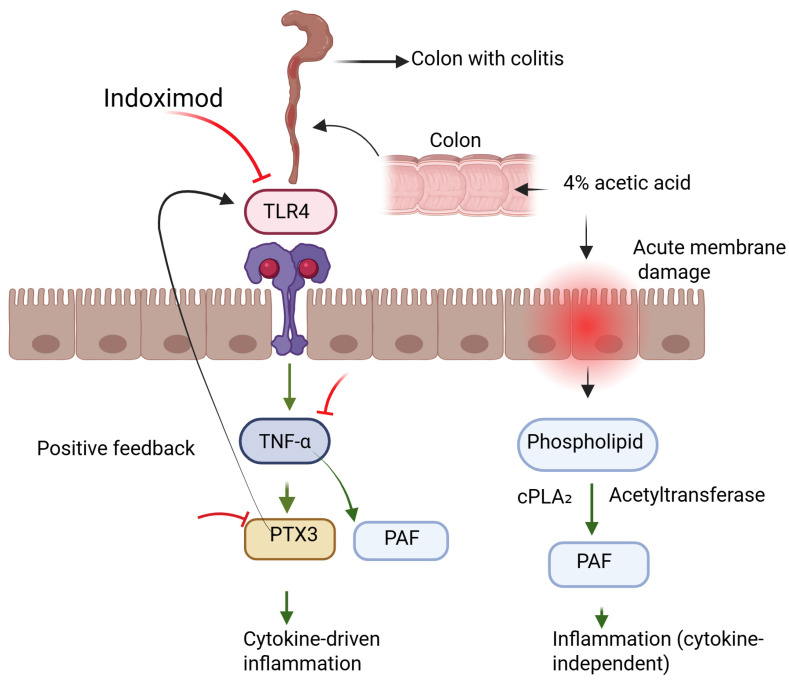
Background and Objectives: Acute ulcerative colitis is characterized by excessive mucosal inflammation and epithelial disruption, often driven by dysregulated cytokine and immune signaling. Indoximod (1-methyl-DL-tryptophan), although not a direct enzymatic inhibitor, modulates the indoleamine 2,3-dioxygenase (IDO) pathway and has been reported to exert immunoregulatory effects in various models of inflammation. This study aimed to evaluate the protective effects of Indoximod in an acetic acid-induced colitis model in rats, focusing on histopathological changes and inflammatory mediators. Materials and Methods: Thirty male Wistar albino rats were randomly assigned to three groups (n = 10 per group): Group 1 (Control) received 0.9% saline oral gavage; Group 2(Colitis) received intrarectal 4% acetic acid to induce colitis and were then treated with saline; Group 3 (Colitis + Indoximod) received 4% acetic acid followed by oral gavage administration of Indoximod (30 mg/kg) for 15 consecutive days. Histopathological evaluation of colonic tissues was performed using hematoxylin and eosin (H&E) staining. Colonic expression of Toll-like receptor 4 (TLR4) and plasma levels of tumor necrosis factor-alpha (TNF-α), pentraxin-3 (PTX-3), and platelet-activating factor (PAF) were quantified using enzyme-linked immunosorbent assay (ELISA). Results: Acetic acid-induced colitis significantly increased mucosal damage, TLR4 expression, and circulating levels of TNF-α, PTX-3, and PAF compared with controls (p < 0.001). Indoximod treatment markedly reduced histological injury and significantly suppressed TLR4 and TNF-α levels (p < 0.01), along with partial reductions in PTX-3 (p < 0.05). However, PAF levels remained elevated despite treatment, indicating limited efficacy in PAF-associated pathways. Conclusions: Indoximod exhibited anti-inflammatory effects in this acute colitis model, likely by downregulating key proinflammatory mediators.
Keywords: IDO inhibitor; Indoximod; PAF; TLR4; TNF-α; acetic acid-induced colitis; pentraxin-3.
Conflict of interest statement
The authors declare no conflicts of interest.
Figures


References
-
- Alatab S., Sepanlou S.G., Ikuta K., Vahedi H., Bisignano C., Safiri S., Sadeghi A., Nixon M.R., Abdoli A., Abolhassani H., et al. The global, regional, and national burden of inflammatory bowel disease in 195 countries and territories, 1990–2017: A systematic analysis for the Global Burden of Disease Study 2017. Lancet Gastroenterol. Hepatol. 2020;5:17–30. doi: 10.1016/S2468-1253(19)30333-4. - DOI - PMC - PubMed
MeSH terms
Substances
LinkOut - more resources
Full Text Sources
Research Materials
Miscellaneous
