


Antioxidant Peptides Derived from Woody Oil Resources: Mechanisms of Redox Protection and Emerging Therapeutic Opportunities
- PMID: 40573238
- PMCID: PMC12196311
- DOI: 10.3390/ph18060842
Antioxidant Peptides Derived from Woody Oil Resources: Mechanisms of Redox Protection and Emerging Therapeutic Opportunities
Abstract
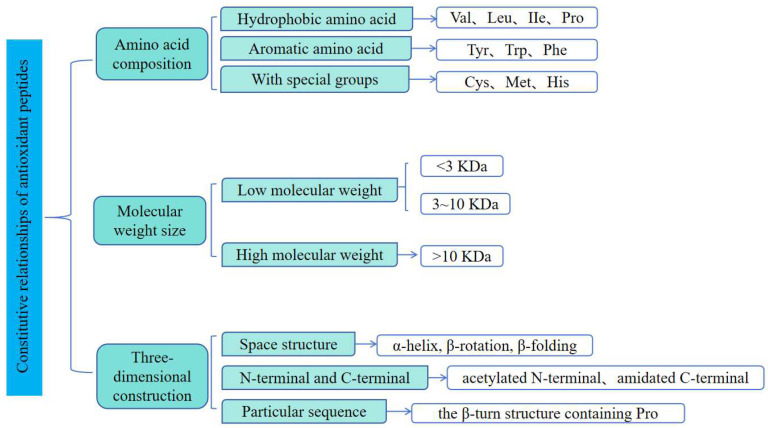
Antioxidant peptides derived from woody oil resource by-products exhibit strong free radical scavenging abilities and offer potential applications in functional foods, nutraceuticals, and cosmetics. This review summarizes the latest advances in preparation technologies, including enzymatic hydrolysis, microbial fermentation, chemical synthesis, recombinant expression, and molecular imprinting, each with distinct advantages in yield, selectivity, and scalability. The structure-activity relationships of antioxidant peptides are explored with respect to amino acid composition, molecular weight, and 3D conformation, which collectively determine their bioactivity and stability. Additionally, emerging delivery systems-such as nanoliposomes, microencapsulation, and cell-penetrating peptides-are discussed for their role in enhancing peptide stability, absorption, and targeted release. Mechanistic studies reveal that antioxidant peptides from woody oil resources act through network pharmacology, engaging core signaling pathways, including Nrf2/ARE, PI3K/Akt, AMPK, and JAK/STAT, to regulate oxidative stress, mitochondrial health, and inflammation. Preliminary safety data from in vitro, animal, and early clinical studies suggest low toxicity and favorable tolerability. The integration of omics technologies, molecular docking, and bioinformatics is accelerating the mechanism-driven design and functional validation of peptides. In conclusion, antioxidant peptides derived from woody oil resources represent a sustainable, multifunctional, and scalable solution for improving human health and promoting a circular bioeconomy. Future research should focus on structural optimization, delivery enhancement, and clinical validation to facilitate their industrial translation.
Keywords: AMPK; JAK/STAT; Keap1/Nrf2/ARE; PI3K/Akt; antioxidant peptides; bioavailability; functional foods; molecular docking; signal transduction pathways; woody oil resources.
Conflict of interest statement
The authors declare no conflicts of interest.
Figures



References
-
- Mat Yasin M.H., Mamat R., Najafi G., Ali O.M., Yusop A.F., Ali M.H. Potentials of palm oil as new feedstock oil for a global alternative fuel: A review. Renew. Sustain. Energy Rev. 2017;79:1034–1049. doi: 10.1016/j.rser.2017.05.186. - DOI
-
- Li Z., Liu A., Du Q., Zhu W., Liu H., Naeem A., Guan Y., Chen L., Ming L. Bioactive substances and therapeutic potential of camellia oil: An overview. Food Biosci. 2022;49:101855. doi: 10.1016/j.fbio.2022.101855. - DOI
Publication types
Grants and funding
LinkOut - more resources
Full Text Sources
