


Influence of Puncture Devices on the Accuracy of Cyclophosphamide Dosing for Chemotherapy Administration
- PMID: 40573273
- PMCID: PMC12195922
- DOI: 10.3390/ph18060879
Influence of Puncture Devices on the Accuracy of Cyclophosphamide Dosing for Chemotherapy Administration
Abstract
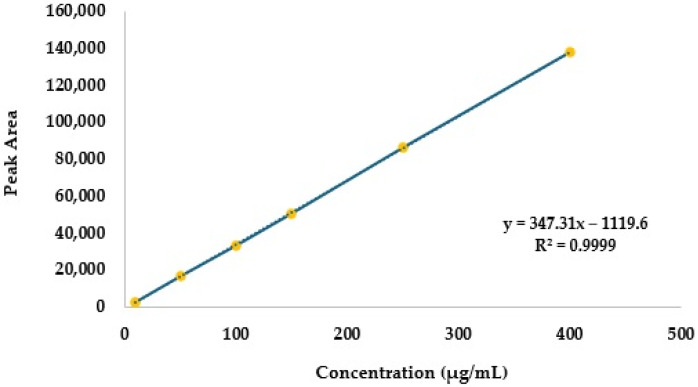
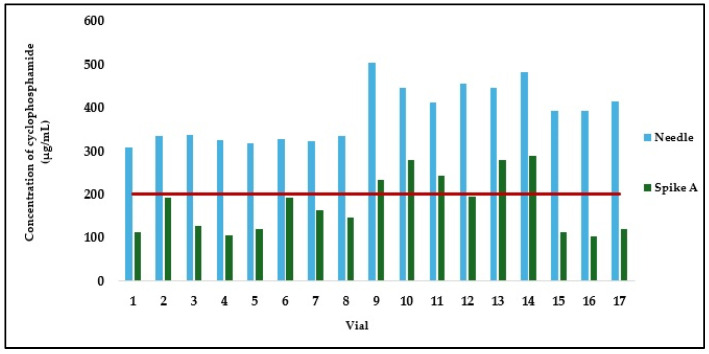
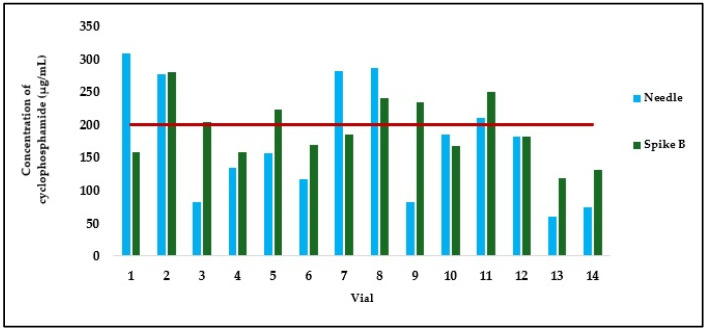
Background/Objectives: Cyclophosphamide is one of the most commonly used cytotoxic drugs in chemotherapy protocols. Its preparation in the hospital setting involves handling concentrated solutions, which pose occupational exposure risks and potential variations in the final dose administered. The aim of this study was to evaluate the effect of aspiration devices on the concentration of cyclophosphamide in reconstituted solutions. Methods: An analytical method was validated using high-performance liquid chromatography coupled to a diode-array detector (HPLC-DAD) for quality control. Cyclophosphamide solutions were prepared and aspirated using either a conventional needle or spike device with or without a filtration system. Results: The validated method demonstrated linearity (R2 = 0.9999), high precision (0.22-4.59%) and accuracy (88.9-99.4%), with a limit of quantification of 4.03 µg/mL. Significant differences (p < 0.001) were observed between samples aspirated with a needle and those aspirated with a spike fitted with a 5 µm filter, with the latter showing lower cyclophosphamide concentrations, suggesting partial retention of the drug. No significant differences were found between the needle and filterless spike preparations. Conclusions: These results suggest that the choice of aspiration device influences the final drug concentration, potentially affecting therapeutic efficacy. Standardisation of preparation techniques and an awareness of device limitations are essential to ensure accurate chemotherapy dosing and patient safety.
Keywords: anticancer drugs; aspiration devices; chemotherapy preparation; cyclophosphamide; dose accuracy; high-performance liquid chromatography with diode-array detection (HPLC-DAD); quality control.
Conflict of interest statement
The authors declare no conflicts of interest.
Figures
References
-
- Amjad M.T., Chidharla A., Kasi A. StatPearls. StatPearls Publishing; Treasure Island, FL, USA: 2025. Cancer Chemotherapy. - PubMed
-
- Bharti A.C., Vishnoi K., Singh S.M., Aggarwal B.B. Chapter 1—Pathways Linked to Cancer Chemoresistance and Their Targeting by Nutraceuticals. In: Bharti A.C., Aggarwal B.B., editors. Role of Nutraceuticals in Cancer Chemosensitization. Volume 2. Academic Press; Cambridge, MA, USA: 2018. pp. 1–30. Cancer Sensitizing Agents for Chemotherapy.
Grants and funding
LinkOut - more resources
Full Text Sources
