


Role of Central Inflammatory and Oxidative Pathways in the Morphine Exacerbation of Cardiovascular Effects of Sepsis in Rats
- PMID: 40573276
- PMCID: PMC12195926
- DOI: 10.3390/ph18060882
Role of Central Inflammatory and Oxidative Pathways in the Morphine Exacerbation of Cardiovascular Effects of Sepsis in Rats
Abstract
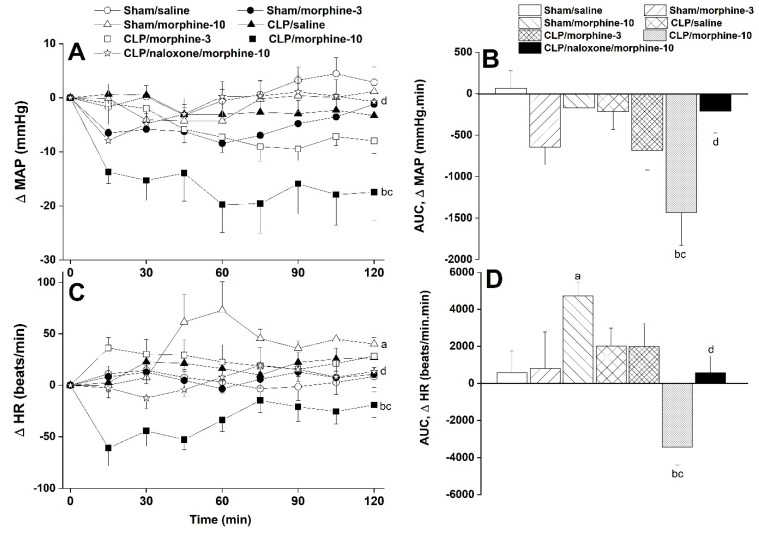
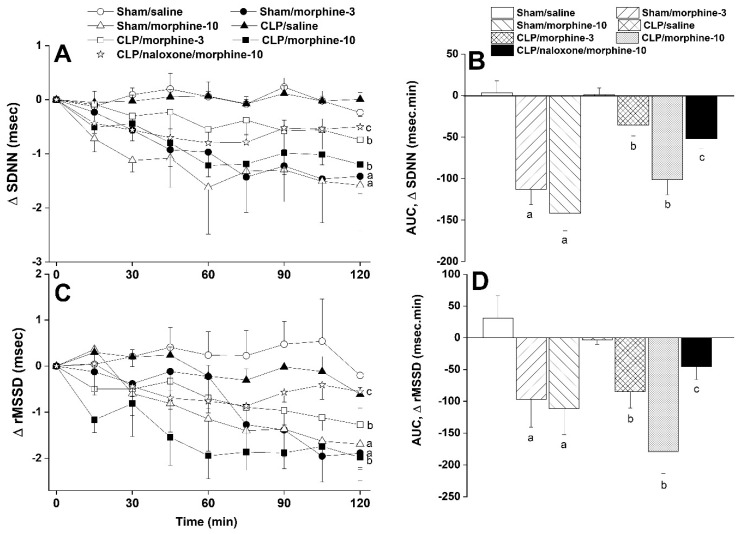
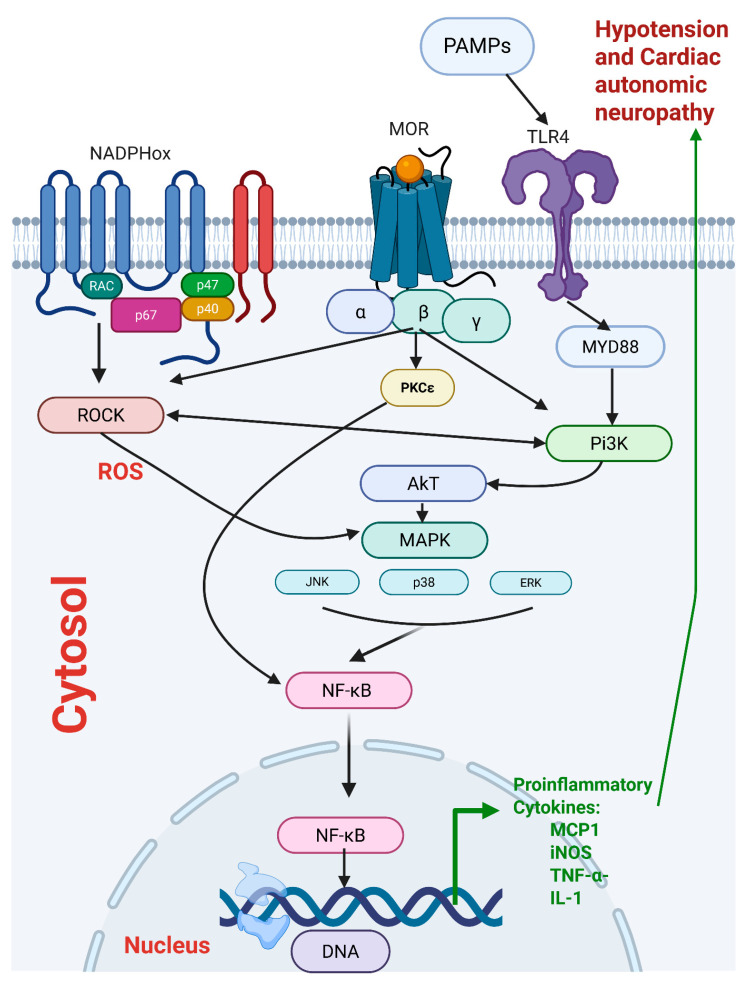
Background/Objectives: Sepsis remains one of the most serious and possibly fatal complications encountered in intensive care units. Considering the frequent use of narcotic analgesics in this setting, we investigated whether the cardiovascular and peripheral and central inflammatory features of sepsis could be modified by morphine. Methods: Rats were instrumented with femoral and intracisternal (i.c.) indwelling catheters and sepsis was induced by cecal ligation and puncture (CLP). Results: The i.v. administration of morphine (3 and 10 mg/kg) significantly and dose-dependently aggravated septic manifestations of hypotension and impaired cardiac autonomic activity, as reflected by the reductions in indices of heart rate variability (HRV). Cardiac contractility (dP/dtmax) was also reduced by morphine in septic rats. The morphine effects were mostly eliminated following (i) blockade of μ-opioid receptors by i.v. naloxone and (ii) inhibition of central PI3K, MAPK-ERK, MAPK-JNK, NADPH oxidase (NADPHox), or Rho-kinase (ROCK) by i.c. wortmannin, PD98059, SP600125, diphenyleneiodonium, and fasudil, respectively. Further, these pharmacologic interventions significantly reduced the heightened protein expression of toll-like receptor 4 (TLR4) and monocyte chemoattractant protein-1 (MCP1) in brainstem rostral ventrolateral medullary (RVLM), but not cardiac, tissues of CLP/morphine-treated rats. Conclusions: Morphine worsens cardiovascular and autonomic disturbances caused by sepsis through a mechanism mediated via μ-opioid receptors and upregulated central inflammatory, chemotactic, and oxidative signals. Clinical studies are warranted to re-affirm the adverse cardiovascular interaction between opioids and the septic challenge.
Keywords: autonomic function; cardiovascular; inflammation; morphine; oxidative stress; sepsis.
Conflict of interest statement
The authors declare no conflicts of interest.
Figures



References
-
- Singer M., Deutschman C.S., Seymour C.W., Shankar-Hari M., Annane D., Bauer M., Bellomo R., Bernard G.R., Chiche J.D., Coopersmith C.M., et al. The Third International Consensus Definitions for Sepsis and Septic Shock (Sepsis-3) JAMA. 2016;315:801–810. doi: 10.1001/jama.2016.0287. - DOI - PMC - PubMed
LinkOut - more resources
Full Text Sources
Research Materials
Miscellaneous
