


Cytomegalovirus Colitis in Adult Patients with Inflammatory Bowel Disease
- PMID: 40573343
- PMCID: PMC12197619
- DOI: 10.3390/v17060752
Cytomegalovirus Colitis in Adult Patients with Inflammatory Bowel Disease
Abstract
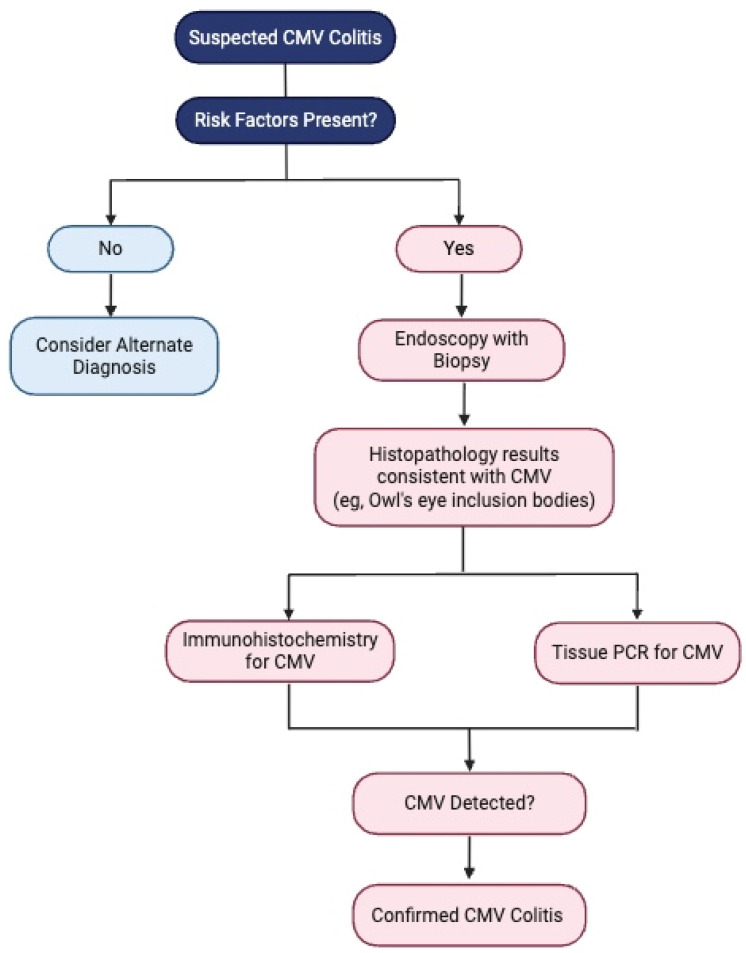
Cytomegalovirus (CMV) colitis, a complication in patients with inflammatory bowel disease (IBD), particularly ulcerative colitis (UC), is a significant diagnostic and therapeutic challenge due to its overlap with IBD flares. CMV reactivation in IBD is driven by chronic inflammation, compromised immune function, and use of immunosuppressive agents like corticosteroids. Risk factors include older age, pancolitis, and severe disease. Diagnosis hinges on endoscopy and histology, with tissue biopsy and immunohistochemistry as the gold standard. Quantitative tissue PCR may aid in differentiating latent from active infection. CMV colitis exacerbates IBD symptoms, prolongs hospitalization, and increases colectomy rates. Antiviral therapy, primarily ganciclovir, improves outcomes in patients with corticosteroid-refractory UC. Treatment focuses on tapering corticosteroids, optimizing biologic therapies such as infliximab, and a careful application of antivirals tailored to disease severity and viral load. Further research is needed to refine diagnostic thresholds and treatment strategies to mitigate CMV's impact on IBD prognosis. Early identification and individualized management are critical to improving clinical outcomes and reducing morbidity.
Keywords: colitis; cytomegalovirus; inflammatory bowel disease.
Conflict of interest statement
The authors declare no conflicts of interest.
Figures



References
-
- Ljungman P., Chemaly R.F., Khawaya F., Alain S., Avery R., Badshah C., Boeckh M., Fournier M., Hodowanec A., Komatsu T., et al. Consensus definitions of cytomegalovirus (CMV) infection and disease in transplant patients including resistant and refractory CMV for use in clinical trials: 2024 update from the Transplant Associated Virus Infections Forum. Clin. Infect. Dis. 2024;79:787–794. doi: 10.1093/cid/ciae321. - DOI - PMC - PubMed
Publication types
MeSH terms
Substances
LinkOut - more resources
Full Text Sources
Medical
