


Innovation in mRNA Vaccines and RNAi via Protein Nanocages
- PMID: 40573984
- PMCID: PMC12197727
- DOI: 10.3390/vaccines13060653
Innovation in mRNA Vaccines and RNAi via Protein Nanocages
Abstract
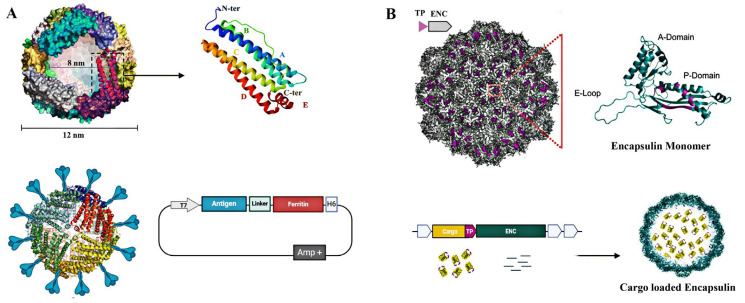
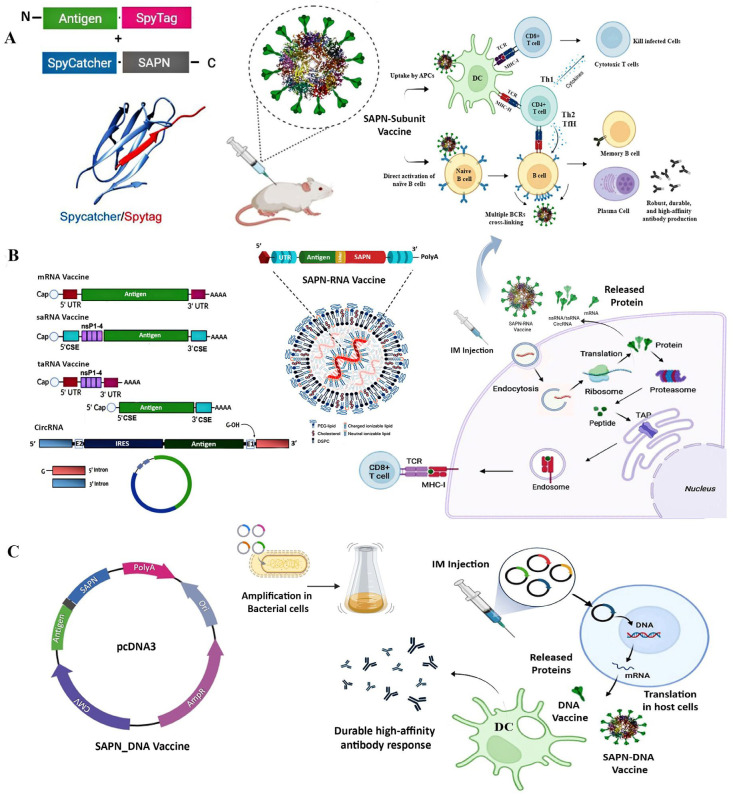
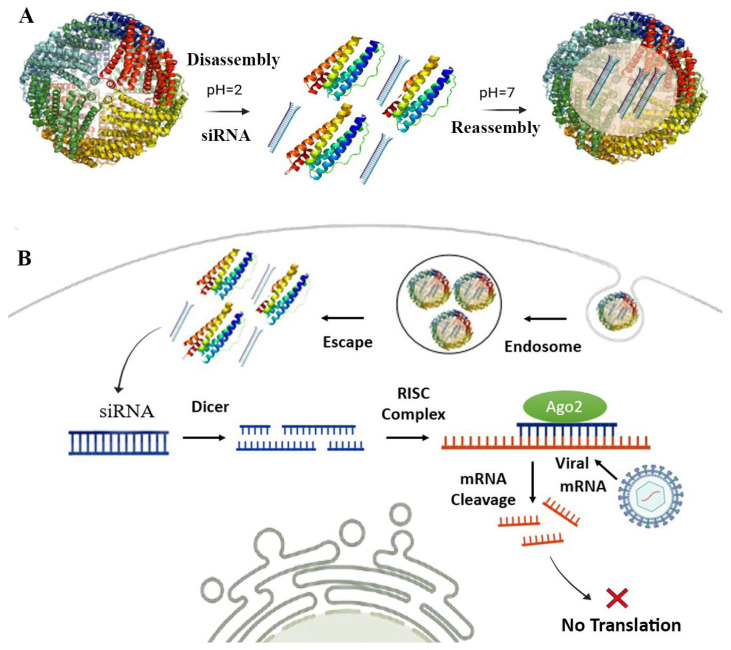
Self-assembling protein nanocages (SAPNs) are distinct natural structures formed by the self-assembly of identical subunits, providing a highly efficient platform and a novel strategy for vaccine development and RNAi therapy. Their internal cavity allows for precise cargo encapsulation, while the externally modifiable surface supports multivalent antigen presentation, thereby enhancing stability, targeted delivery, and immune activation. In addition to serving as stable subunit vaccines with multivalent antigen display, SAPNs can be incorporated into mRNA vaccines (SAPN-RNA vaccines) by pre-fusing with the antigen. This strategy stabilizes secreted antigenic proteins with prolonged presentation to the immune system, and improves vaccine efficacy while reducing off-target effects and minimizing required doses. Additionally, SAPNs can overcome cellular uptake barriers, enhance DNA vaccine efficacy, and enable the co-delivery of antigens and adjuvants. Functionalization with adjuvants or targeting ligands further improves their immunostimulatory properties and specificity. The SAPN-RNAi strategy optimizes siRNA delivery by promoting lysosomal escape, enhancing targeted uptake, and protecting siRNA from degradation through SAPN encapsulation. This review examines the structural and functional properties of protein nanocages and their applications in vaccine design and RNAi delivery, emphasizing their synergistic effects, and exploring current progress, challenges, and future directions. In conclusion, SAPNs represent a versatile multifunctional platform with broad applicability across subunit, mRNA and DNA vaccines, adjuvant co-delivery, and RNAi therapeutics, with significant potential against viral infections.
Keywords: ferritin; mRNA vaccines; protein nanocages; siRNA delivery; vaccine platform; virus.
Conflict of interest statement
The author declares no conflict of interest.
Figures
References
Publication types
LinkOut - more resources
Full Text Sources
