


The emergence of NY10: insights into the 2012 West Nile Virus outbreak in the United States
- PMID: 40574749
- PMCID: PMC12202104
- DOI: 10.1093/ve/veaf037
The emergence of NY10: insights into the 2012 West Nile Virus outbreak in the United States
Abstract
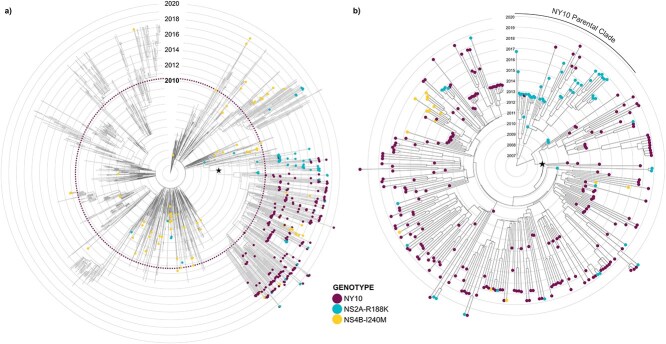
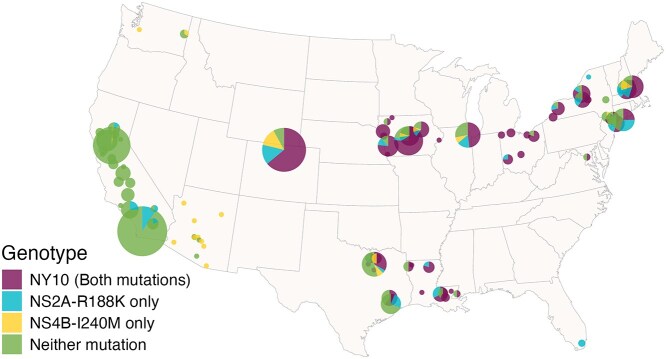
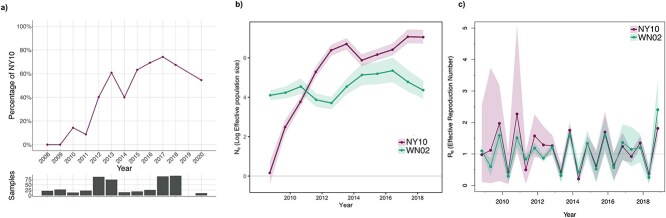
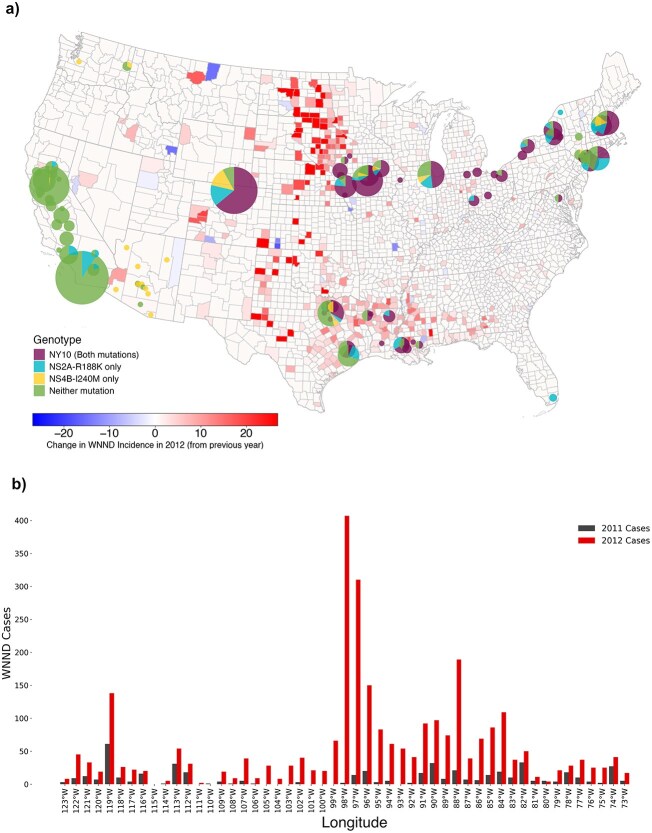
West Nile Virus (WNV) remains a public health risk across North America due to its capacity for rapid adaptation and evolution. While research in the United States has focused on the WN02 and SW03 mutations, the NY10 genotype, first detected in 2010, has received comparatively little attention. We conducted a phylogenetic and phylodynamic investigation of NY10, revealing its rapid increase in detection frequency and effective population size in the early 2010s. Our analysis suggests that NY10 played an important role in the 2012 WNV outbreak, with an effective population size indicating higher diversity than other lineages during this period. Despite this, NY10 appears geographically restricted, with no detections west of Colorado, indicating that barriers in the southwestern United States may influence its spread. These findings highlight the complex interplay between viral evolution, geography, and the environmental factors that shape WNV epidemiology. The study emphasizes the potential of WNV to generate genotypes with epidemic potential and underscores the importance of integrating genetic data into surveillance and forecasting systems to better predict and manage future outbreaks. Understanding the drivers of WNV's genetic diversity will be crucial for developing more effective public health strategies as the virus continues to evolve.
Keywords: NY10; WNV; West Nile virus; arbovirus; phylogenetic analysis.
Published by Oxford University Press 2025.
Figures
References
-
- Andersen-lab . west-nile-genomics-wnv4k. andersen-lab/west-nile-genomics-wnv4k, 2023. 2019-03-28T21:12:15Z.
LinkOut - more resources
Full Text Sources
