


Satisfaction with Prosthesis and Walking Ability among Trans-Tibial Prosthesis Users from Two Selected Rehabilitation Hospitals in Rwanda
- PMID: 40575282
- PMCID: PMC12188255
- DOI: 10.4314/rjmhs.v8i1.6
Satisfaction with Prosthesis and Walking Ability among Trans-Tibial Prosthesis Users from Two Selected Rehabilitation Hospitals in Rwanda
Abstract
Background: Satisfaction with the prosthesis is the key element to using the prosthesis for better walking and performing daily activities among transtibial prosthesis users. Different factors affect satisfaction and walking ability.
Objective: To evaluate satisfaction and assess walking ability among transtibial prosthesis users from two rehabilitation hospitals in Rwanda.
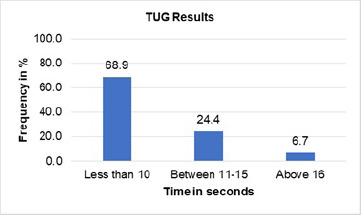
Methods: A quantitative cross-sectional study was conducted on 45 transtibial prosthesis users who received their prostheses from the University Teaching Hospital of Kigali and Gatagara Orthopedics and Rehabilitation Hospital, Nyanza. The research was done from February 1, 2024, to April 30, 2024. The Trinity Amputation and Prosthesis Experience-Revised (TAPES-R) was utilized to evaluate satisfaction whereas the Timed Up and Go (TUG) and the 2 minutes' walk test (2MWT) were used for walking ability assessment.
Results: Out of 45 participants, 71.1% (n=32) were males and the remaining were females. On satisfaction with prosthesis, 62.2% were satisfied while 37.8% were unsatisfied. The satisfaction was statistically significantly associated with shape (p≤0.001), appearance (p≤0.003), weight (p≤0.001), usefulness (p≤0.027), reliability (p≤0.035), fit (p≤0.001), and comfort (p≤0.038) of their prosthesis, their health status (p≤0.011) and physical status (p≤0.001). For walking ability, 60% of the participants demonstrated moderate walking ability.
Conclusion: Some transtibial prosthesis users were unsatisfied with their prosthesis. Moderate walking ability was observed generally. More rehabilitation including gait training, physiotherapy, early prosthetic fitting, rehabilitation team follow-ups and use of advanced prosthetic technology are recommended.
Keywords: Rwanda; Transtibial amputation; prosthesis; satisfaction; walking ability.
Conflict of interest statement
None
Figures


References
-
- Okesina AA, Nsubuga I, Omoola OO, et al. Understanding Lower Limb Amputation: A Review of the Strategies for Healthcare Improvement, Prevention, and Management. Rwanda Medical Journal. 2024;81:118–133. doi: 10.4314/rmj.v81i1.13. - DOI
-
- Gailey R, McFarland L V, Cooper RA, et al. Unilateral lower-limb loss: prosthetic device use and functional outcomes in servicemembers from Vietnam war and OIF/OEF conflicts. J Rehabil Res Dev. 2010;47:317–331. DOI: 10.1682/jrrd.2009.04.0039. - PubMed
-
- Murwanashyaka E, Ssebuufu R KP. Prevalence, Indications, Levels and Outcome Limb amputations at University Teaching Hospital-Butare in Rwanda. East Cent Afr J surg. 2013;18:28–35. https://www.ajol.info/index.php/ecajs/article/view/97357.
-
- Mathi E, Savla D, S R S, et al. Quality of Life in Transtibial Amputees: An Exploratory Study Using TAPES-R Questionnaire. Int J Health Sci Res. 2014;4:162–168. https://api.semanticscholar.org/CorpusID:70773804.
-
- Pezzin LE, Dillingham TR, MacKenzie EJ, et al. Use and satisfaction with prosthetic limb devices and related services. Arch Phys Med Rehabil. 2004;85:723–729. DOI: 10.1016/j.apmr.2003.06.002. - PubMed
LinkOut - more resources
Full Text Sources
Miscellaneous