


Strain-specific galactose utilization by commensal E. coli mitigates Salmonella establishment in the gut
- PMID: 40577327
- PMCID: PMC12204579
- DOI: 10.1371/journal.ppat.1013232
Strain-specific galactose utilization by commensal E. coli mitigates Salmonella establishment in the gut
Abstract
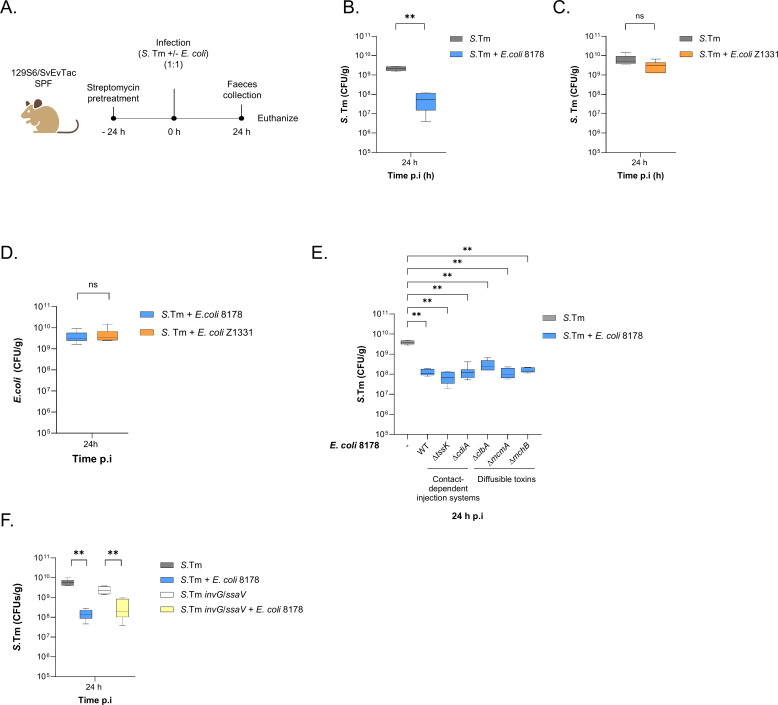
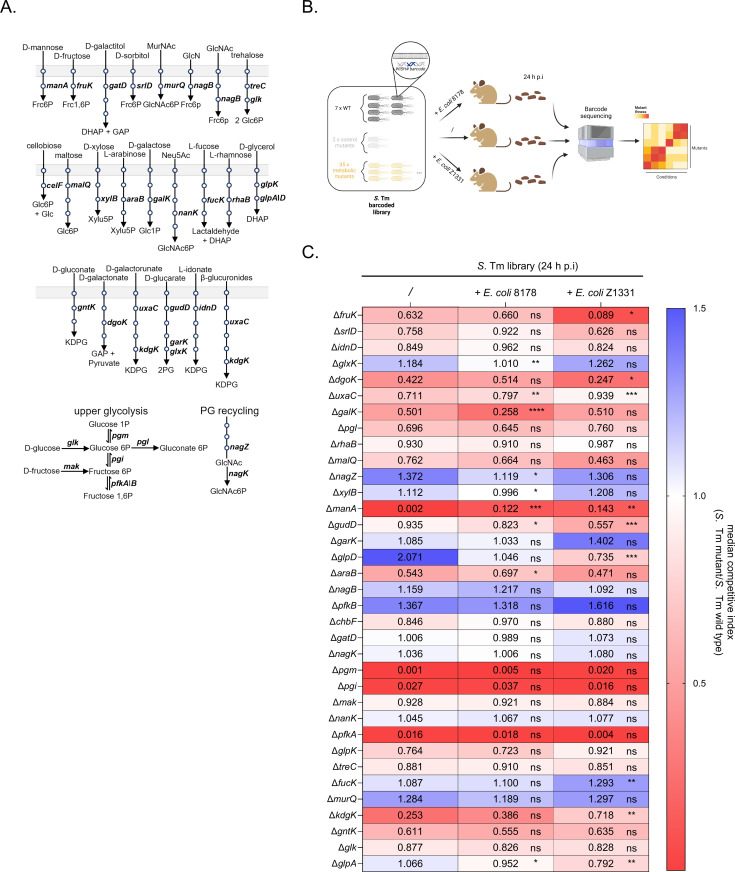
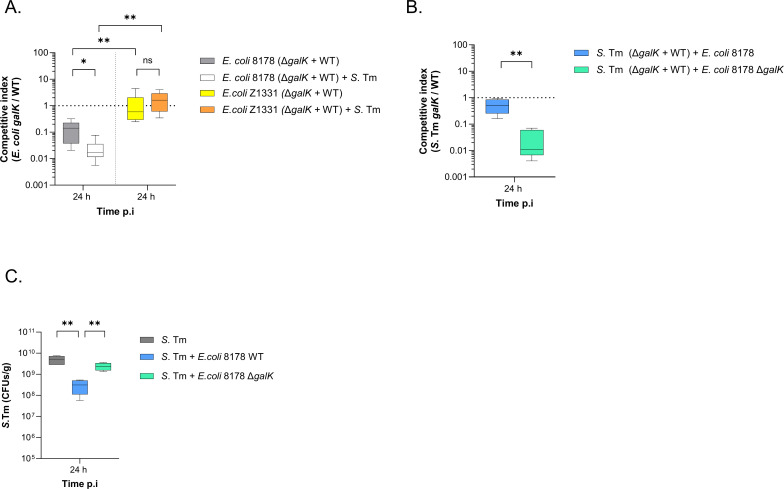
Salmonella enterica serovar Typhimurium (S. Tm) is a major cause of gastrointestinal diseases worldwide. To date, options for prevention or curative therapy remain limited. The gut microbiota plays a protective role against enteric diseases, particularly in preventing establishment and proliferation of S. Tm. While most research has focused on microbiota-mediated pathogen exclusion during the later, inflammation-dominated stages of infection, little is known about how microbiota members mitigate S. Tm early gut colonization. To address this gap, we conducted 24 h in vivo competitive experiments using S. Tm and different commensal E. coli strains. We observed a significant reduction in pathogen load, which was strain-specific and particularly evident with E. coli 8178. To investigate the underlying molecular mechanisms, we performed an in vivo screen using a rationally designed S. Tm library-which includes a wide range of carbohydrate utilization mutants-both in the absence and presence of E. coli strains. Our findings revealed that E. coli 8178-mediated S. Tm competition was driven by the exploitation of galactose during the early stage of infection. Identifying galactose as a key metabolite in pathogen exclusion by gut microbiota members enhances our mechanistic understanding of microbiota-mediated protection and opens new avenues for developing microbiota- and dietary-based strategies to better control intestinal infections.
Copyright: © 2025 Schubert et al. This is an open access article distributed under the terms of the Creative Commons Attribution License, which permits unrestricted use, distribution, and reproduction in any medium, provided the original author and source are credited.
Conflict of interest statement
The authors have declared that no competing interests exist.
Figures
References
-
- WHO U. WHO estimates of the global burden of foodborne diseases: foodborne diseases burden epidemiology reference group 2007-2015. World Health Organization; Geneva, Switzerland: 2015.
MeSH terms
Substances
LinkOut - more resources
Full Text Sources
Medical
Miscellaneous
