


Short birth spacing and its impact on maternal and child health in India with urban-rural variation: An epidemiological study using the National Family Health Survey Data
- PMID: 40577365
- PMCID: PMC12204571
- DOI: 10.1371/journal.pone.0325461
Short birth spacing and its impact on maternal and child health in India with urban-rural variation: An epidemiological study using the National Family Health Survey Data
Abstract
Background: Maintaining an appropriate gap between childbirths is essential for promoting the health of both the mother and the child. This practice lowers the risk of adverse maternal and child health outcomes. Inadequate birth spacing is a multifaceted issue linked to increase infant mortality and has the potential to impact the health and demographic landscape of the nation. This study aims to assess the prevalence of short birth spacing (SBS) in association with demographic and socio-economic factors in India with special reference to maternal and child health.
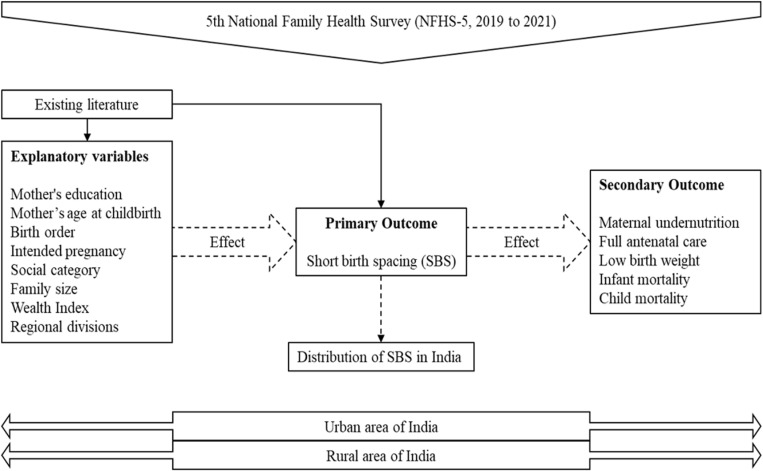
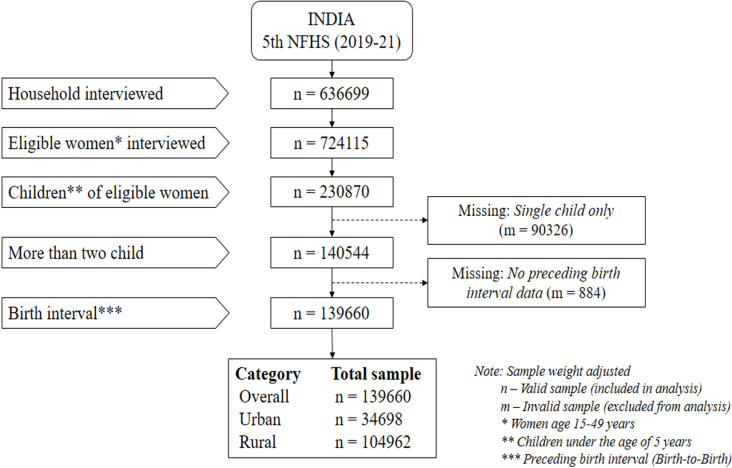
Methods: This study investigated SBS in India using a cross-sectional design and data from the National Family Health Survey (NFHS-5). The analysis included data from 636,699 households, encompassing 724,115 women and 139,660 birth intervals. The primary outcome was SBS, and secondary outcomes included maternal undernutrition, full antenatal care (ANC), low birth weight (LBW), infant mortality, and child mortality. The analysis incorporated demographic and socio-economic variables as explanatory factors for SBS. Data analysis was conducted after checking its normality. The data characteristics were summarised and analysed using descriptive and inferential statistics.
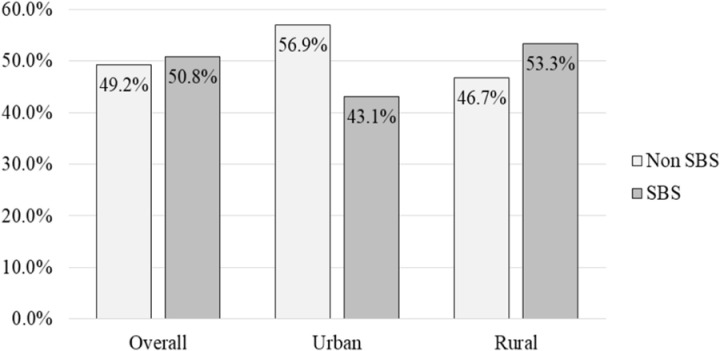
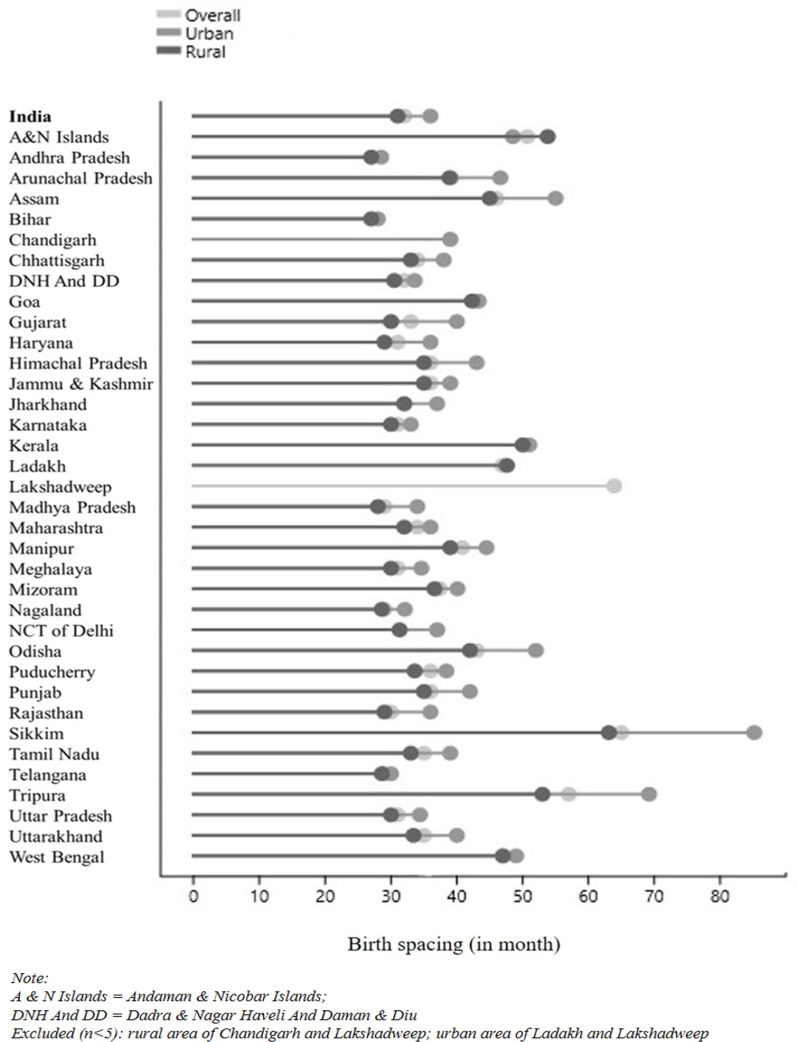
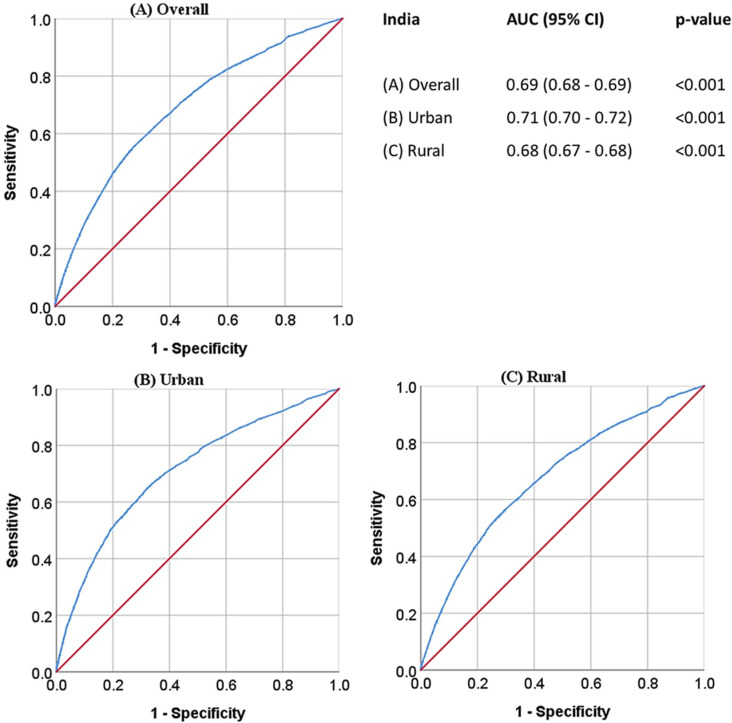
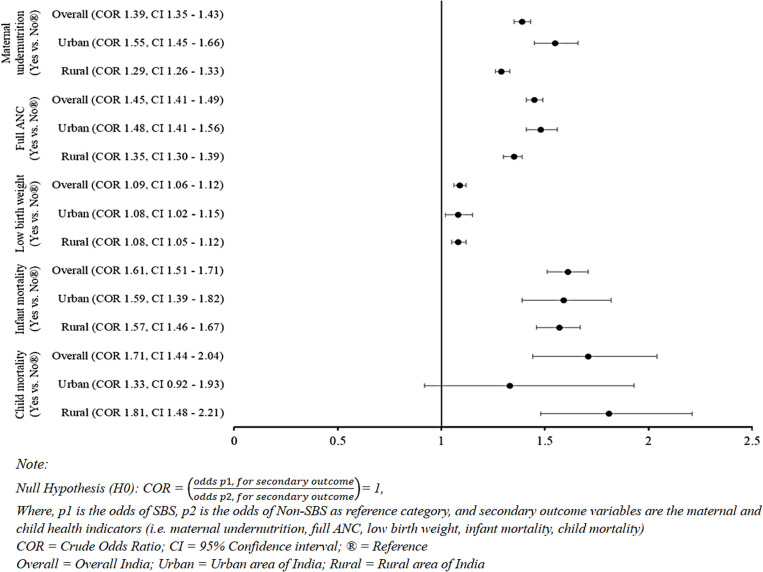
Results: In India, SBS is more prevalent (50.8%) with a median of 32 months. Bihar and Andhra Pradesh have shortest spacing (27 months), while Lakshadweep has longest (63.9 months). The Central zone has highest SBS prevalence (53.8%), especially in rural areas (55.9%). SBS is significantly associated with lack of maternal education, younger maternal age, unwanted pregnancies, larger families, and poor wealth index. Additionally, it is found that the explanatory variables have a significant impact on SBS, with area under the curve (AUC) covering 68% to 71% (p < 0.001). Furthermore, SBS has a detrimental effect on maternal and child health as secondary outcomes.
Conclusion: This study emphasizes the substantial influence of socio-demographic factors on the practice of SBS. It is crucial to provide educational programs for mothers that focus on the importance of birth spacing and using family planning services. The study highlights the need to implement economic development initiatives within families to address the factors contributing to inadequate birth spacing. These measures enhance maternal and child health and align with the SDGs in India.
Copyright: © 2025 Kundu et al. This is an open access article distributed under the terms of the Creative Commons Attribution License, which permits unrestricted use, distribution, and reproduction in any medium, provided the original author and source are credited.
Conflict of interest statement
The authors have declared that no competing interests exist.
Figures
References
-
- Shakya S, Pokharel PK, Yadav BK. Study on birth spacing and its determinants among women of Kirtipur municipality of Kathmandu district. Int J Nurs Educ. 2011;3(1):56–60.
-
- Winikoff B. The effects of birth spacing on child and maternal health. Stud Fam Plann. 1983;14(10):231–45. - PubMed
-
- Rodriguez G, Hobcraft J, McDonald J, Menken J, Trussell J. A Comparative Analysis of Determinants of Birth Intervals. Voorburg, Netherlands: International Statistical Institute; 1984.
MeSH terms
LinkOut - more resources
Full Text Sources
Medical
Miscellaneous
