


Analysing fast food consumption behaviour patterns: The case of Jordan
- PMID: 40577369
- PMCID: PMC12204562
- DOI: 10.1371/journal.pone.0326347
Analysing fast food consumption behaviour patterns: The case of Jordan
Abstract
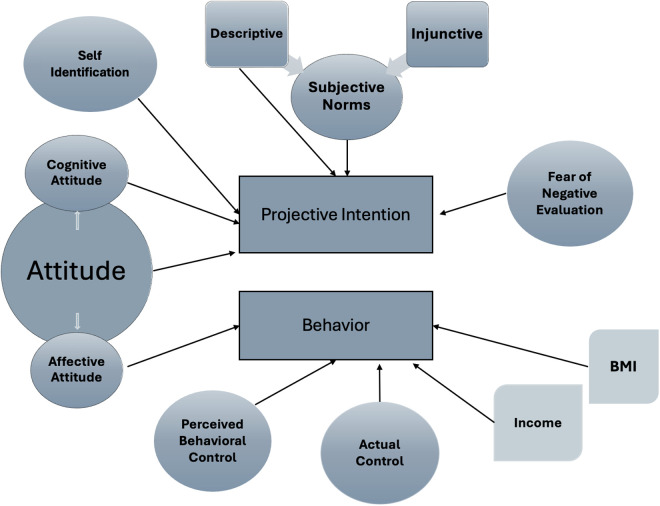
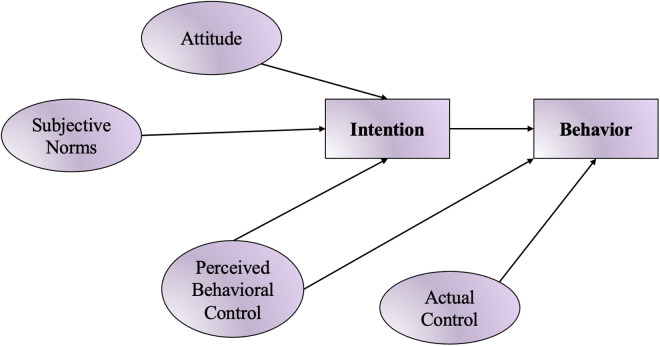
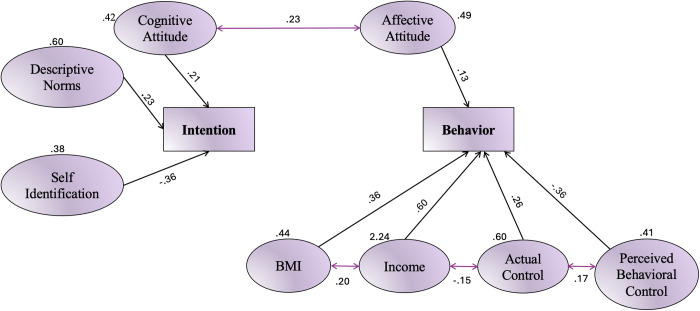
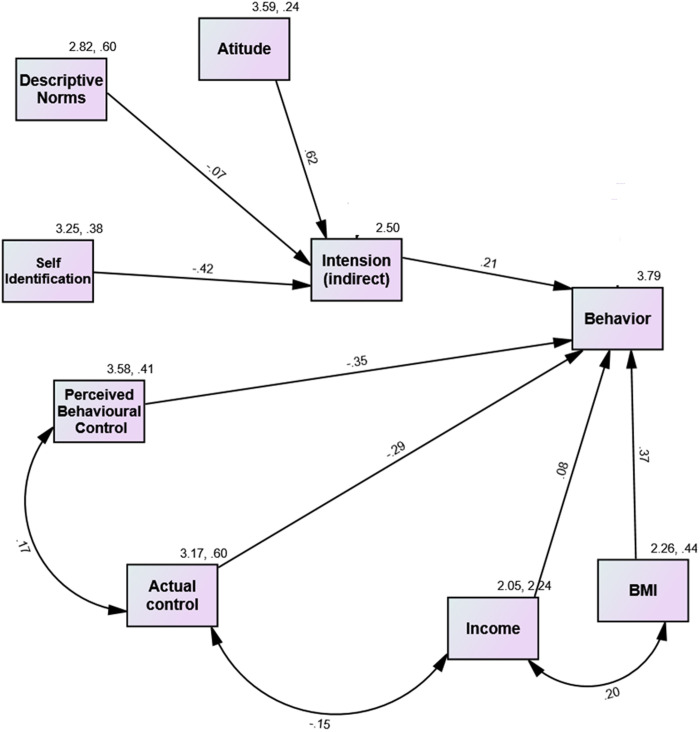
This study aimed to examine the factors influencing fast food consumption among a Jordanian population by utilizing the extended theory of planned behavior as its theoretical framework. The research employed theory-related scales, income, BMI, ability to consume (intention), indirect intention, and a retrospective measure of fast-food consumption within a cross-sectional sample of 408 university students aged 18-23 years. Structural equation modeling was used to analyze the determinants of consumption. The findings indicated that the self-reported intention measure failed to mediate the attitude-behavior relationship. However, the use of projective intention (indirect) measures revealed that personal factors such as attitude, subjective norms, and self-identification significantly explained over 50% of the variation in the intention to consume fast food, suggesting that participants often underestimated their intention to consume fast food. Furthermore, the study identified available personal funds, perceived and actual behavioral control, and BMI as significant external predictors of fast-food consumption. The originality of this study lies in its contribution to understanding the growing preference for fast food in the Middle East, particularly in Jordan. It introduces a theoretical model that employs projection-based assessments to implicitly gauge intentions and explores the relationship between income, BMI, and consumption behavior. The practical implications of these findings underscore the importance of key psychosocial elements in developing and implementing preventive strategies aimed at promoting healthy eating behaviors among university students.
Copyright: © 2025 Asab, Barakat. This is an open access article distributed under the terms of the Creative Commons Attribution License, which permits unrestricted use, distribution, and reproduction in any medium, provided the original author and source are credited.
Conflict of interest statement
The authors have declared that no competing interests exist.
Figures
References
-
- Haven A. Consumer behavior and the growth of the fast food industry in a small emerging country. IJAME. 2015;4:180–9.
-
- Tengiz ZM, Oraman Y. The evaluation of the students’ attitudes and behavior towards fast food consumption. Foodbalt 2019: 13th Baltic Conference on Food Science and Technology: Food Nutrition, Well-Being. Latvia Univ Life Sciences & Technologies; 2019.
-
- Huang TT, Harris KJ, Lee RE, Nazir N, Born W, Kaur H. Assessing overweight, obesity, diet and physical activity in college students. J Am Coll Health. 2003;52(2):83–6. - PubMed
MeSH terms
LinkOut - more resources
Full Text Sources
