


Simultaneous TGF-β and GITR pathway modulation promotes anti-tumor immunity in glioma
- PMID: 40580238
- PMCID: PMC12206220
- DOI: 10.1007/s00262-025-04098-w
Simultaneous TGF-β and GITR pathway modulation promotes anti-tumor immunity in glioma
Abstract
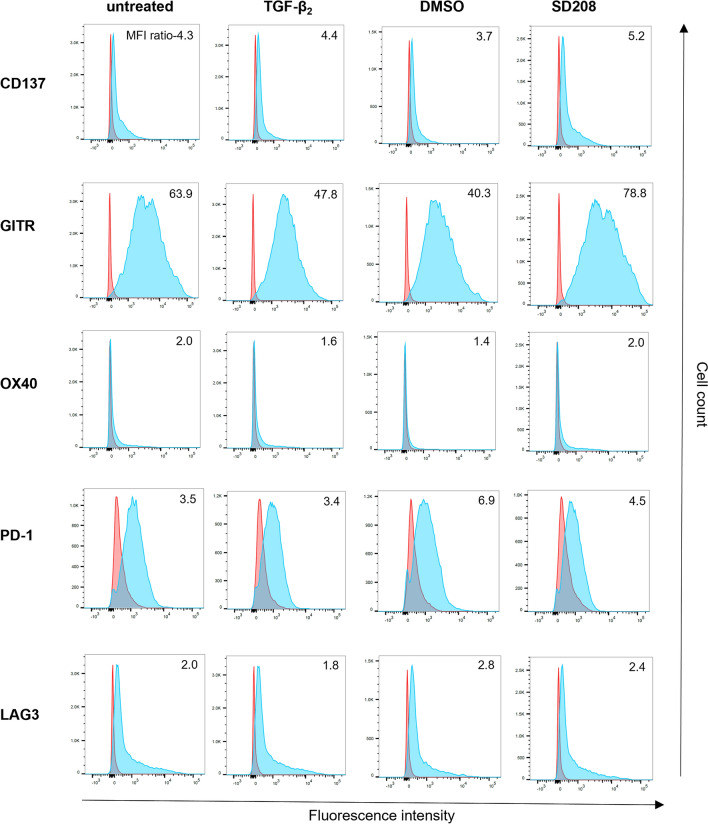
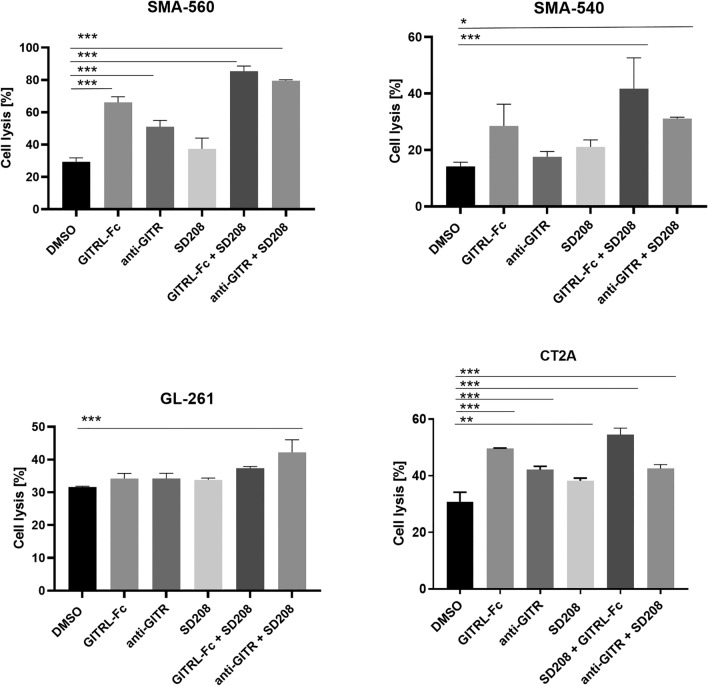
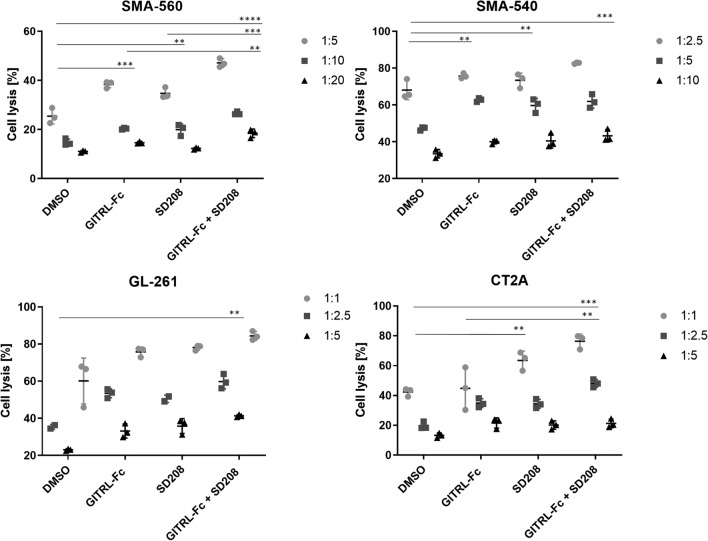
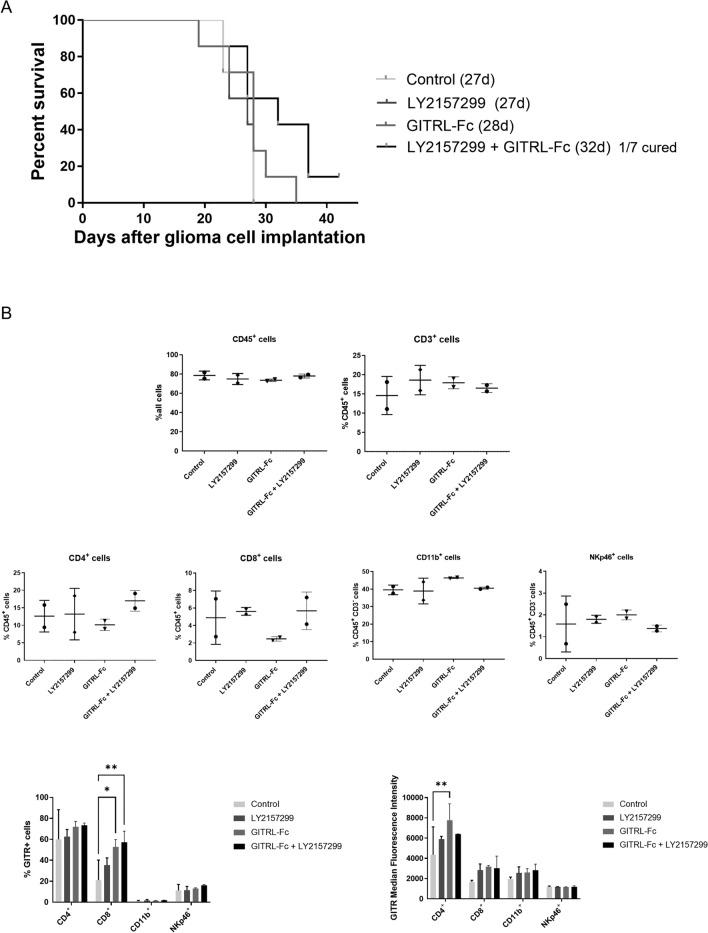
The immunosuppressive tumor microenvironment of glioblastoma limits the effectiveness of most immunotherapies. Transforming growth factor (TGF)-β signaling drives tumor progression and prevents effective T cell activity. Notably, both regulatory T cells (Tregs) and effector T cells within glioblastoma and other tumors express high levels of the immune checkpoint receptor, glucocorticoid-induced tumor necrosis factor receptor (GITR), which modulates T cell activation and function. Combining GITR agonism with TGF-β inhibition may therefore offer a compelling approach to restore anti-tumor immunity. We evaluated the combined effects of TGF-β inhibition and GITR modulation using two different GITR agonists in syngeneic mouse glioma models. GITR modulation enhanced T cell activation, as shown by increased cytokine secretion and effector T cell proliferation in vitro. Combining GITR modulation with TGF-β inhibition amplified these effects, resulting in significantly stronger immune cell-mediated tumor cell killing compared to single-agent treatments. Combination therapy improved survival of glioma-bearing mice, with a higher fraction of long-term survivors compared to monotherapy. Surviving mice resisted tumor re-challenge, indicating durable adaptive immunity. In summary, dual targeting of TGF-β and GITR pathways synergistically enhances anti-tumor immunity in glioblastoma. This novel combination strategy demonstrates clinical potential by addressing the limitations of existing immunotherapies and offering a promising approach for durable and effective glioblastoma treatment.
Keywords: GITRL; Glioblastoma; Immunosuppression; Immunotherapy; Microenvironment.
© 2025. The Author(s).
Conflict of interest statement
Declarations. Conflict of interest: MW has received research grants from Novartis, Quercis and Versameb, and honoraria for lectures or advisory board participation or consulting from Anheart, Bayer, Curevac, Medac, Neurosense, Novartis, Novocure, Orbus, Pfizer, Philogen, Roche, and Servier. PR has received honoraria for lectures or advisory board participation from Alexion, Bristol-Myers Squibb, Boehringer Ingelheim, CDR-Life, Debiopharm, Galapagos, Laminar, Midatech Pharma, Novartis, Novocure, OM Pharma, QED, Roche, Sanofi, and Servier and research support from Merck Sharp and Dohme and TME Pharma. DL, MS, JF, and AE have nothing to disclose. Ethics approval: All animal experiments were authorized by the Veterinary Office of the Canton of Zurich.
Figures


References
MeSH terms
Substances
Grants and funding
LinkOut - more resources
Full Text Sources
Medical
