


Viable E. coli O157:H7 detection based on Föster resonance energy transfer (FRET) system using FITC and TRITC conjugates as molecular probes
- PMID: 40584166
- PMCID: PMC12205779
- DOI: 10.1016/j.mex.2025.103406
Viable E. coli O157:H7 detection based on Föster resonance energy transfer (FRET) system using FITC and TRITC conjugates as molecular probes
Abstract
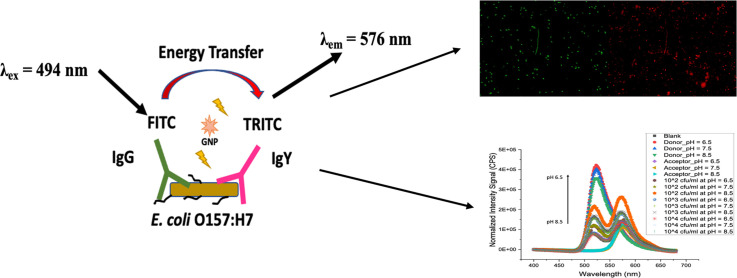
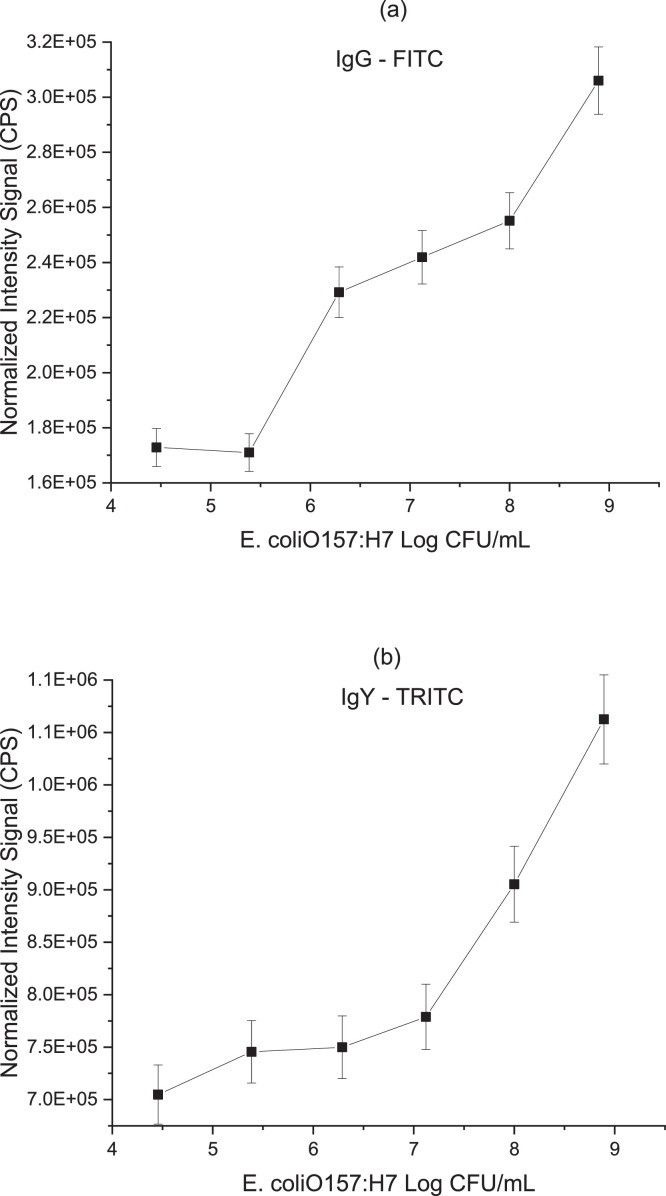
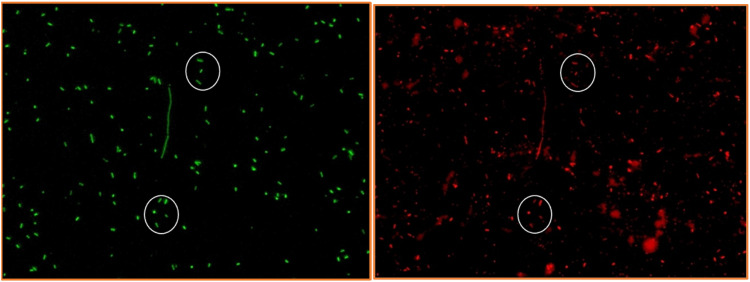
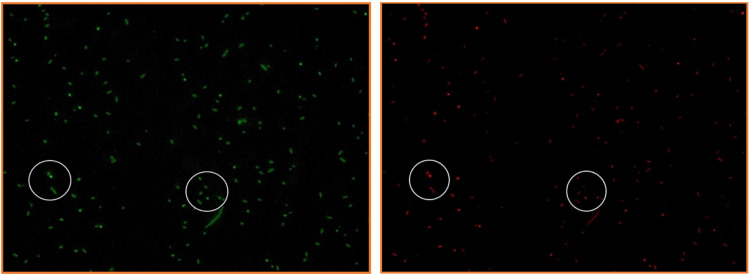
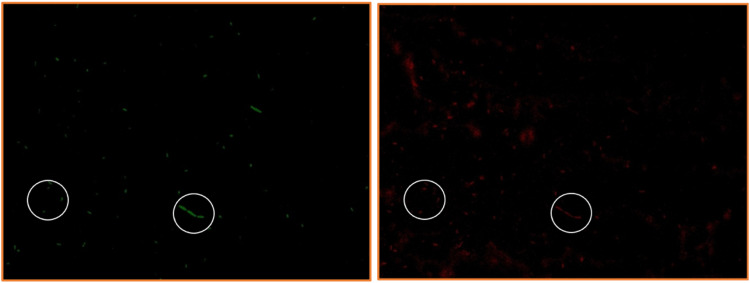
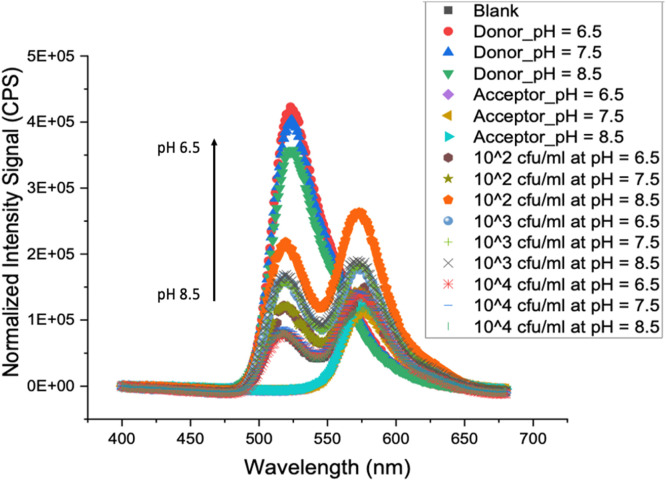
Improved rapid and sensitive biosensors for detecting foodborne pathogens in the environment are urgently needed to curtail disease outbreaks. This study aims to develop and optimize a fast and sensitive biosensor for detecting Escherichia coli O157 using an advanced Förster Resonance Energy Transfer (FRET) technology. Building on recent FRET technological advancements, we intend to measure the degree of interaction between primary antibodies labeled with fluorescein isothiocyanate (FITC) and secondary antibodies labeled with tetramethyl rhodamine isothiocyanate (TRITC) in a sandwich format. This study assesses the detection of E. coli O157:H7 at various pH levels in contaminated lettuce juice. A detection range of 102 to 104 CFU/mL after a 4-h pre-enrichment at 37 °C enabled sensitive quantification. In this FRET-based method, FITC-IgG was used as the donor and TRITC-IgY as the acceptor. Samples were stimulated at 350 nm, and emissions were measured from 500 to 680 nm, capturing a wide range of fluorescence signals. FRET microscopic fluorescence imaging was used to determine how pH affects the concentration of live E. coli O157:H7. The results showed that pH change has a considerable impact on detection. The approach illustrates FRET's effectiveness in identifying live pathogens under diverse settings, indicating its underlying relevance in pathogen identification.•FITC-labeled primary antibodies and TRITC-labeled secondary antibodies were used in a sandwich arrangement to optimize a Förster Resonance Energy Transfer (FRET) biosensor for the detection of E. coli O157:H7.•A detection range of 10² to 10⁴ CFU/mL was achieved by pre-enriching the samples for four hours at 37 °C. Emissions from 500 to 680 nm were recorded after exciting the samples at 350 nm to measure fluorescence signals. The LOD and LOQ were found to be 168 CFU/mL and 510 CFU/mL, respectively.•E. coli O157:H7 detection in contaminated lettuce juice at varying pH levels was examined using FRET microscopic fluorescence imaging, which demonstrated a notable influence of pH on pathogen identification.
Keywords: Acceptor; Antibodies; Biosensor; Detection; Donor; Fluorophore; Föster Resonance Energy Transfer (FRET); Labeling.
© 2025 The Author(s).
Conflict of interest statement
The authors declare that they have no known competing financial interests or personal relationships that could have appeared to influence the work reported in this paper.
Figures

References
-
- Clegg R.M. Förster resonance energy transfer—FRET what is it, why do it, and how it’s done. Lab. Tech. Biochem. Mol. Biol. 2009;33:1–57. doi: 10.1016/S0075-7535(08)00001-6. - DOI
LinkOut - more resources
Full Text Sources
