


Current state and future directions of basic research in rheumatoid arthritis
- PMID: 40584767
- PMCID: PMC12202279
- DOI: 10.4078/jrd.2024.0151
Current state and future directions of basic research in rheumatoid arthritis
Abstract
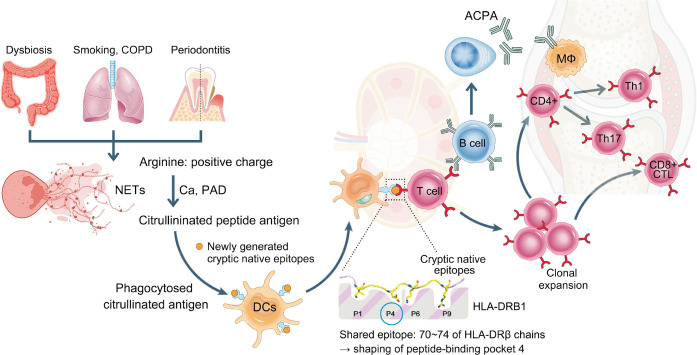
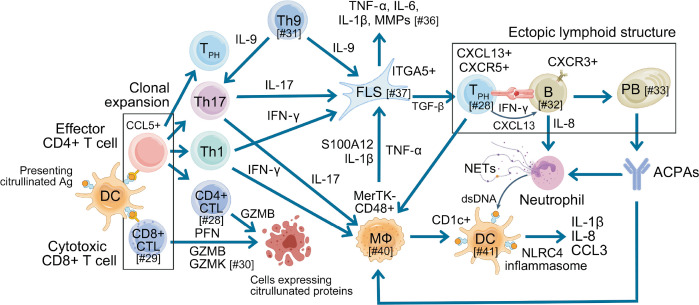
Rheumatoid arthritis (RA) is a chronic autoimmune disease characterized by synovial inflammation and joint destruction. Despite advances in biologic therapies targeting inflammatory mediators such as tumor necrosis factor (TNF)-α, interleukin (IL)-6, Janus kinase (JAK), and B cells, many patients do not respond adequately, emphasizing the need for deeper insights into RA pathogenesis. Research highlights the intricate interplay of genetic and epigenetic factors driving immune dysregulation. The breakdown of immune tolerance, often initiated in mucosal sites such as the gut, lung, and oral cavity, promotes the citrullination of antigens, leading to anti-citrullinated protein antibody production and subsequent immune activation. Single-cell and multi-omics approaches have shed light on underexplored immune cell types, such as T peripheral helper cells, CD4+/CD8+ cytotoxic T cells, and autoreactive B cells, broadening the understanding beyond traditionally studied Th17, Th1 cells, macrophages, and fibroblast-like synoviocytes. Future basic research in RA should prioritize elucidating the mechanisms behind peripheral tolerance breakdown, the pathogenesis of seronegative RA, and the molecular pathways driving refractory and recurrent disease. Moreover, leveraging multi-omics approaches to dissect disease heterogeneity will be pivotal for advancing personalized treatment strategies and improving long-term outcomes in RA patients.
Keywords: Anti-citrullinated protein antibody; Disease heterogeneity; Immune dysregulation; Rheumatoid arthritis; Synovial inflammation.
Copyright © 2025 by The Korean College of Rheumatology. All rights reserved.
Conflict of interest statement
CONFLICT OF INTEREST J.K.P. and S.W.H. have been an editorial board member since June 2020 and May 2024, respectively, but have no role in the decision to publish this article. The rest of the authors have no potential conflicts of interest relevant to this article.
Figures
References
Publication types
LinkOut - more resources
Full Text Sources
Research Materials