This is a preprint.
Decoding the mechanophysiology for inhaled onset of smallpox with model-based implications for mpox spread
- PMID: 40585170
- PMCID: PMC12204288
- DOI: 10.1101/2025.06.17.25329814
Decoding the mechanophysiology for inhaled onset of smallpox with model-based implications for mpox spread
Update in
-
Decoding the mechanophysiology for inhaled onset of smallpox with model-based implications for mpox spread.Sci Rep. 2025 Dec 14;16(1):2142. doi: 10.1038/s41598-025-31923-0. Sci Rep. 2025. PMID: 41392049 Free PMC article.
Abstract
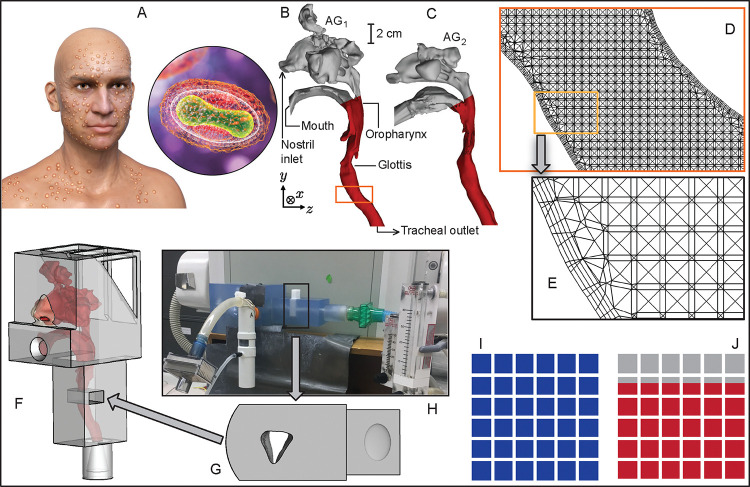
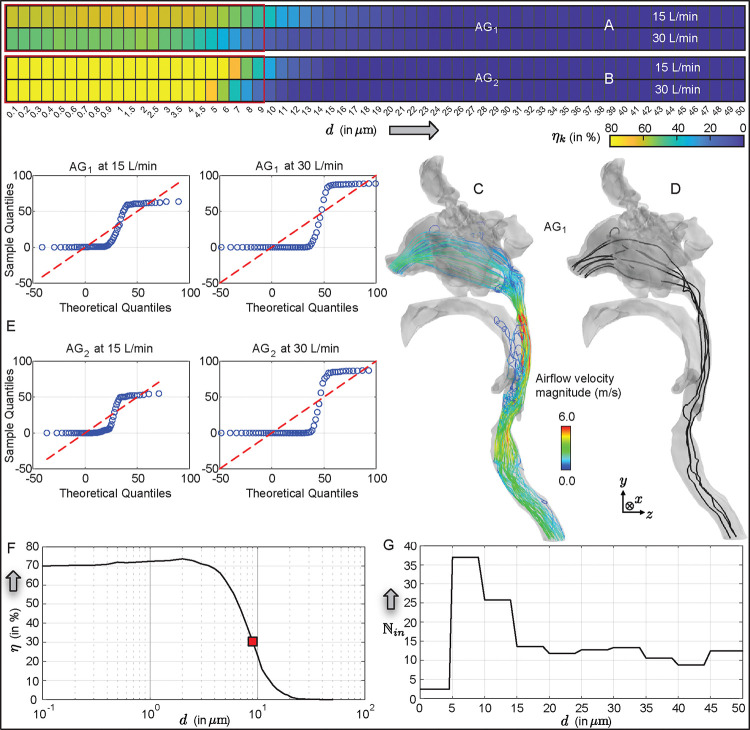
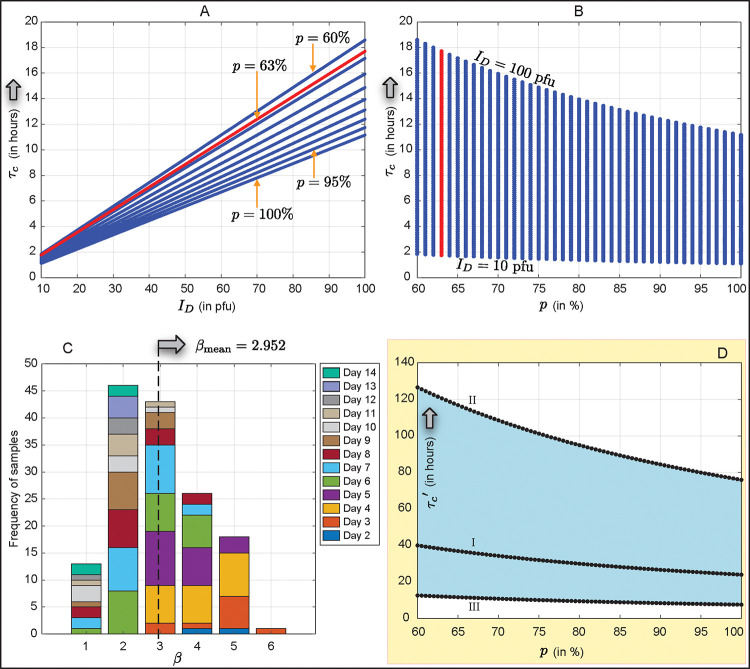
Orthopoxviruses can transmit via inhalation of virus-laden airborne particulates, with the initial infection triggered along the respiratory pathway. Understanding the flow physics of inhaled aerosols and droplets within the respiratory tract is crucial for improving transmission mitigation strategies and elucidating disease pathology. Here, we introduce an experimentally-validated physiological fluid dynamics model simulating inhaled onset of smallpox caused by the variola virus of Orthopoxvirus genus. Using high-fidelity Large Eddy Simulations, we modeled airflow and particulate motion within anatomical airway domains reconstructed from medical imaging. By integrating these simulations with viral concentration and individual immune factors, we estimated critical exposure durations for infection onset to be between 1-19 hours, aligning with existing smallpox literature. To formalize the broader applicability of this framework, we extended our analysis to mpox virus, a circulating pathogen from same genus. For mpox, the mechanophysiological computations indicate a critical exposure window of 24-40 hours; however, this can vary significantly-from as short as 8 hours to as long as 127 hours-depending on virion concentration fluctuations within inhaled particulates, assuming happenstance of viral evolution. Predictably longer than the critical exposure durations for smallpox, the mpox findings still strongly suggest the possibility for airborne inhaled transmission during prolonged proximity.
Keywords: Computational physiology; Critical exposure duration; Inhaled virus transmission; Mpox; Orthopoxviruses; Respiratory fluid dynamics; Smallpox.
Conflict of interest statement
The authors declare no competing interests.
Figures
References
-
- Fenner F. Global eradication of smallpox. Rev. Infect. Dis. 4, 916–930 (1982). - PubMed
-
- Pedersen N. & Kang L. Patient Zero: A Curious History of the World’s Worst Diseases (Workman Publishing, New York, NY 10014, USA, 2021).
-
- Moore Z. S., Seward J. F. & Lane J. M. Smallpox. The Lancet 367, 425–435 (2006). - PubMed
-
- Geddes A. M. The history of smallpox. Clin. Dermatol. 24, 152–157 (2006). - PubMed
Publication types
Grants and funding
LinkOut - more resources
Full Text Sources