


Gut microbiota causally affects ulcerative colitis by potential mediation of plasma metabolites: A Mendelian randomization study
- PMID: 40587710
- PMCID: PMC12212764
- DOI: 10.1097/MD.0000000000042791
Gut microbiota causally affects ulcerative colitis by potential mediation of plasma metabolites: A Mendelian randomization study
Abstract
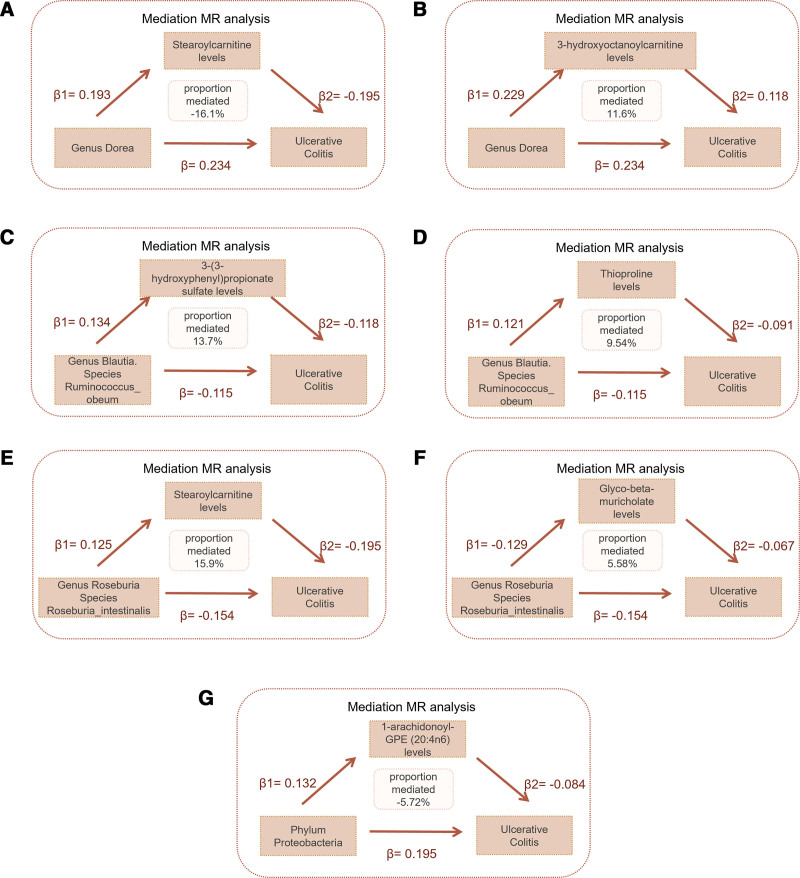
Ulcerative colitis (UC) is a chronic inflammatory bowel disease with a multifactorial etiology, including genetic, immunological, and environmental factors, as well as alterations in the gut microbiome and plasma metabolites. The interplay between these factors is complex and not fully elucidated, particularly regarding the potential mediation of metabolites in the relationship between gut microbiota and UC. We performed a Mendelian randomization (MR) study to investigate the causal associations between gut microbiota, plasma metabolites, and UC. The study utilized a two-sample MR approach to discern causal relationships among these factors. Genetic variants from genome-wide association studies served as instrumental variables in the MR analyses, conducted using the "TwoSampleMR" package in R software. We adhered to the fundamental assumptions of MR analyses, ensuring the validity of our causal inferences. Additionally, we incorporated a mediation analysis to assess the potential mediating role of plasma metabolites in the relationship between gut microbiota and UC. Our current study found the substantial relationship between certain gut microbial taxa and the development of UC. Indeed, we have identified 6 microbial taxa, including Genus Dorea, Phylum Proteobacteria, Species Streptococcus parasanguinis, Species Ruminococcus obeum, Species Roseburia intestinalis, and Order Lactobacillales, which were found to be causally related to UC. Seventy-three metabolites and metabolite ratios of were also causally associated with UC, and a mediation analysis revealed that metabolites such as stearoylcarnitine, 3-hydroxyoctanoylcarnitine, 1-arachidonoyl-GPE (20:4n6), 3-(3-hydroxyphenyl)propionate sulfate, and thioproline mediated the effects of gut microbiota on UC and hence might play roles in disease pathogenesis. This microbiota-UC-specific MR study provides evidence for causal associations between specific gut microbiota and UC, potentially mediated through plasma metabolites. The findings give new perspectives on the causal nexus of the gut microbiota and plasma metabolites with UC, highlighting potential intervention targets for the disease. These findings call for confirmation in further research, together with investigation of the underlying mechanisms.
Keywords: Mendelian randomization (MR); causal relationship; gut microbiota; plasma metabolites; ulcerative colitis (UC).
Copyright © 2025 the Author(s). Published by Wolters Kluwer Health, Inc.
Conflict of interest statement
The authors have no conflicts of interest to disclose.
Figures



References
MeSH terms
LinkOut - more resources
Full Text Sources
Medical
Miscellaneous
