


Alzheimer's disease polygenic risk's association with all-cause dementia through the plasma metabolome in the UK Biobank study
- PMID: 40588577
- PMCID: PMC12638481
- DOI: 10.1007/s11357-025-01724-4
Alzheimer's disease polygenic risk's association with all-cause dementia through the plasma metabolome in the UK Biobank study
Abstract
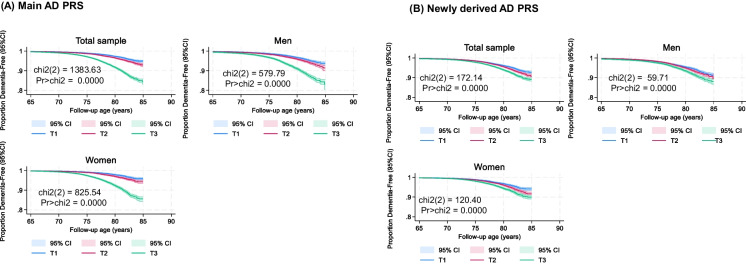
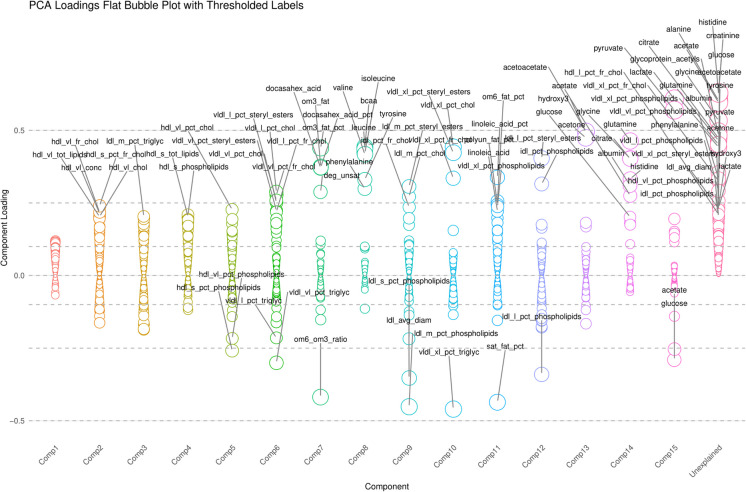
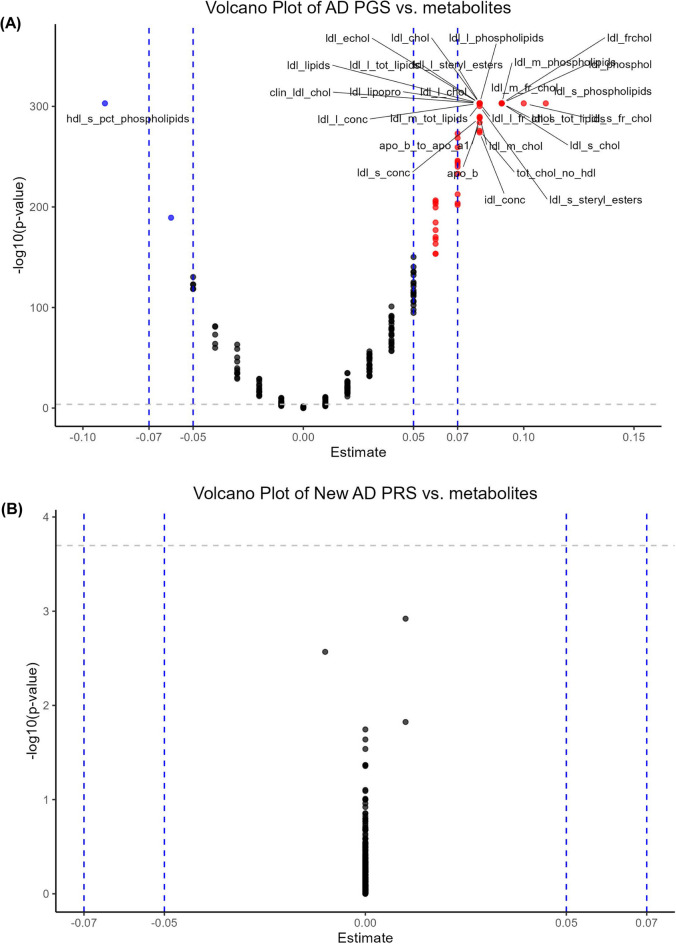
Dementia, with Alzheimer's Disease (AD) accounting for 60-70% of its occurrences, is a multifactorial disorder marked by cognitive and functional decline. Polygenic risk scores (PRS) stratify genetic risk for complex diseases, including AD. Integrating PRS with metabolomics offers a pathway to better understand AD etiology and identify biomarkers for early detection. We explored the association between AD PRS, metabolomics, and dementia risk using data from the UK Biobank. The analysis emphasizes sex-specific associations and the mediating role of metabolites between AD PRS and dementia risk. The study utilized data from 205,219 UK Biobank participants aged ≥ 50 years at baseline. Dementia outcomes were derived using ICD-10 codes. AD PRS were computed using genome-wide association study data, while metabolomic data included 249 biomarkers measured via Nuclear Magnetic Resonance. Time-to-event analyses (Cox proportional hazards models) and generalized structural equation modeling assessed associations and mediation effects, adjusting for age, sex, and genetic principal components. Higher AD PRS was associated with increased risks of all-cause dementia (HR: 1.75, 95% CI: 1.70-1.79, P < 0.001) and AD (HR: 2.02, 95% CI: 1.95-2.09, P < 0.001), with stronger effects in women for both outcomes when considering the main AD PRS which was related to APOE4 status. Metabolomic analyses identified lipid-related markers as key mediators. LDL phospholipid content was the metabolite marker with the strongest positive relationship with AD genetic risk (effect size, b = + 0.11), while HDL phospholipids percentage showed a similarly strong inverse association (effect size b = -0.09). No metabolomic markers were significantly associated with another version of AD PRS that was less correlated with APOE4 status. Mediation analyses applied to the main AD PRS revealed modest effects, with LDL-related metabolomic components partially mediating the effect of genetic risk on dementia incidence, through a protective type of mediation (< -2%). Nevertheless, most genetic risk operated independently of metabolites. AD PRS is significantly associated with dementia risk, with sex differences and metabolomic pathways providing further insights. Lipid metabolism, particularly LDL-centric measures, emerged as potential mediators. This integrative approach highlights the utility of combining genetic and metabolomic data to identify biomarkers and potential targets for early intervention in AD and dementia.
Keywords: Alzheimer’s disease; Dementia; Lipid metabolism; Metabolomics; Polygenic risk scores; UK Biobank.
© 2025. This is a U.S. Government work and not under copyright protection in the US; foreign copyright protection may apply.
Conflict of interest statement
Declarations. Conflict of interest: None declared. Consent statement: All human subjects provided informed consent. Ethics statement: The studies involving human participants received approval from the UK Biobank's Institutional Review Boards, specifically the North West Multi-centre Research Ethics Committee for the United Kingdom, the National Information Governance Board for Health and Social Care for England and Wales, and the Community Health Index Advisory Group for Scotland ( https://www.ukbiobank.ac.uk/wp-content/uploads/2011/05/EGF20082.pdf ). All participants provided informed consent for the study through a touch-screen interface, which necessitated acceptance to each individual statement on the consent form and the participant's signature on an electronic pad ( http://www.ukbiobank.ac.uk/wp-content/uploads/2011/06/Consent_form.pdf ). Written informed permission for participation was not mandated for this study in compliance with National Legislation and Institutional Requirements.
Figures

References
-
- Livingston G, Huntley J, Liu KY, Costafreda SG, Selbaek G, Alladi S, et al. Dementia prevention, intervention, and care: 2024 report of the lancet standing commission. Lancet. 2024;404(10452):572–628. - PubMed
MeSH terms
Substances
Grants and funding
LinkOut - more resources
Full Text Sources
Medical
