


Characteristics and predictive model for diffuse large B-cell lymphoma with early chemoimmunotherapy failure
- PMID: 40589747
- PMCID: PMC12206878
- DOI: 10.3389/fimmu.2025.1553850
Characteristics and predictive model for diffuse large B-cell lymphoma with early chemoimmunotherapy failure
Abstract
Introduction: The outcomes of refractory or relapsed diffuse large B-cell lymphoma are generally poor, especially those relapsed or progressed within 12 months from diagnosis named as early chemoimmunotherapy failure (ECF), with a 2-year OS of 24.7%. Due to the dismal outcome, early recognition of ECF and developing targeted innovative treatments to improve patient prognosis are urgent.
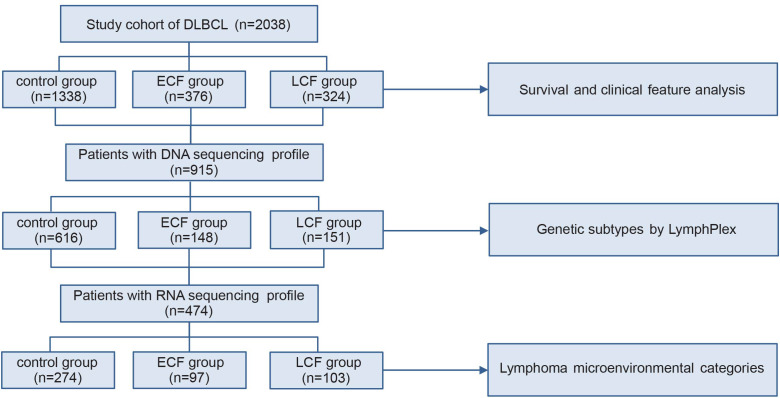
Methods: This study recruited 2038 newly diagnosed DLBCL patients treated with R-CHOP/RminiCHOP or R-CHOP-based immunochemotherapy in Ruijin hospital and 411 hospital from December 1997 to December 2020.
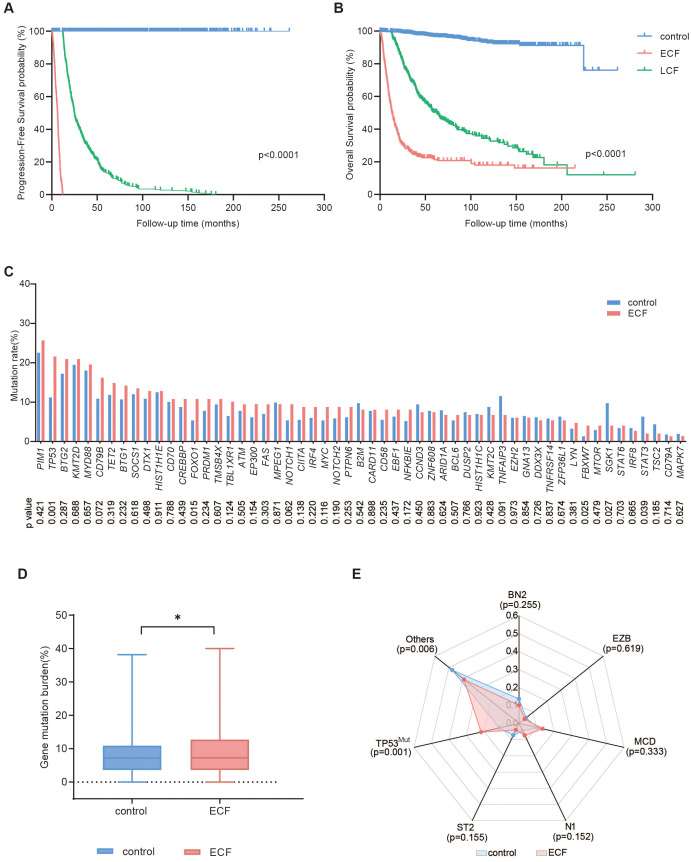
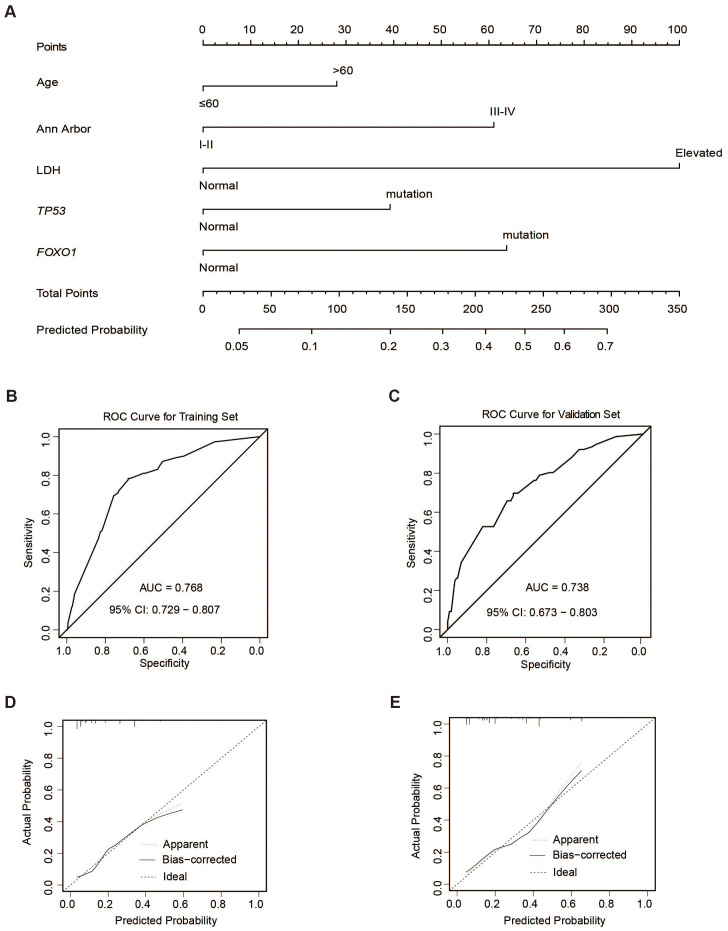
Results: Compared to the control group, ECF patients were significantly associated with elderly age, advanced Ann Arbor stage, elevated serum LDH, poor performance status, multiple extranodal involvements, double expressor lymphoma (DEL), and non-GCB subtype, as well as high frequencies of TP53, FOXO1 and FBXW7 mutations. Through multivariate analysis, elderly age, advanced stage, elevated serum LDH, DEL, and mutations of TP53 or FOXO1 were independent predictors of ECF.
Discussion: Based on these predictors, a nomogram of ECF was established, and the straining cohort of our Chinese patients as well as the external cohort from Western countries showed a good predictive power of the ECF model, indicating the efficiency of our ECF predicting model, regardless of patients' race. Our ECF model allows clinicians to early recognize ECF patients, to optimize the therapeutic strategies and to improve the outcome of those chemo-resistant patients.
Keywords: CAR- T cells; DLBCL - diffuse large B cell lymphoma; RCHOP-like regimen; chemo-resistant; early chemoimmunotherapy failure; nomogram.
Copyright © 2025 Dong, Shi, Wu, Zhao, Fu, Xu, Cheng, Bousquet, Zhao and Wang.
Conflict of interest statement
The authors declare that the research was conducted in the absence of any commercial or financial relationships that could be construed as a potential conflict of interest.
Figures
References
-
- Coiffier B, Thieblemont C, Van Den Neste E, Lepeu G, Plantier I, Castaigne S, et al. Long-term outcome of patients in the LNH-98.5 trial, the first randomized study comparing rituximab-CHOP to standard CHOP chemotherapy in DLBCL patients: a study by the Groupe d’Etudes des Lymphomes de l’Adulte. Blood J Am Soc Hematol. (2010) 116:2040–5. doi: 10.1182/blood-2010-03-276246 - DOI - PMC - PubMed
-
- Harrysson S, Eloranta S, Ekberg S, Enblad G, Jerkeman M, Wahlin BE, et al. Incidence of relapsed/refractory diffuse large B-cell lymphoma (DLBCL) including CNS relapse in a population-based cohort of 4243 patients in Sweden. Blood Cancer J. (2021) 11:9. doi: 10.1182/blood-2019-122014 - DOI - PMC - PubMed
MeSH terms
Substances
LinkOut - more resources
Full Text Sources
Research Materials
Miscellaneous
