


Molecular Prevalence and Identification of Zoonotic Plasmodium spp., Including Plasmodium knowlesi, Plasmodium cynomolgi, and Plasmodium inui, in Long-Tailed Macaques (Macaca fascicularis) of Southern Thailand
- PMID: 40590022
- PMCID: PMC12208761
- DOI: 10.1155/vmi/3024193
Molecular Prevalence and Identification of Zoonotic Plasmodium spp., Including Plasmodium knowlesi, Plasmodium cynomolgi, and Plasmodium inui, in Long-Tailed Macaques (Macaca fascicularis) of Southern Thailand
Abstract
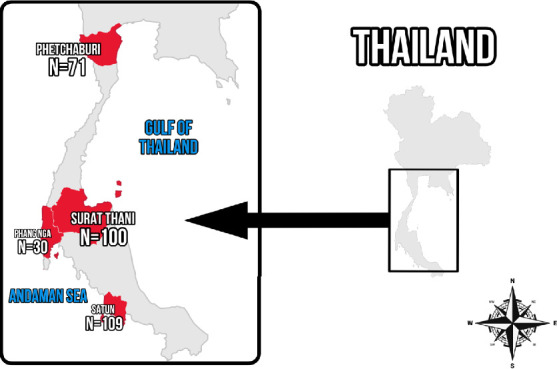
Zoonotic malaria, caused by simian Plasmodium spp., poses a major public health challenge in Southeast Asia, including Thailand, where long-tailed macaques (Macaca fascicularis) serve as natural reservoirs. This study investigated the molecular prevalence and species identification of zoonotic simian Plasmodium spp. in macaques from four provinces in Southern Thailand: Phetchaburi, Satun, Phang Nga, and Surat Thani. A total of 310 blood samples were collected between May 2023 and June 2024 and analyzed using nested and seminested polymerase chain reaction (PCR) techniques targeting the 18S rRNA gene. Sequencing analyses confirmed the presence of zoonotic Plasmodium species. Overall, 11.3% (35/310; 95% CI: 7.9-15.3) of the macaques tested positive, with Plasmodium inui being the most prevalent species at 9.4% (29/310), followed by Plasmodium knowlesi and Plasmodium cynomolgi, each at 0.9% (3/310). The highest prevalence was observed in Surat Thani at 18% (18/100). These findings underscore the zoonotic potential of simian malaria and its geographic distribution in Southern Thailand, which may be associated with the significant increase in macaque populations and their expanding habitat overlap with human communities. In conclusion, this study highlights the major role of long-tailed macaques as reservoirs for zoonotic Plasmodium spp. Enhanced surveillance and community awareness are crucial for mitigating cross-species transmission and improving malaria control.
Keywords: Macaca fascicularis; Plasmodium spp.; Thailand; long-tailed macaque; malaria.
Copyright © 2025 Thanawat Hmaidee et al. Veterinary Medicine International published by John Wiley & Sons Ltd.
Conflict of interest statement
The authors declare no conflicts of interest.
Figures
References
-
- WHO. Malaria. 2023. https://www.who.int/health-topics/malaria#tab=tab_1 .
-
- Bloland P. B., Williams H. A. Malaria Control During Mass Population Movements and Natural Disasters . National Academies Press; 2002. - PubMed
-
- World Health Organization. Malaria . World Health Organization; 2024.
LinkOut - more resources
Full Text Sources
Miscellaneous
