


Foliar application of yeast extract mitigates water deficit stress and elicits hypericin and phenolic production in Hypericum perforatum L
- PMID: 40593013
- PMCID: PMC12217363
- DOI: 10.1038/s41598-025-06013-w
Foliar application of yeast extract mitigates water deficit stress and elicits hypericin and phenolic production in Hypericum perforatum L
Abstract
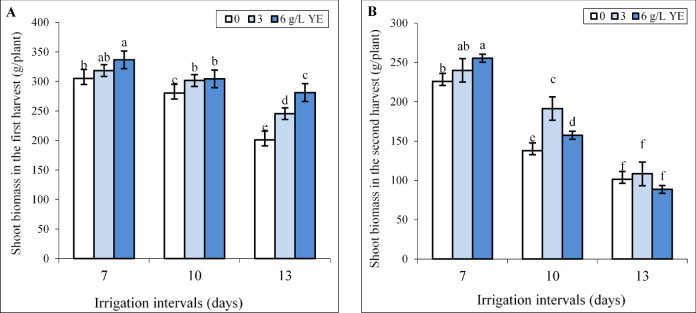
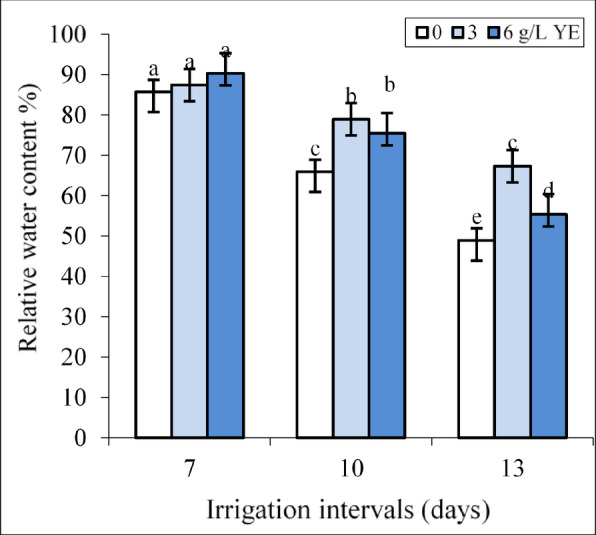
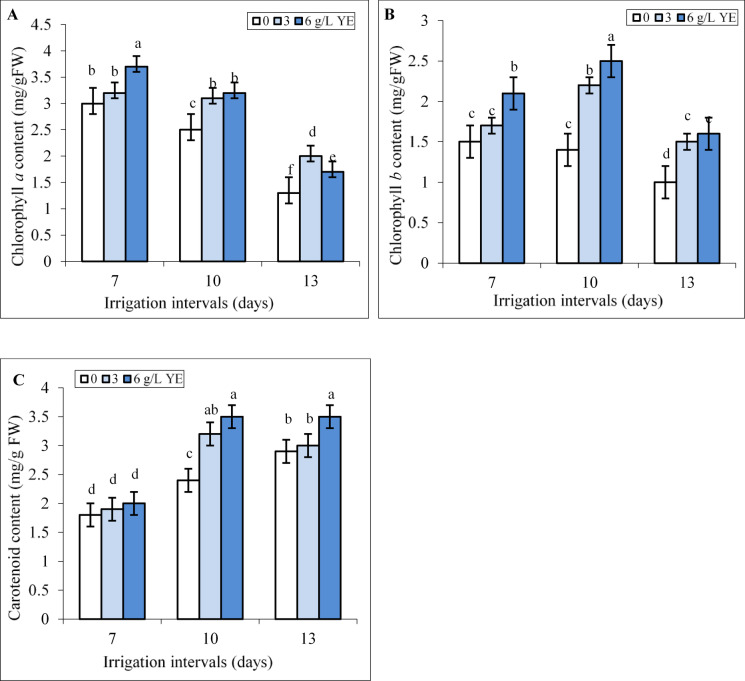
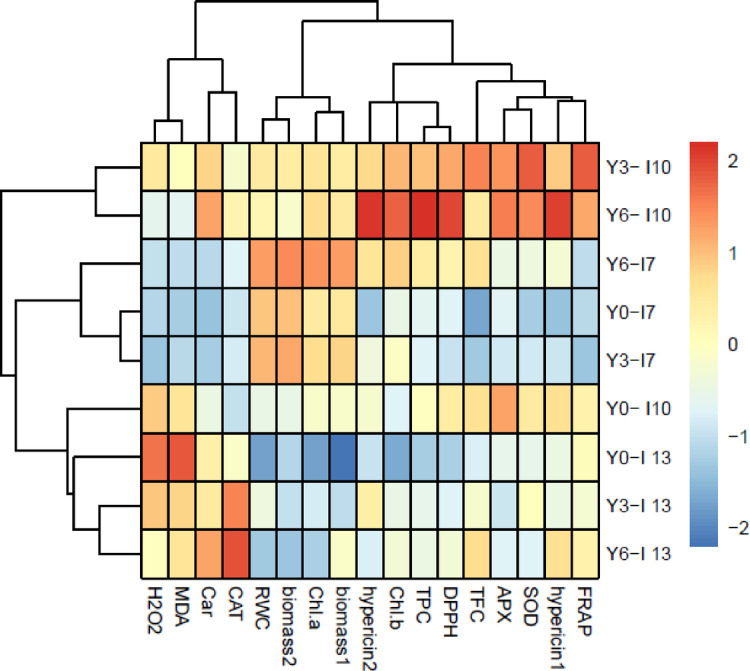
Yeast extract has emerged as a bio-elicitor capable of modulating secondary metabolism and stress tolerance in plants, but its impact on St John's Wort (Hypericum perforatum L.) remains unexplored. Therefore, the interactive effects of yeast extract (0, 3, and 6 g L-1) and irrigation intervals (7, 10, and 13 days) on hypericin and phenolic production in this medicinal herb were investigated in a field experiment. The prolonged irrigation intervals decreased biomass during both seasons. Hypericin content peaked under the 10-day irrigation interval but declined in the 13-day irrigation interval. Foliar spraying of yeast extract improved biomass, chlorophyll a, b, carotenoids, relative water content, and hypericin concentration across all water regimes. Yeast extract application reduced hydrogen peroxide and malondialdehyde contents in water deficit-subjected plants due to increased activity of superoxide dismutase and catalase, and elevated levels of total phenol and flavonoid contents in the leaves. The highest contents of hypericin and phenolics were recorded with applying 6 g L-1 yeast extract under the 10-day irrigation interval, corresponding with the strongest 2,2-diphenylpicrylhydrazyl scavenging activity and ferric-reducing power in the leaves. These findings suggest that yeast extract spraying might be a promising approach for enhancing the productivity and quality of medicinal plants under water deficit.
Keywords: Antioxidant enzymes; DPPH; Drought stress; FRAP; Phenolics; St john’s wort.
© 2025. The Author(s).
Conflict of interest statement
Declarations. Competing interests: The authors declare no competing interests. Ethics approval and consent to participate: Not applicable. This manuscript does not involve researching about humans or animals. Permission to cultivation in farm of Goldaru company: We acquired permission to conduct the study in the research farm of Goldaru Company at Kelishad, Iran. Permission to collect samples: The permission to sowing Hypericum perforatum L. was acquired from Agricultural and Natural Resources Ministry of Iran. This plant is one of the medicinal plants that is commonly allowed to be cultivated in Iran and is available and known to most people.Therefore, a voucher specimen of this material has been not deposited in a publicly available herbarium. We thank from Dr. N. Kharazian from Shahrekord University that confirmed the identification of the plants. Statement on experimental research and field studies on plants: The plants Hypericum perforatum L sampled comply with relevant institutional, national, and international guidelines and domestic legislation of Iran.
Figures


References
-
- Kapoor, S. et al. The flower of Hypericum perforatum L.: A traditional source of bioactives for new food and pharmaceutical applications. Biochem. Sys Ecol.110, 104702 (2023). - DOI
MeSH terms
Substances
LinkOut - more resources
Full Text Sources
Miscellaneous
