


Hydration assessment and physical performance of mountain bike cyclists in competition in a hot environment
- PMID: 40594074
- PMCID: PMC12219091
- DOI: 10.1038/s41598-025-05005-0
Hydration assessment and physical performance of mountain bike cyclists in competition in a hot environment
Abstract
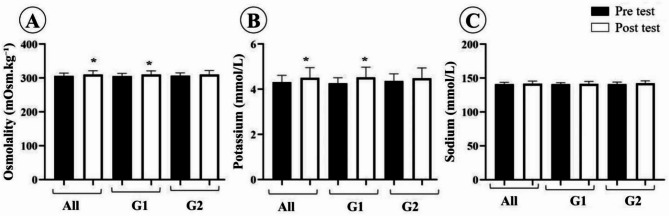
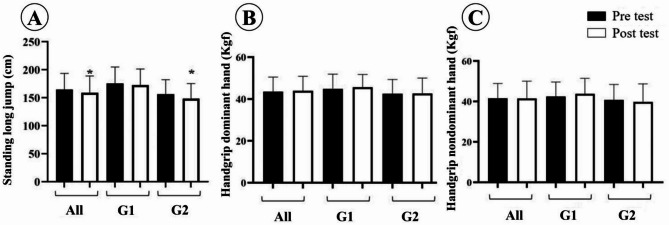
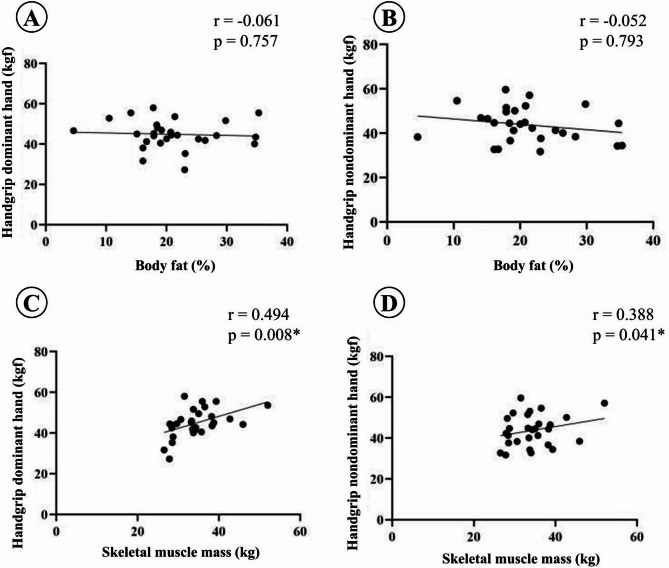
Hydration plays a fundamental role in the physical performance of athletes, especially in endurance sports such as mountain biking. To assess the hydration status and physical performance of mountain bike cyclists during a competition in a hot environment. This is a cross-sectional study, part of a broader research project, conducted during a mountain bike competition in a hot environment in the city of Piripiri, Piauí, Brazil. Cyclists were weighed before and after the competition, and blood samples were collected to analyze sodium, potassium, and plasma osmolality concentrations. Body composition was assessed using bioimpedance analysis, and physical performance tests were conducted, including a horizontal jump test to assess lower limb strength and a handgrip strength test for upper limb evaluation. The competition organizers recorded race duration. Results were presented as means and standard deviations. Repeated measures ANOVA and Pearson's correlation test were used for statistical analysis, with a significance level of 5% and a 95% confidence interval. A total of 66 male athletes were divided into two groups: Group 1 (G1), young athletes (18 to 34 years old), with 28 individuals, and Group 2 (G2), master athletes (35 to 59 years old), with 37 individuals. There was a significant decrease in body mass between the pre- and post-competition moments (79.15 ± 14.65 kg; 76.15 ± 14.36 kg) (p = 0.000). The cyclists experienced significant dehydration, starting the race already in a dehydrated state, which intensified throughout the competition (p = 0.008). G2 showed a reduction in lower limb strength (p = 0.004) and a negative correlation between dehydration and the horizontal jump test (r = - 0.396; p = 0.015), as well as between dehydration and handgrip strength in the dominant hand (r = - 0.387; p = 0.018) and non-dominant hand (r = - 0.386; p = 0.019) with race time. Additionally, a positive correlation was observed between skeletal muscle mass and handgrip strength in both G1 and G2. Cyclists started the race already in a dehydrated state. Master cyclists demonstrated a negative correlation between dehydration and physical performance. Athletes with greater muscle mass exhibited higher upper limb strength, which negatively correlated with race time among master athletes.
Keywords: Athletic performance; Dehydration; Master athletes; Mountain bike; Thermoregulation.
© 2025. The Author(s).
Conflict of interest statement
Declarations. Competing interests: The authors declare no competing interests.
Figures




References
-
- Cycling South Africa. https://www.cyclingsa.com. Accessed 19 Feb 2024.5.30 (2020).
MeSH terms
LinkOut - more resources
Full Text Sources
