


Glucose homeostasis and cognitive functions in schizophrenia: a systematic review and meta-analysis
- PMID: 40594261
- PMCID: PMC12215534
- DOI: 10.1038/s41598-025-06225-0
Glucose homeostasis and cognitive functions in schizophrenia: a systematic review and meta-analysis
Abstract
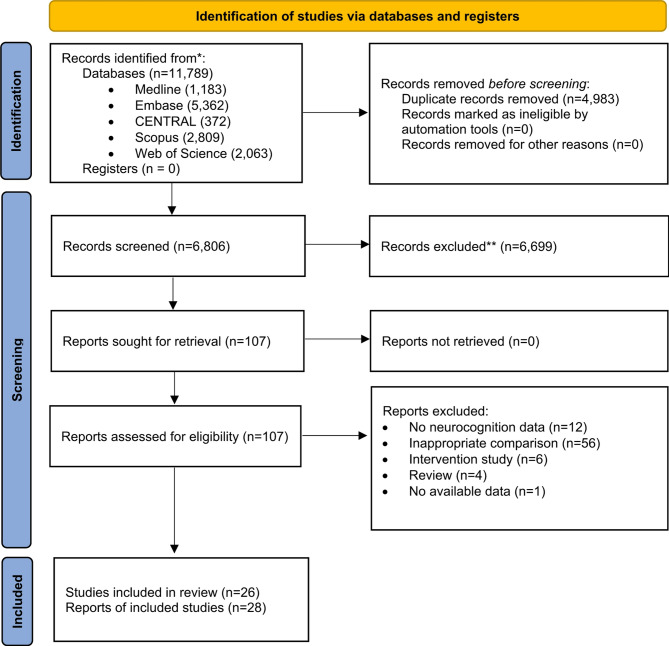
Schizophrenia is a lifelong mental disorder associated with cognitive dysfunctions. Comorbid metabolic dysregulations, such as diabetes and insulin resistance, may further deteriorate cognitive functions. It is therefore essential to investigate the effects of these metabolic disturbances on cognition in this population. A systematic review and meta-analysis following PRISMA guidelines was conducted using data from five databases: Medline, Embase, CENTRAL, Scopus, and Web of science. Of the 26 studies included, 9 were meta-analyzed with random effects model. The search was completed on November 23, 2023 and updated on April 2, 2025. We examined the cognitive functions of schizophrenia patients with and without diabetes or insulin resistance, using standardized mean differences (SMD) or mean differences (MD) as outcomes. The review section provides an overview of the literature on the relationship between glucose homeostasis and cognitive functions. The risk of bias was assessed using the QUIPS tool. There is a clear trend suggesting that diabetes exacerbates cognitive dysfunction in schizophrenia (global cognition: SMD=-0.26; P = 0.1087; 95% CI, -0.59 to 0.08), particularly in domains such as reasoning (SMD=-0.40; P = 0.0109, 95% CI -0.58 to -0.22) and processing speed (SMD=-0.43; P = 0.0005, 95% CI -0.52 to -0.35). Conflicting results were observed in studies on insulin resistance (global cognition: SMD=-0.12; P = 0.5890; 95% CI -0.91 to 0.68). Our findings suggest that glucose metabolism dysregulations might worsen cognitive dysfunctions in schizophrenia. However, further research is needed with larger samples and less heterogeneous studies to investigate if the effect is statistically significant. Addressing these metabolic issues could help improve cognitive and functional outcomes in schizophrenia patients.
© 2025. The Author(s).
Conflict of interest statement
Declarations. Competing interests: The authors declare no competing interests.
Figures


References
-
- Tandon, R. et al. The schizophrenia syndrome, circa 2024: what we know and how that informs its nature. Schizophr Res.264, 1–28. 10.1016/j.schres.2023.11.015 (2024). - PubMed
-
- Correll, C. U., Xiang, P., Sarikonda, K., Bhagvandas, N. & Gitlin, M. The economic impact of cognitive impairment and negative symptoms in schizophrenia: A targeted literature review with a focus on outcomes relevant to health care Decision-Makers in the united States. J. Clin. Psychiatry. 85, 24r15316. 10.4088/JCP.24r15316 (2024). - PubMed
Publication types
MeSH terms
Substances
LinkOut - more resources
Full Text Sources
Medical
Miscellaneous
