


Exploring temperature-dependent transcriptomic adaptations in Yersinia pestis using direct cDNA sequencing by Oxford Nanopore Technologies
- PMID: 40594459
- PMCID: PMC12218796
- DOI: 10.1038/s41598-025-05662-1
Exploring temperature-dependent transcriptomic adaptations in Yersinia pestis using direct cDNA sequencing by Oxford Nanopore Technologies
Abstract
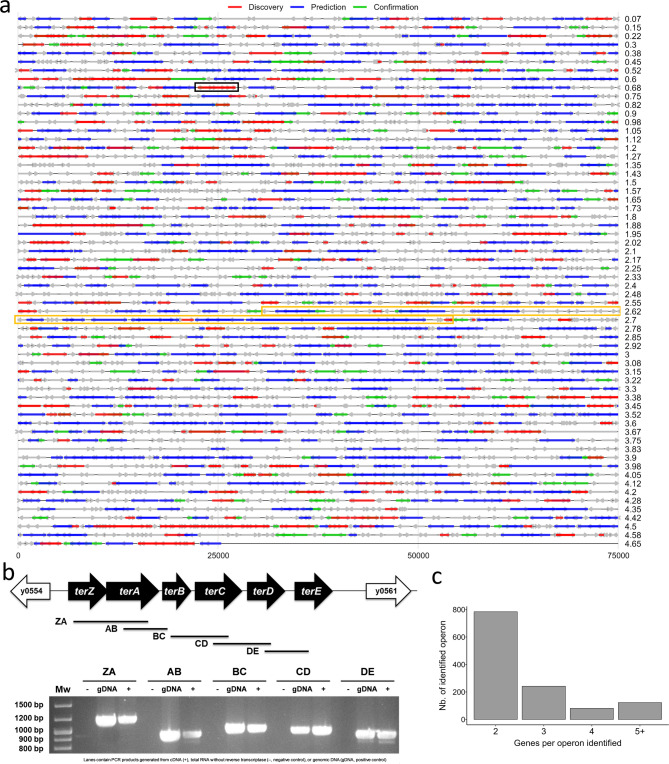
Transcriptomics is key to understanding how bacterial pathogens adapt and cause disease, but remains constrained by cost, technical, and biosafety issues, especially for highly virulent and/or regulated pathogens. Here, we present a streamlined and cost-effective RNA-Seq workflow using Oxford Nanopore Technologies for direct cDNA sequencing, suitable for complete in-house implementation. This method avoids PCR bias, enables multiplexing, and includes built-in quality controls and alignment benchmarking. Applied to Yersinia pestis (the causative agent of plague), the workflow produced an experimentally validated operon map and revealed novel transcriptional units, including within the pathogenicity island. Transcriptomic profiling at 21 °C and 37 °C, modeling the flea and mammalian environments, highlighted temperature-driven metabolic shifts, notably the upregulation of sulfur metabolism and the dmsABCD operon. These findings provide insights into Y. pestis adaptation and illustrate how long-read RNA-Seq can support operon discovery, genome annotation, and gene regulation studies in high-risk or understudied bacterial pathogens.
Keywords: Yersinia pestis; Operons mapping; Oxford Nanopore Technology; RNA-Seq; Temperature adaptation.
© 2025. The Author(s).
Conflict of interest statement
Competing interests: The authors declare no competing interests.
Figures



References
-
- Hu, T., Chitnis, N., Monos, D. & Dinh, A. Next-generation sequencing technologies: An overview. Hum. Immunol.82, 801–811 (2021). - PubMed
MeSH terms
Substances
Grants and funding
LinkOut - more resources
Full Text Sources
