


Molecular identification and diversity of gastrointestinal apicomplexan protozoa in pigs in the Republic of Korea
- PMID: 40594808
- PMCID: PMC12216780
- DOI: 10.1038/s41598-025-08200-1
Molecular identification and diversity of gastrointestinal apicomplexan protozoa in pigs in the Republic of Korea
Abstract
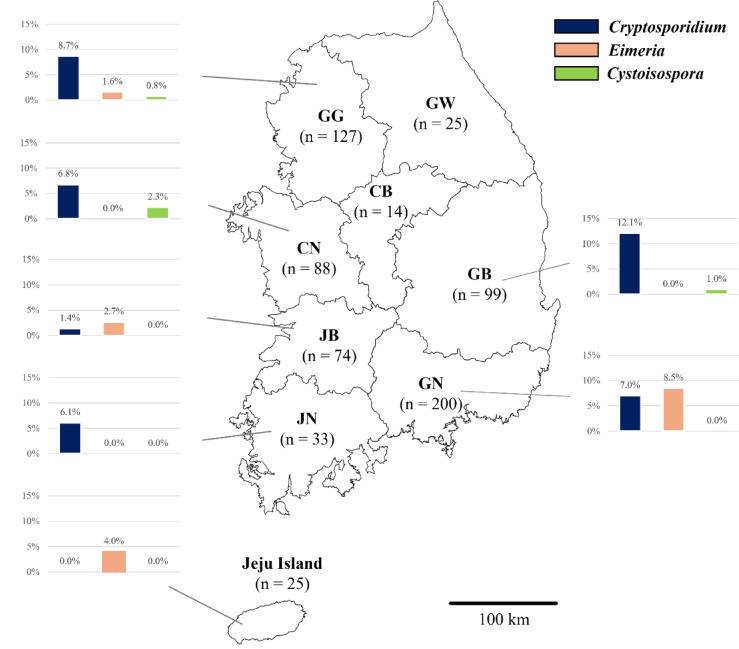
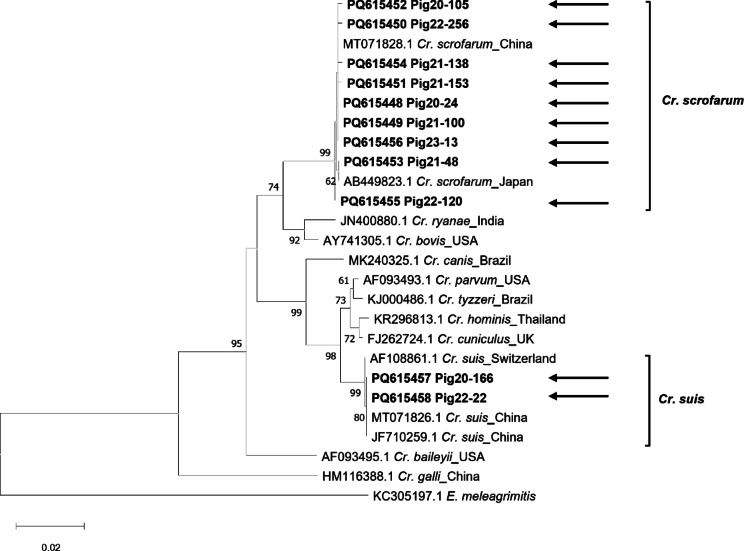
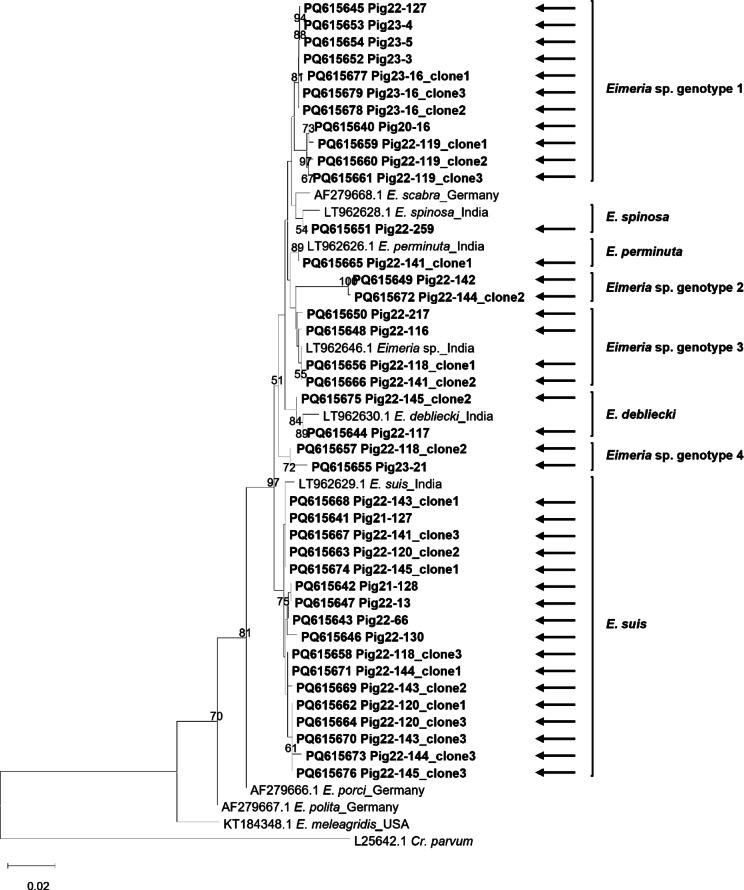
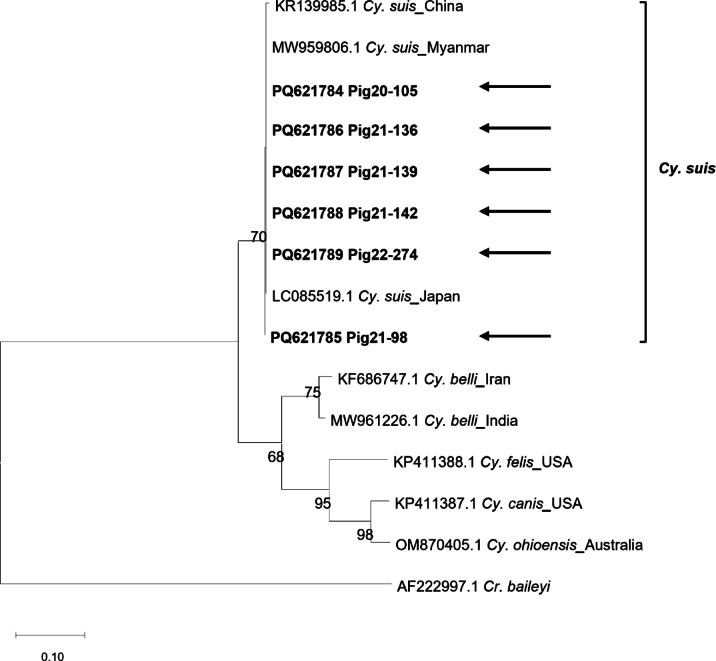
The genera Cryptosporidium, Eimeria, and Cystoisospora cause gastrointestinal diseases in pigs that can lead to economic losses in the pig industry. Despite their importance, the molecular epidemiology and species diversity of these parasites remain poorly understood. Therefore, this study aimed to investigate the distribution and diversity of these genera Cryptosporidium, Eimeria, and Cystoisospora in pigs in Korea and to evaluate their potential influencing factors, including geographical location and season. A total of 700 fecal samples were collected from 103 pig farms between May 2020 and February 2023. PCR identified the genera Cryptosporidium, Eimeria, and Cystoisospora in 49 (7.0%), 24 (3.4%), and 6 (0.9%) samples, respectively. At the farm level, 43 (41.8%) out of 103 farms had at least one pig infected with these parasites. According to the region, Eimeria spp. showed the highest prevalence in Gyeongsangnam-do (8.5%; 17/200) with a statistically significant difference. Seasonal analysis revealed a statistically significant difference for Eimeria spp. with higher prevalence in summer (6.4%; 15/233) and winter (4.7%; 7/149). Phylogenetic analyses revealed Cryptosporidium (Cr.) scrofarum and Cr. suis, and confirmed the presence of Eimeria (E.) debliecki, E. perminuta, E. spinosa, and E. suis, as well as Eimeria sp. genotype 1-4. All Cystoisospora (Cy.) positive samples were confirmed as Cy. suis. This study examined the nationwide distribution of the genera Cryptosporidium, Eimeria, and Cystoisospora in pigs in Korea, providing molecular evidence of these parasites. The results improve our understanding of the distribution and diversity of apicomplexan protozoa in pigs in Korea. Notably, Cr. scrofarum and Cr. suis identified in this study are known to infect humans, indicating potential zoonotic risks. These findings highlight the importance of continued surveillance to mitigate economic losses on the pig industry and to address public health concerns.
Keywords: Cryptosporidium; Cystoisospora; Eimeria; Apicomplexan protozoa; Pig; Prevalence.
© 2025. The Author(s).
Conflict of interest statement
Declarations. Competing interest: The authors declare no competing interests. Ethical approval and consent to participate: Ethical review and approval were waived for this study, due to the study focused on post-slaughter samples.
Figures
References
-
- Worliczek, H. L., Gerner, W., Joachim, A., Mundt, H. & Saalmüller, A. Porcine coccidiosis - Investigations on the cellular immune response against Isospora suis. Parasitol. Res.105, 151–156 (2009). - PubMed
-
- Matsubayashi, M. et al. Genetic identification of Entamoeba polecki subtype 3 from pigs in Japan and characterisation of its pathogenic role in ulcerative colitis. Infect. Genet. Evol.36, 8–14 (2015). - PubMed
MeSH terms
Grants and funding
LinkOut - more resources
Full Text Sources
Miscellaneous
