


Alterations in static and dynamic functional network connectivity in subcortical vascular cognitive impairment
- PMID: 40595059
- PMCID: PMC12218908
- DOI: 10.1038/s41598-025-06640-3
Alterations in static and dynamic functional network connectivity in subcortical vascular cognitive impairment
Abstract
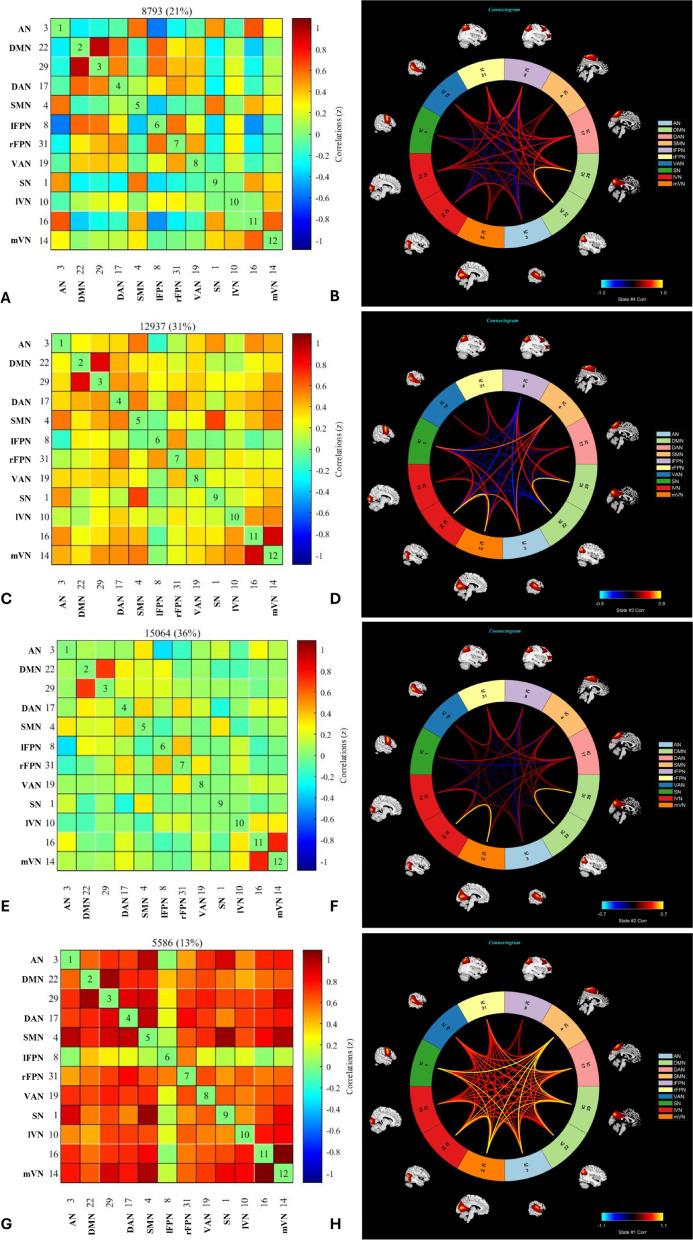
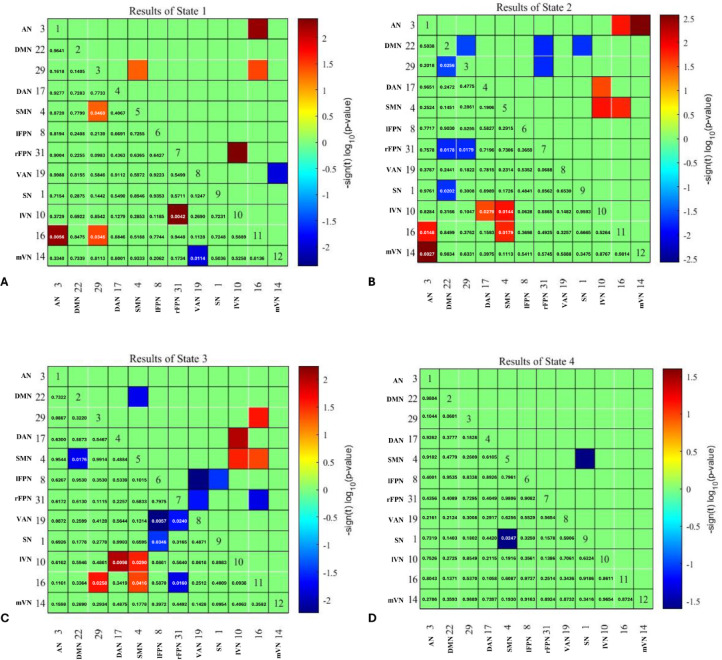
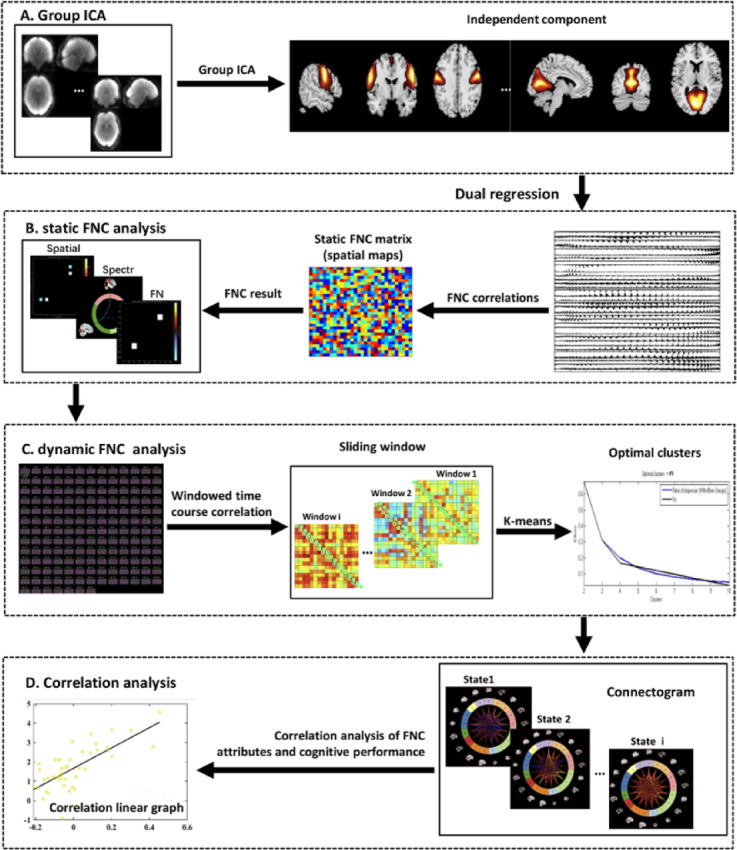
The current study integrated static (sFNC) and dynamic (dFNC) functional network connectivity to investigate the neurobiological mechanisms underlying alterations in static and dynamic functional network connectivity in subcortical vascular cognitive impairment (SVCI). We recruited 80 patients with SVCI (39 males, 41 females) and 83 healthy controls (32 males, 51 females). Clinical and imaging data, including clinical history, neuropsychological assessments, and Magnetic Resonance Imaging (MRI) scans, were collected. We extracted network independent components for sFNC and dFNC using independent component analysis with resting-state functional MRI data. Firstly, changes in sFNC in SVCI were comparatively analyzed. Subsequently, dynamic connectivity was examined using the sliding time window technique and cluster analysis to assess brain functional activity states and temporal properties. Differences in dFNC temporal properties (fractional occupancy, mean dwell time, and number of transitions) and functional connectivity across different time domains between groups were assessed with two sample t-tests. Spearman correlation analyses were performed to explore relationships between sFNC and dFNC changes and cognitive function. In the sFNC analysis, the SVCI group showed significantly decreased interactions between the sensorimotor network and lateral visual network, which was negatively associated with executive function (r = - 0.248, p = 0.027). In the dFNC analysis, brain functional activity was grouped into four highly structured functional connection states. The results revealed one connected state dominated by an increased connectivity pattern, two moderately connected states primarily characterized by increased connectivity with moderate decreases, and one weakly connected state exhibiting a modular connectivity pattern. These findings illustrate the progression in SVCI from connectivity disruption to compensation, eventually leading to a diminished compensatory response. Fractional occupancy and mean dwell time of states were correlated with cognitive function (all p < 0.05). SVCI patients exhibit impairments in both sFNC and dFNC, linked to cognitive decline. Connectivity dynamics reflect the brain's adaptive capacity in response to cognitive impairment.
Keywords: Dynamic; Functional network connectivity; MRI; Subcortical vascular cognitive impairment.
© 2025. The Author(s).
Conflict of interest statement
Declarations. Competing interests: The authors declare no competing interests.
Figures



References
MeSH terms
Grants and funding
LinkOut - more resources
Full Text Sources
Medical
