


Functional immune reconstitution after allogeneic hematopoietic stem cell transplantation in myeloablative and non-myeloablative conditioned patients
- PMID: 40595122
- PMCID: PMC12215635
- DOI: 10.1038/s41598-025-06718-y
Functional immune reconstitution after allogeneic hematopoietic stem cell transplantation in myeloablative and non-myeloablative conditioned patients
Abstract
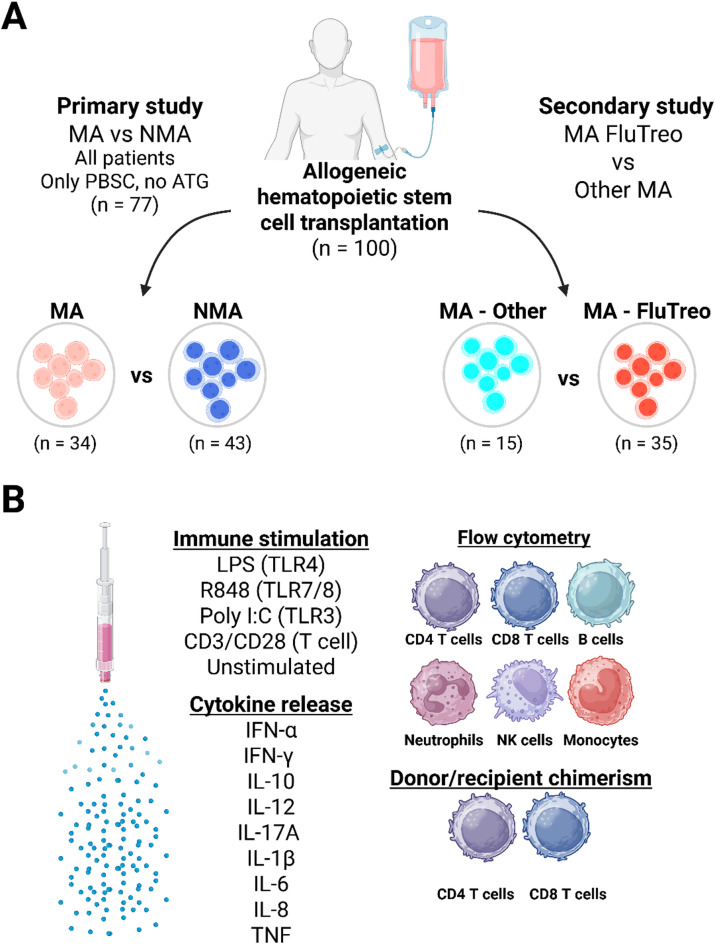
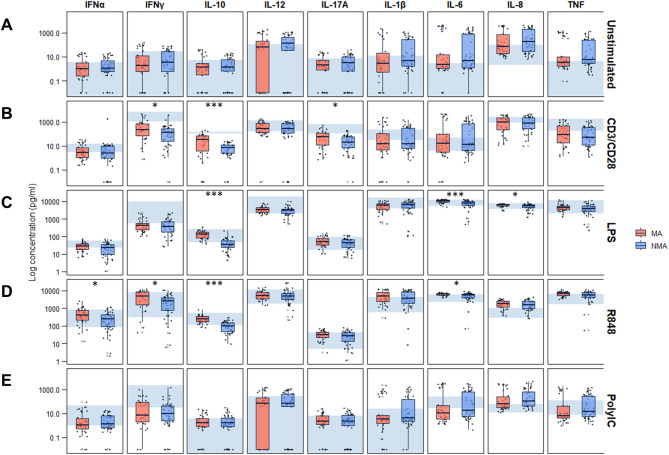
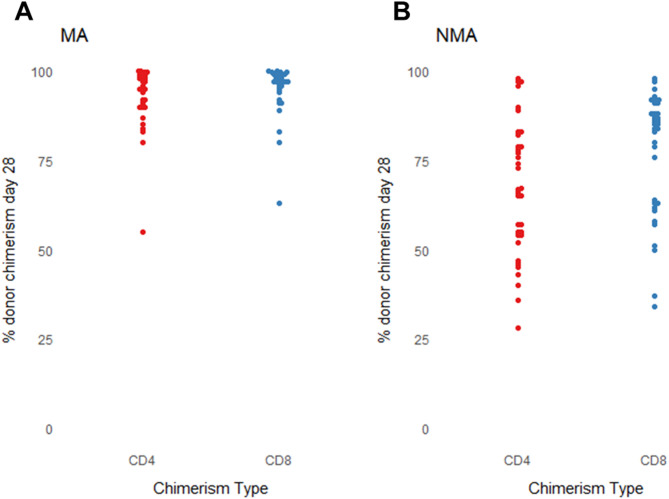
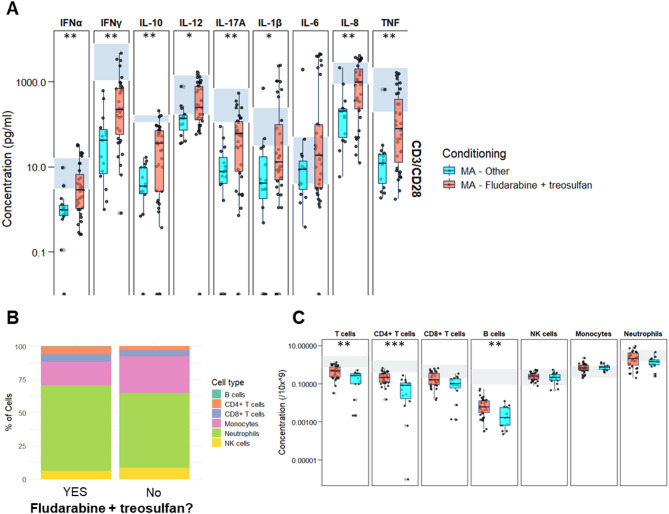
Allogeneic hematopoietic stem cell transplantation (allo-HCT) is a treatment modality for several hematological and immune-driven diseases. A conditioning regimen precedes transplantation. These comprise myeloablative (MA) conditioning consisting of chemotherapeutics often in combination with high-dose total body irradiation (TBI), while non-myeloablative (NMA) conditioning regimens use reduced dosage of chemotherapy and TBI allowing allo-HCT to patients who would otherwise not be eligible for treatment. While cellular immune reconstitution in allo-HCT patients has been well studied, differences between MA and NMA conditioned patients including the functional status of the immune system post-transplantation remains unclear. Seventy-seven patients undergoing allo-HCT were included in the main study, only including patients receiving peripheral blood stem cell grafts, no ATG treatment and no other GVHD prophylaxis than tacrolimus + methotrexate or cyclosporine + MMF + sirolimus (median age 59; IQR: 48-65). The cohort consisted of 34 patients receiving MA conditioning and 43 NMA conditioned patients. As a proxy for post-transplantation immune function, we analyzed stimulated cytokine release patterns in whole-blood samples from MA and NMA patients before and after transplantation alongside major immune cell phenotypes and T cell chimerism on day 28 after transplantation. Notably, among patients receiving grafts from peripheral blood apheresis, MA patients exhibited higher T cell counts, and elevated CD3/CD28-stimulated cytokine release compared to NMA patients. Assessment of associations between cytokine release and immune cell concentration associations indicated that variation in T cell or other immune cell concentrations between the cohorts could not account for differences in CD3/CD28-stimulated cytokine release. Meanwhile, LPS- and R848-stimulated cytokine release was associated with innate immune cell subtypes. A secondary study amongst MA conditioned patients further revealed that those who received fludarabine and treosulfan (n = 35) had higher T cell concentration and stimulated immune function compared to patients receiving more intense MA regimens (n = 15). These findings highlight the complex impact conditioning has on immune function after allo-HCT. Further analyses of T cell compartments and myeloid/lymphoid innate cells are needed to further understand the functional differences observed between conditioning groups and the potential impact on clinical outcomes.
Keywords: Bone marrow transplantation; Conditioning; Hematopoietic stem cells; Immune function; Immune stimulation; TruCulture.
© 2025. The Author(s).
Conflict of interest statement
Declarations. Competing interests: The authors declare no competing interests. Ethical approval: This study was approved by the ethical committee of the Capital Region, Denmark (approval nr H-17024315). All study participants gave informed written consent before inclusion.
Figures


References
MeSH terms
Substances
LinkOut - more resources
Full Text Sources
Research Materials
