


Current diagnostic and therapeutic management of chronic rhinosinusitis with nasal polyps in Austria: insights and unmet needs from a nationwide survey
- PMID: 40595263
- PMCID: PMC12216395
- DOI: 10.1038/s41598-025-07658-3
Current diagnostic and therapeutic management of chronic rhinosinusitis with nasal polyps in Austria: insights and unmet needs from a nationwide survey
Abstract
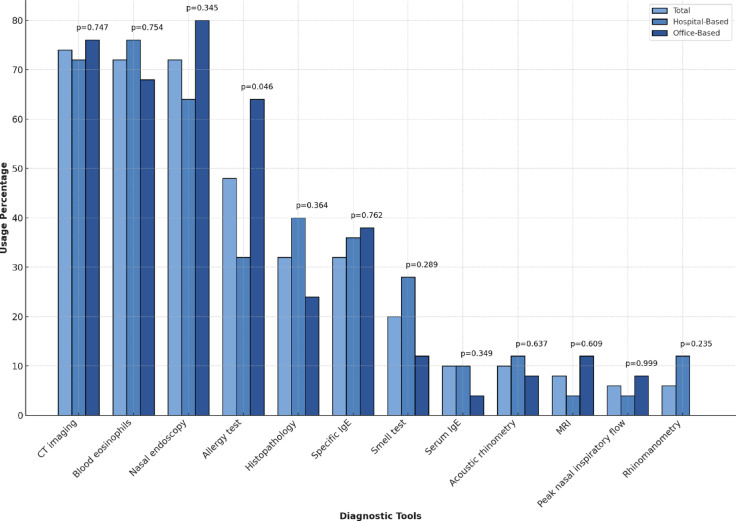
This article aims to describe the current diagnostic and therapeutic practices for managing chronic rhinosinusitis with nasal polyps (CRSwNP) among Austrian ENT specialists. A cross-sectional, nationwide survey was conducted between November and December 2022 in Austria. A total of 50 ENT specialists, evenly split between hospital- and office-based physicians, participated. The questionnaire covered demographics, diagnostic and therapeutic approaches. CT imaging, nasal endoscopy, and blood eosinophil count were the most utilized diagnostic tools. Most participants applied the SNOT-22 for patient-reported outcomes. Local corticosteroids were the most frequently prescribed treatment. Systemic corticosteroid overuse and limited biologic adoption were noted. Hospital-based physicians managed significantly more patients with biologics. The initiation of biologic therapy was considered most appropriate following one FESS by the vast majority of respondents. Adherence to guideline-based evaluation criteria for biologic treatment response was suboptimal, highlighting gaps in clinical practice. Our survey highlights strengths in guideline adherence and areas for improvement, particularly in the diagnostic approach, systemic corticosteroid usage, and biologic treatment. Addressing educational gaps and refining clinical practices could enhance patient outcomes, reduce invasive procedures, and optimize resource utilization in CRSwNP management.
Keywords: Biologics; CRSwNP; Corticosteroids; Endoscopic sinus surgery; Survey.
© 2025. The Author(s).
Conflict of interest statement
Declarations. Competing interests: Janina Kay is a GSK employee, Philipp Guenzl and Laura Walrave are GSK employees and hold financial equities in GSK. The other authors declare that they have no conflict of interest. The primary market research carried out by IQVIA was financed by GSK Austria.
Figures
References
-
- Fokkens, W. J. et al. European position paper on rhinosinusitis and nasal polyps 2020. Rhinology58(Suppl S29), 1–464. 10.4193/Rhin20.600 (2020). - PubMed
-
- Campion, N. J. et al. Prevalence and symptom burden of nasal polyps in a large Austrian population. J. Allergy Clin. Immunol. Pract.9(11), 4117–4129e2. 10.1016/j.jaip.2021.06.037 (2021). - PubMed
-
- Tomassen, P. et al. Inflammatory endotypes of chronic rhinosinusitis based on cluster analysis of biomarkers. J. Allergy Clin. Immunol.137(5), 1449–1456e4. 10.1016/j.jaci.2015.12.1324 (2016). - PubMed
MeSH terms
Substances
LinkOut - more resources
Full Text Sources
Medical
Research Materials
Miscellaneous
