. 2025 Jul 1;16(1):5471.
doi: 10.1038/s41467-025-60547-1.

Structural mechanism of DDX39B regulation by human TREX-2 and a related complex in mRNP remodeling

Affiliations

Structural mechanism of DDX39B regulation by human TREX-2 and a related complex in mRNP remodeling

Bradley P Clarke et al. Nat Commun. .

Abstract

Nuclear export of mRNAs in the form of messenger ribonucleoprotein particles (mRNPs) is an obligatory step for eukaryotic gene expression. The DEAD-box ATPase DDX39B (also known as UAP56) is a multifunctional regulator of nuclear mRNPs. How DDX39B mediates mRNP assembly and export in a controlled manner remains elusive. Here, we identify a novel complex TREX-2.1 localized in the nucleus that facilitates the release of DDX39B from the mRNP. TREX-2.1 is composed of three subunits, LENG8, PCID2, and DSS1, and shares the latter two subunits with the nuclear pore complex-associated TREX-2 complex. Cryo-EM structures of TREX-2.1/DDX39B and TREX-2/DDX39B identify a conserved trigger loop in the LENG8 and GANP subunit of the respective TREX-2.1 and TREX-2 complex that is critical for DDX39B regulation. RNA sequencing from LENG8 knockdown cells shows that LENG8 influences the nucleocytoplasmic ratio of a subset of mRNAs with high GC content. Together, our findings lead to a mechanistic understanding of the functional cycle of DDX39B and its regulation by TREX-2 and TREX-2.1 in mRNP processing.


Conflict of interest statement

Competing interests: The authors declare no competing interests.

Figures

Fig. 1
Fig. 1. Human TREX-2 and related TREX-2.1 complexes.
a Schematic representations of the TREX-2 complex and the novel TREX-2.1 complex. TREX-2 and TREX-2.1 each contain a unique scaffold subunit, GANP and LENG8, respectively. GANP can be divided into three regions: the N-terminal region containing FG nucleoporin-like motifs, the middle region featuring a PCI fold formed by a helical domain (HD) and a winged-helix domain (WH), and the C-terminal region composed of CID and MCM3AP domains. The CID domain forms a complex with Centrins and two copies of ENY2 (subunits of TREX-2, omitted in the graph for clarity). LENG8 contains a predicted unstructured N-terminal region and a C-terminal PCI fold, which also forms a complex with PCID2 and DSS1, as shown in (b, c). b LENG8 forms a novel TREX-2.1 complex with PCID2 and DSS1. In vitro GST pull-down was performed with purified GST-LENG8 and human THO complex or the PCID2/DSS1 complex. GST-LENG8 binds to PCID2/DSS1, but not the THO complex. c Purification of the TREX-2.1 complex containing LENG8, PCID2, and DSS1. Purified TREX-2.1 complex was analyzed by size exclusion chromatography using a Superdex 200 column. Coomassie-stained SDS-PAGE of the peak fraction is shown. d LENG8 localization in A549 cells. Cells were subjected to immunofluorescence microscopy with anti-LENG8 (red) and anti-NPC (green) as indicated. Scale bar, 10 μm. Experiments in (bd) have been repeated three times independently with similar results. Source Data are provided as a Source Data file.
Fig. 2
Fig. 2. TREX-2.1 regulates the activity of DDX39B.
a TREX-2.1 directly interacts with DDX39B. In vitro GST pull-down was performed with purified GST-DDX39B and TREX-2.1. b LENG8 co-immunoprecipitates with PCID2 and DDX39B. 293T cells transfected with a FLAG-LENG8 plasmid or an empty Flag plasmid control and with an HA-PCID2 plasmid were subjected to immunoprecipitation with anti-Flag antibody. c TREX-2.1 displaces DDX39B from a pre-assembled DDX39B/RNA/ATP-γ-S complex. The integrity of the TREX-2.1 complex is required for DDX39B displacement from the DDX39B/RNA/ATP-γ-S complex. d TREX-2.1 displaces DDX39B from a pre-assembled DDX39B/RNA/AMPPNP complex. Experiments in (ad) have been repeated three times independently with similar results. e TREX-2.1 stimulates the ATPase activity of DDX39B. Each column represents the mean of 3 independent replicates. Error bars represent standard deviation. Source Data are provided as a Source Data file.
Fig. 3
Fig. 3. Cryo-EM structure of the human TREX-2M/DDX39B complex with ADP.
a Schematics for generating the photo-crosslinked TREX-2M/DDX39B complex and Coomassie-stained SDS-PAGE of the cryo-EM sample. This experiment has been repeated three times independently with similar results. b Cryo-EM map of the TREX-2M/DDX39B complex determined at 3.25 Å resolution (EMD-46981), low-pass filtered at 6 Å resolution. The GANP, PCID2, and DSS1 subunits of TREX-2M are colored in green, yellow, and blue, respectively. The NTM, RecA1, and RecA2 domains of DDX39B are colored in red, pink, and purple, respectively. c Cryo-EM map of the TREX-2M/DDX39BNTM+RecA1 complex determined at 2.79 Å resolution (EMD-46982). d Structure of the TREX-2M/DDX39BNTM+RecA1 complex (PDB 9DLP). DDX39B is observed in a post-hydrolysis state bound to ADP. e–g TREX-2M interfaces with NTM-N (e), NTM-C (f), and RecA1 (g, arrowhead indicates the trigger loop) of DDX39B. h Schematics of the interactions between TREX-2M and DDX39BNTM+RecA1. Source Data are provided as a Source Data file.
Fig. 4
Fig. 4. Molecular basis for TREX-2M-mediated DDX39B regulation.
a Overlay of the overall TREX-2M/DDX39B structure with the DDX39B/RNA structure (PDB 8ENK) through the RecA1 domain. A model of TREX-2M/DDX39B was generated with the TREX-2M/DDX39BNTM+RecA1 complex (PDB 9DLP) and docked DDX39B–RecA2 domain based on the cryo-EM map of TREX-2M/DDX39B (EMD-46981). The trigger loop (colored in orange) from the GANP subunit of TREX-2M inserts between the two RecA domains. bd The trigger loop directly contacts ADP and breaks key interactions between DDX39B–RecA2 and ADP. Zoom-in views of panel a: TREX-2M/DDX39B (b), DDX39B/RNA (c), and their overlay (d). e The trigger loop and the integrity of the TREX-2M complex are required for the stimulative effect on DDX39B. Each column represents the mean of 3 independent replicates. Error bars represent standard deviation. Source Data are provided as a Source Data file.
Fig. 5
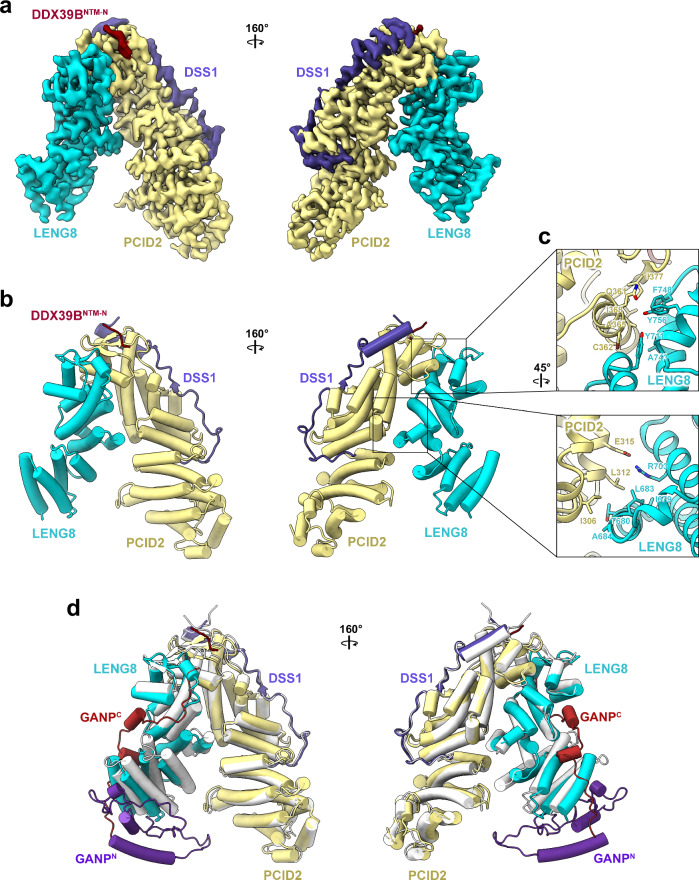
Fig. 5. Cryo-EM structure of the human TREX-2.1/DDX39BNTM-N complex.
a Cryo-EM map of the TREX-2.1/DDX39BNTM-N complex determined at 3.08 Å resolution (EMD-46983). The LENG8, PCID2, and DSS1 subunits of TREX-2.1 are colored in cyan, yellow, and blue, respectively. The NTM-N of DDX39B is colored in red. b Structure of the TREX-2.1/DDX39BNTM-N complex (PDB 9DLR). c Key interfaces between LENG8 and PCID2 in TREX-2.1 assembly. d Comparison of TREX-2.1 and TREX-2M. The TREX-2.1 complex is colored as in (b). The TREX-2M complex is colored white except for the unique N-terminal region (deep purple) and the C-terminal region (red) within GANP.
Fig. 6
Fig. 6. Cryo-EM structure of the human TREX-2.1/DDX39B complex.
a Cryo-EM map of the TREX-2.1/DDX39B complex determined at 3.28 Å resolution (EMD-47126), low-pass filtered at 6 Å resolution. The LENG8, PCID2, and DSS1 subunits of TREX-2.1 are colored in cyan, yellow, and blue, respectively. The NTM, RecA1, and RecA2 domains of DDX39B are colored in red, pink, and purple, respectively. b Schematics for TREX-2.1 and TREX-2M interactions with DDX39B. The LENG8 subunit of TREX-2.1 is shorter than the GANP subunit of TREX-2M near the DDX39B–RecA1 interface. The RecA2 domain of DDX39B binds to different sites on TREX-2.1 or TREX-2M. c Cryo-EM map of the TREX-2.1/DDX39BNTM+RecA1 complex determined at 2.97 Å resolution (EMD-46985). d Structure of the TREX-2.1/DDX39BNTM+RecA1 complex (PDB 9DLV). eg TREX-2.1 interfaces with NTM-N (e), NTM-C (f), and RecA1 (g) of DDX39B.
Fig. 7
Fig. 7. TREX-2.1 regulates DDX39B through the conserved trigger loop.
a Structural comparison of TREX-2.1 and TREX-2M at the trigger loop interface with DDX39B. b Zoom-in view of the rectangular region in (a) with emphasis on the interaction between the trigger loop and the RecA1 domain of DDX39B. The models of TREX-2.1/DDX39B and TREX-2M/DDX39B were aligned on the RecA1 domain of DDX39B. c Trigger loop mutant of TREX-2.1 showed reduced stimulation of the ATPase activity of DDX39B. Each column represents the mean of 3 independent replicates. Error bars represent standard deviation. d Trigger loop mutant of TREX-2.1 is deficient in releasing DDX39B from RNA. This experiment has been repeated three times independently with similar results. Source Data are provided as a Source Data file.
Fig. 8
Fig. 8. Functional investigations of TREX-2 and TREX-2.1 in mRNP metabolism.
aj RNA features associated with cellular mRNAs whose nucleocytoplasmic distribution is influenced by LENG8. A549 cells were transfected with siRNAs that target LENG8 or with non-targeting control siRNAs. After 72 h, RNA was isolated from whole cell lysates and from nuclear or cytoplasmic fractions and subjected to RNAseq analysis. Two biological replicates were analyzed to identify mRNAs whose nuclear to cytoplasmic ratios are above 2.0 with no change in total expression levels. RNA features associated with cellular mRNAs whose nucleocytoplasmic ratio is modulated by LENG8 were compared to RNA features of the control genome-wide mRNA population. Violin plots show the distribution of the depicted RNA features between these two groups. The red line indicates the median, and the green line indicates quartiles. A two-tailed Mann–Whitney U rank test was used to calculate statistical significance. p-values are shown on the top of and the number of transcripts for each group are the following: a (control n = 19,340; LENG8-dependent n = 391), b (control n = 19,340; LENG8-dependent n = 391), c (control n = 19,340; LENG8-dependent n = 391), d (control n = 19,128; LENG8-dependent n = 391), e (control n = 19,340; LENG8-dependent n = 391), f (control n = 19,340; LENG8-dependent n = 391), g (control n = 19,128; LENG8-dependent n = 391), h (control n = 18,575; LENG8-dependent n = 383), i (control n = 19,340; LENG8-dependent n = 391), j (control n = 19,340; LENG8-dependent n = 391). k IAV NP disrupts TREX-2/TREX-2.1 interactions with DDX39B. In vitro GST pull-down was performed with purified recombinant proteins. The schematic for the experiment is shown on the left. GST-DDX39B was first preincubated with TREX-2M or TREX-2.1, and then IAV NP was added to the pull-down reactions. IAV NP was observed to associate with GST-DDX39B and displace TREX-2M or TREX-2.1, as shown in the right panel. This experiment has been repeated three times independently with similar results. Source Data are provided as a Source Data file.
Fig. 9
Fig. 9. Functional cycle of DDX39B and its regulation by TREX-2 and TREX-2.1.
Schematic of the DDX39B ATPase functional cycle with representative structures of each state. (1) The THO complex primes DDX39B in a semi-open conformation and recruits the ATPase to nascent transcripts,. (2) DDX39B assumes a closed conformation when bound to RNA,. (3) Structure of TREX-2/DDX39B captures a key intermediate, in which RNA has been released and ADP is still engaged by the critical trigger loop from TREX-2. (4) Structure of TREX-2.1/DDX39B provides a snapshot after both RNA and nucleotide have been released from DDX39B. (5) DDX39B adopts an open conformation in the absence of nucleotide and RNA,.

References

    1. Xie, Y. & Ren, Y. Mechanisms of nuclear mRNA export: a structural perspective. Traffic20, 829–840 (2019). - PMC - PubMed
    1. Oeffinger, M. & Montpetit, B. Emerging properties of nuclear RNP biogenesis and export. Curr. Opin. Cell Biol.34, 46–53 (2015). - PubMed
    1. Khong, A. & Parker, R. The landscape of eukaryotic mRNPs. RNA26, 229–239 (2020). - PMC - PubMed
    1. Singh, G., Pratt, G., Yeo, G. W. & Moore, M. J. The clothes make the mRNA: past and present trends in mRNP fashion. Annu Rev. Biochem.84, 325–354 (2015). - PMC - PubMed
    1. Palazzo, A. F., Qiu, Y. & Kang, Y. M. mRNA nuclear export: how mRNA identity features distinguish functional RNAs from junk transcripts. RNA Biol.21, 1–12 (2024). - PMC - PubMed

LinkOut - more resources