


Effects of concentric and concentric-eccentric resistance training on speed and force in adult soccer players
- PMID: 40596458
- PMCID: PMC12216481
- DOI: 10.1038/s41598-025-06396-w
Effects of concentric and concentric-eccentric resistance training on speed and force in adult soccer players
Abstract
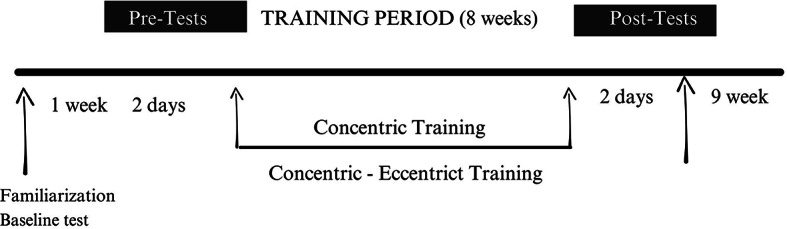
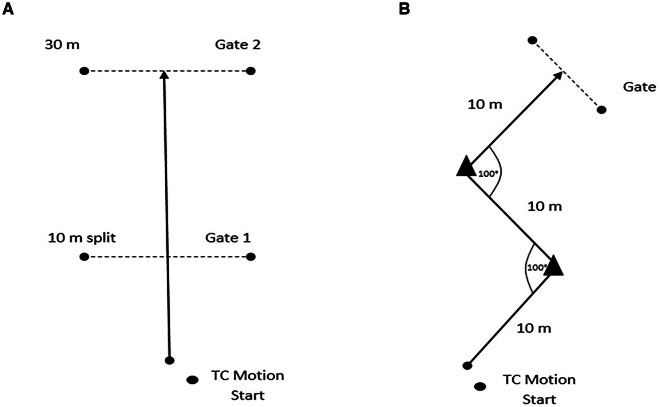
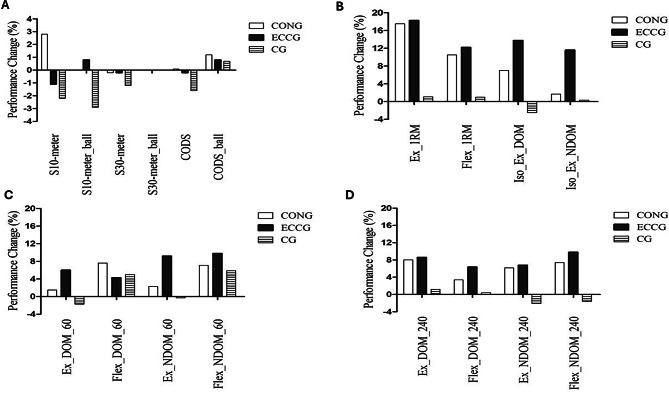
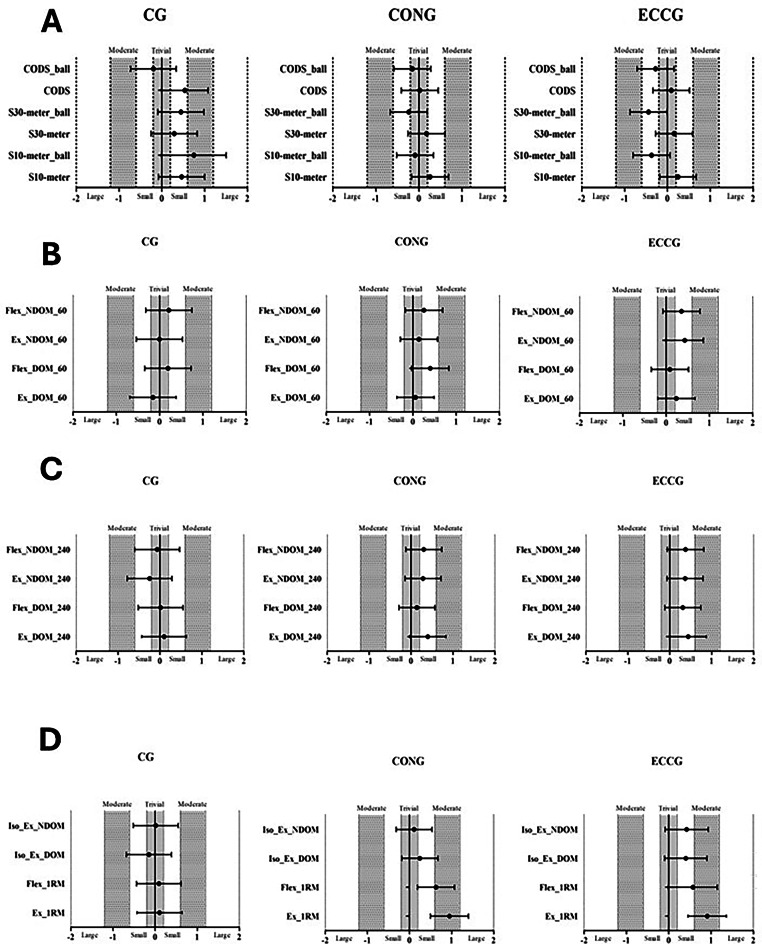
This study investigated the effects of concentric and concentric-eccentric strength training on speed and strength performance in sub-elite soccer players. Thirty-four healthy Czech soccer players were randomly assigned to a concentric group (CONG, n = 13), concentric/eccentric group (ECCG, n = 12), or control group (CG, n = 9). All participants completed the study. Over an 8-week intervention period, the CONG and ECCG groups accomplished 16 training sessions focused on leg curl and leg extension exercises. Speed and strength assessments were performed at baseline and post-intervention. While no significant improvements were observed in speed performance (p > 0.05), both intervention groups demonstrated significant gains in strength parameters. One-repetition maximum (1RM) knee extension increased by 17.5% (CONG, p < 0.001) and 18.3% (ECCG, p < 0.001), and the 1RM knee flexion improved by 10.5% (CONG, p < 0.001) and 12.2% (ECCG, p < 0.001, compared to the CG, with moderate and clear effect sizes. ANOVA analysis revealed significant interaction effects for knee extension 1RM (p < 0.001), knee flexion 1RM (p = 0.022), and isometric knee extension of the dominant leg (p = 0.033). Despite these gains in muscle strength, speed performance showed only minor, non-significant changes, with the CONG group experiencing a 2.8% improvement in the 10-meter sprint. In conclusion, both concentric and concentric-eccentric strength training protocols effectively enhanced lower-limb strength in soccer players, with the concentric-eccentric approach showing slightly better results. However, neither training method significantly improved speed. Coaches should use concentric-eccentric exercises to enhance strength but consider other methods to boost speed and overall performance.
Keywords: Athletic performance; Eccentric training; Force production; Muscle strength; Physical conditioning; Soccer.
© 2025. The Author(s).
Conflict of interest statement
Declarations. Competing interests: The authors declare no competing interests.
Figures
References
-
- Cavanagh, B. Peer review. Specificity of power training for sports performance: A review of the literature. J. Aust Strength. Cond. 4, 25–29 (2010).
-
- Newton, R. U. & Kraemer, W. J. Developing explosive muscular power: implications for a mixed methods training strategy. Strength Cond. J. 16, 20–31 (1994)
-
- Tricoli, V., Lamas, L., Carnevale, R. & Ugrinowitsch, C. Short-term effects on lower-body functional power development: weightlifting vs. vertical jump training programs. J. Strength. Cond Res.19, 433–437 (2005). - PubMed
-
- Farthing, J. & Chilibeck, P. The effects of eccentric and concentric training at different velocities on muscle hypertrophy. Eur. J. Appl. Physiol.89, 578–586 (2003). - PubMed
-
- Fernandez-Gonzalo, R., Lundberg, T., Alvarez-Alvarez, L. & de Paz, J. Muscle damage responses and adaptations to eccentric-overload resistance exercise in men and women. Eur. J. Appl. Physiol.114, 1075–1084 (2014). - PubMed
Publication types
MeSH terms
Grants and funding
LinkOut - more resources
Full Text Sources
