


Serum vitamin D levels in patients with Bell's palsy: a systematic review and meta-analysis
- PMID: 40596965
- PMCID: PMC12210633
- DOI: 10.1186/s12883-025-04268-4
Serum vitamin D levels in patients with Bell's palsy: a systematic review and meta-analysis
Abstract
Background: Bell's palsy (BP) is the most prevalent acute mono-neuropathy associated with facial nerve failure, accounting for 60-75% of all occurrences of facial paralysis. The primary pathophysiological mechanism leading to BP is recognized as the confinement of the facial nerve within the facial canal, caused by edema. The link between vitamin D and neurological disorders has drawn more scientific attention in recent years, and vitamin D plays a role as a neuro-immuno-modulator. While some studies suggest an association between vitamin D and the incidence of BP, others report no significant impact. This systematic review aims to critically assess the relationship between vitamin D levels and the severity of BP.
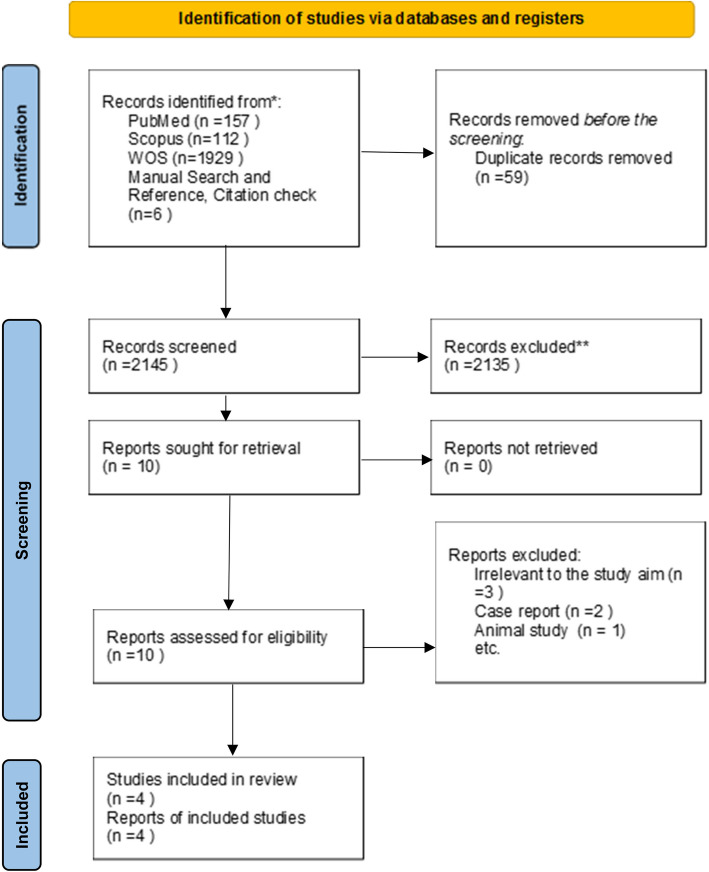
Method: A comprehensive search was conducted across Scopus, PubMed, and Web of Science databases for articles published from inception until September 29, 2024. The inclusion criteria for this meta-analysis encompassed articles that reported serum vitamin D levels and vitamin D deficiency in patients with BP, compared with the control group, specifically those presenting original data from cross-sectional, case-control, and cohort studies. Vitamin D levels in BP patients were reported as mean ± SD. Meta-analyses were performed using Stata version 17 software (Stata Corp, College Station, TX), with effect sizes expressed as standardized mean differences (Hedges g) and 95% confidence intervals (CIs).
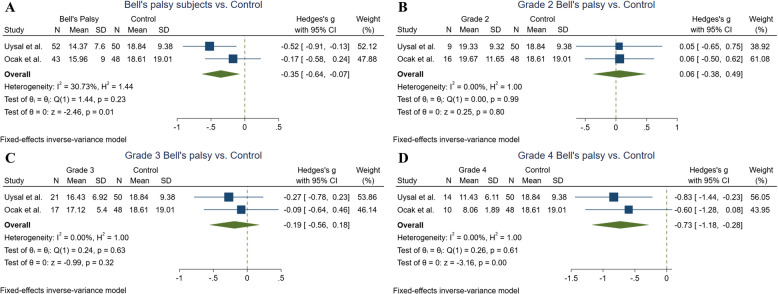
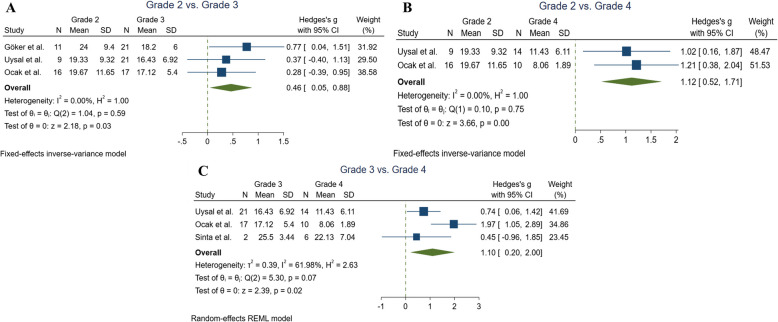
Result: Three studies reported the mean vitamin D levels among BP subjects, with the pooled mean vitamin D level of 15.98 ng/ml (CI = 13.83-18.06). No significant difference was observed for grade 2 vs controls (Hedges'g = 0.05, 95% CI = [-0.38 to 0.49], P value = 0.79, I2 = 0%), and grade 3 vs. controls (Hedges'g = -0.18, 95% CI = [-0.55 to 0.18], P value = 0.32, I2 = 0%). In contrast, the meta-analysis showed a significantly decreased value for vitamin D across grade 4 of the disease (Hedges'g = -0.72, 95% CI = [-1.18 to -0.27], P value = 0.001, I2 = 0%).
Conclusion: In this systematic review and meta-analysis, we evaluate the relationship between serum vitamin D levels in patients with BP. Our meta-analysis showed a significant decrease in Vitamin D levels in patients with high-grade BP. Our meta-analysis results show that a high grade of BP is associated with lower serum vitamin D levels. Given that inflammation is involved in the pathophysiological background of BP, the anti-inflammatory effect of vitamin D can be a possible mechanism for the benefit of this vitamin in BP.
Keywords: 1,25-dihydroxy vitamin D; Bell’s palsy (BP); Facial paralysis; Vitamin D.
© 2025. The Author(s).
Conflict of interest statement
Declarations. Ethics approval and consent to participate: IRB Information: not applicable. Research involving human participants and, or animals: Not applicable. Consent for publication: Not applicable. This manuscript does not contain any individual person’s data in any form (including images or personal/clinical details) that would require consent for publication. Competing interests: The authors declare no competing interests.
Figures
References
Publication types
MeSH terms
Substances
LinkOut - more resources
Full Text Sources
Medical
