


Attention-driven hybrid deep learning and SVM model for early Alzheimer's diagnosis using neuroimaging fusion
- PMID: 40597079
- PMCID: PMC12210430
- DOI: 10.1186/s12911-025-03073-w
Attention-driven hybrid deep learning and SVM model for early Alzheimer's diagnosis using neuroimaging fusion
Abstract
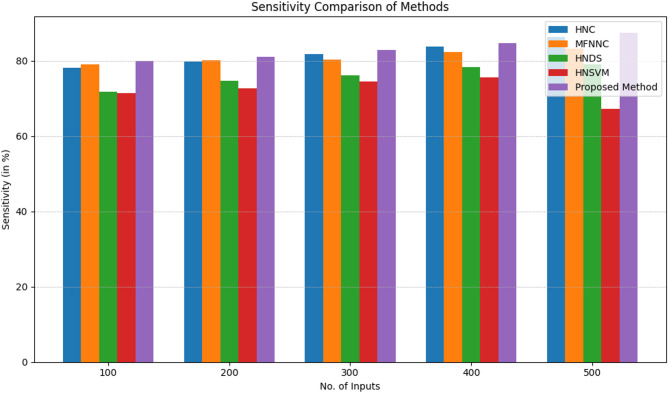
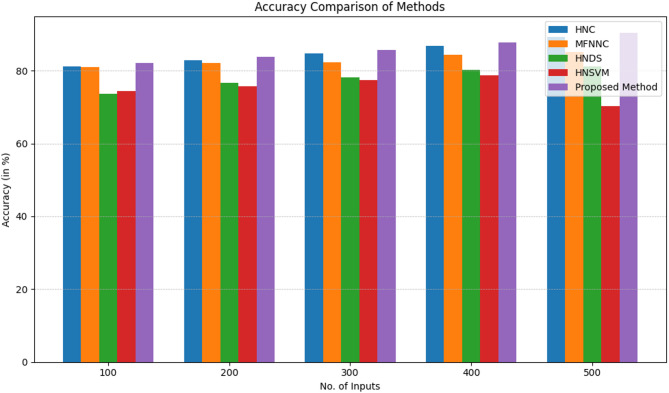
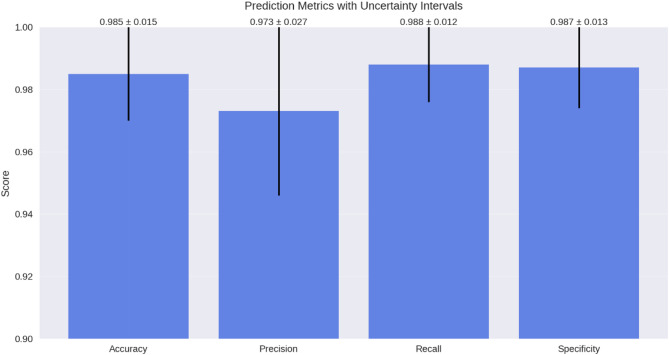
Alzheimer's Disease (AD) poses a significant global health challenge, necessitating early and accurate diagnosis to enable timely interventions. AD is a progressive neurodegenerative disorder that affects millions worldwide and is one of the leading causes of cognitive impairment in older adults. Early diagnosis is critical for enabling effective treatment strategies, slowing disease progression, and improving the quality of life for patients. Existing diagnostic methods often struggle with limited sensitivity, overfitting, and reduced reliability due to inadequate feature extraction, imbalanced datasets, and suboptimal model architectures. This study addresses these gaps by introducing an innovative methodology that combines SVM with Deep Learning (DL) to improve the classification performance of AD. Deep learning models extract high-level imaging features which are then concatenated with SVM kernels in a late-fusion ensemble. This hybrid design leverages deep representations for pattern recognition and SVM's robustness on small sample sets. This study provides a necessary tool for early-stage identification of possible cases, so enhancing the management and treatment options. This is attained by precisely classifying the disease from neuroimaging data. The approach integrates advanced data pre-processing, dynamic feature optimization, and attention-driven learning mechanisms to enhance interpretability and robustness. The research leverages a dataset of MRI and PET imaging, integrating novel fusion techniques to extract key biomarkers indicative of cognitive decline. Unlike prior approaches, this method effectively mitigates the challenges of data sparsity and dimensionality reduction while improving generalization across diverse datasets. Comparative analysis highlights a 15% improvement in accuracy, a 12% reduction in false positives, and a 10% increase in F1-score against state-of-the-art models such as HNC and MFNNC. The proposed method significantly outperforms existing techniques across metrics like accuracy, sensitivity, specificity, and computational efficiency, achieving an overall accuracy of 98.5%.
Keywords: Alzheimer's disease (AD); Classification accuracy; Disease detection; Machine learning; Neuroimaging; Recursive feature elimination.
© 2025. The Author(s).
Conflict of interest statement
Declarations. Ethics approval and consent to participate: Not applicable. Consent for publication: Not applicable. Competing interests: The authors declare no competing interests.
Figures
References
-
- Hassan E, Saber A, Elbedwehy S. Knowledge distillation model for acute lymphoblastic leukemia detection: exploring the impact of nesterov-accelerated adaptive moment Estimation optimizer. Biomed Signal Process Control. 2024;94:106246.
-
- Saber A, et al. An optimized ensemble model based on meta-heuristic algorithms for effective detection and classification of breast tumors. Neural Comput Appl. 2025;37(6):4881–94.
MeSH terms
LinkOut - more resources
Full Text Sources
Medical
