


Barriers and facilitators for the utilisation of psycho-oncological services in German hospitals as perceived by patients and healthcare professionals: a mixed-methods study
- PMID: 40597280
- PMCID: PMC12220343
- DOI: 10.1186/s12913-025-13053-5
Barriers and facilitators for the utilisation of psycho-oncological services in German hospitals as perceived by patients and healthcare professionals: a mixed-methods study
Abstract
Background: Psycho-oncological services (POS) are an integral and widely recommended part of comprehensive cancer care. However, their utilisation appears to fall short of the perceived need. This study aimed to explore barriers and facilitators for the uptake of POS in the context of existing clinical structures and pathways to POS.
Methods: A mixed-methods study was conducted, drawing on elements of a Delphi approach, including an iterative two-round feedback process and an expert panel. The expert panel consisted of healthcare professionals in cancer care (n = 27) and cancer patients (n = 14). The first round comprised open-ended questions to explore different perspectives related to the research question. The resulting material was analysed qualitatively and grouped into themes, which were rated according to their perceived importance by the expert panel in the second survey-round (N = 27).
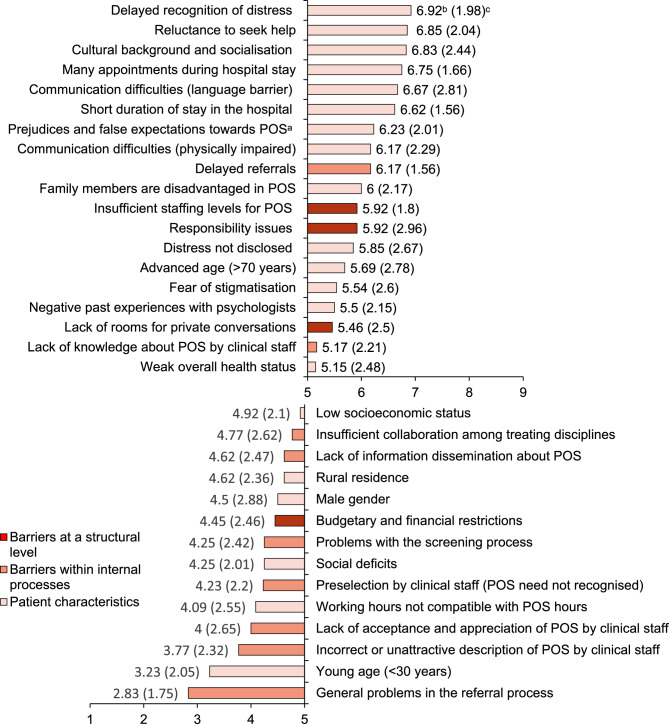
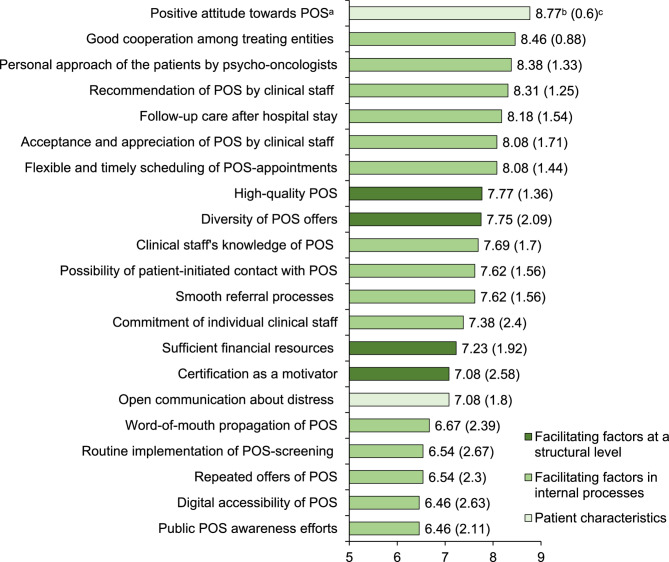
Results: The expert panel identified 69 aspects influencing the uptake of POS; 81% were rated as relevant in the second round. They were grouped into structural factors at hospital level, aspects related to internal processes, and factors at patient level. Central aspects were recommendations of POS by the clinical staff, personal introduction of the psycho-oncologist, integration and acceptance of POS within the hospital organisation, information dissemination about POS to both patients and clinical staff, and the possibility of flexible access routes to POS since patients’ preferences differed. Patient-groups more difficult to reach with a POS-offer were also identified.
Conclusion: The results can be used to review implemented clinical pathways to POS in diverse hospital contexts, helping to identify and improve critical aspects accordingly, and thus improve service accessibility.
Trial registration: This study was pre-registered at the German Clinical Trials Register (DRKS-ID: DRKS00025105; registration date: 26-05-2021).
Supplementary Information: The online version contains supplementary material available at 10.1186/s12913-025-13053-5.
Keywords: Barriers; Cancer patients; Clinical pathway; Facilitators; Mixed-methods; Psycho-oncology.
Conflict of interest statement
Declarations. Ethics approval and consent to participate: Ethical approval was granted by the ethics board of the University Medical Center Giessen-Marburg (ID-No.: 200/20), and informed consent was obtained from all participants. Consent for publication: Not applicable.
Figures

References
-
- German Guideline Program in Oncology (German Cancer Society, German Cancer Aid, AWMF): S3-Leitlinie Psycho-oncological Diagnostics, Counseling and Treatment of Adult Cancer Patients, Long version 2.0, 2023, AWMF Registration Number: 032051OL https://www.leitlinienprogramm-onkologie.de/leitlinien/psychoonkologie/. Accessed 1 Apr 2025.
LinkOut - more resources
Full Text Sources
