


Driver mutations and malignant pleural effusion in non-small cell lung cancer
- PMID: 40597364
- PMCID: PMC12220507
- DOI: 10.1186/s12920-025-02180-x
Driver mutations and malignant pleural effusion in non-small cell lung cancer
Abstract
Background: Malignant pleural effusion (MPE) complicates approximately 50% of non-small cell lung cancer (NSCLC) cases, signaling advanced disease and poor patient outcomes. While molecular alterations such as ALK, ROS1, and T790M mutations, as well as PD-L1 expression, are critical in NSCLC progression, their relationship with MPE development remains inadequately characterized.
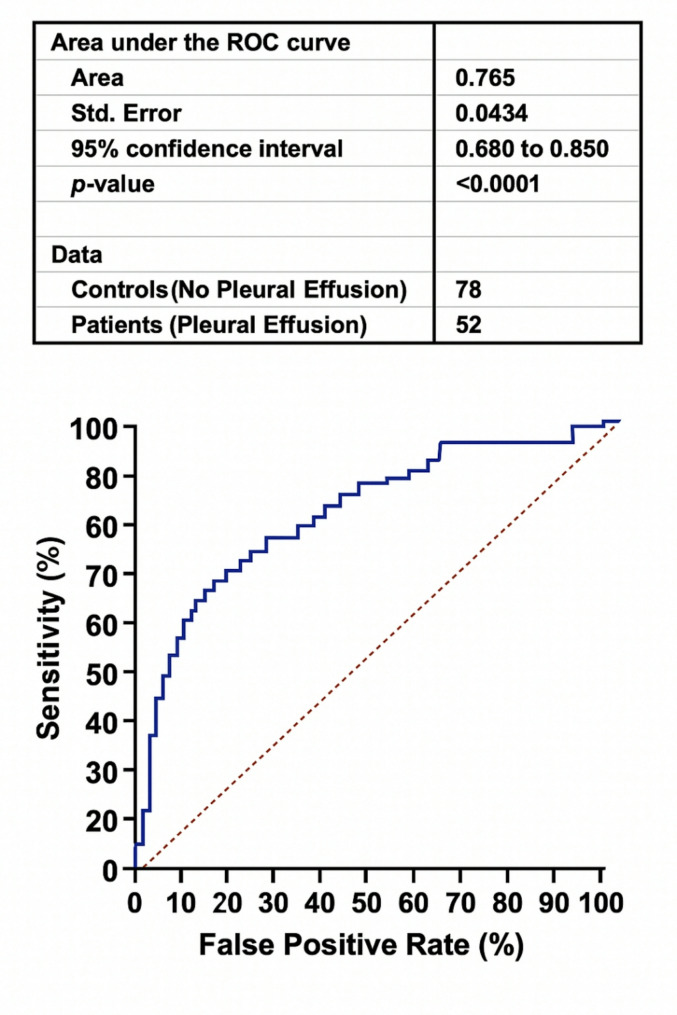
Methods: This retrospective cohort study examined 130 NSCLC patients (52 with MPE, 78 without MPE). Clinical characteristics and comprehensive molecular profiles were analyzed using next-generation sequencing. Statistical comparisons were performed, and a Least Absolute Shrinkage and Selection Operator (LASSO) regularized logistic regression model identified independent predictors of MPE. Model performance was evaluated using receiver operating characteristic (ROC) analysis.
Results: PD-L1 expression demonstrated a significant association with MPE development (Odds ratio = 2.78, p < 0.01), nearly tripling the likelihood of effusion. The presence of ALK, ROS1, and T790M mutations (combined OR = 2.41, p < 0.05) also showed predictive value for MPE formation. Several clinical factors independently correlated with MPE, including advanced age, heavy smoking history (> 50 pack-years), and right inferior lobe tumor location (all p < 0.05). The predictive model demonstrated robust performance with an area under the curve of 0.80.
Conclusions: These findings establish important associations between specific driver mutations and PD-L1 expression in relation to MPE development in NSCLC patients. Identifying these genetic and clinical predictors may enhance risk stratification approaches and guide personalized treatment strategies, especially for those with advanced disease. Further prospective validation studies are needed to confirm these associations and explore their therapeutic implications.
Keywords: Driver mutations; Malignant pleural effusion; Non-small cell lung cancer.
© 2025. The Author(s).
Conflict of interest statement
Declarations. Ethics approval and consent to participate: This study was conducted in accordance with the Declaration of Helsinki and approved by the Şişli Hamidiye Etfal Training and Research Hospital Health Application and Research Center Clinical Research Ethics Committee (Approval No:2778, Date:14.01.2025). As this was a retrospective study, individual written informed consent was not newly obtained; however, all patients had previously provided written informed consent for their medical data to be used for research purposes, which was verified through hospital records before data extraction. Consent for publication: Not applicable. No identifiable patient data or images are included in this study. Use of artificial intelligence in manuscript preparation: The authors acknowledge the use of artificial intelligence (AI)-based tools for language editing, structural refinement, and manuscript organization. AI-assisted platforms, including ChatGPT-4 and Claude AI, were employed to enhance the clarity and readability of the text while maintaining scientific accuracy. However, all scientific interpretations, data analyses, and conclusions were formulated by the authors to ensure the originality and integrity of the study. The statistical methods and computational scripts used in this study adhere to best-practice guidelines for reproducible research, ensuring transparency in data processing and model interpretation. The authors confirm that all analyses were manually reviewed to validate statistical outputs and avoid AI-generated biases in model selection. Competing interests: The authors declare no competing interests.
Figures
References
MeSH terms
Substances
LinkOut - more resources
Full Text Sources
Medical
Research Materials
