


A conceptual model of factors potentially influencing prescribing decisions for chronic conditions: an overview of systematic reviews
- PMID: 40598148
- PMCID: PMC12217990
- DOI: 10.1186/s12916-025-04194-9
A conceptual model of factors potentially influencing prescribing decisions for chronic conditions: an overview of systematic reviews
Abstract
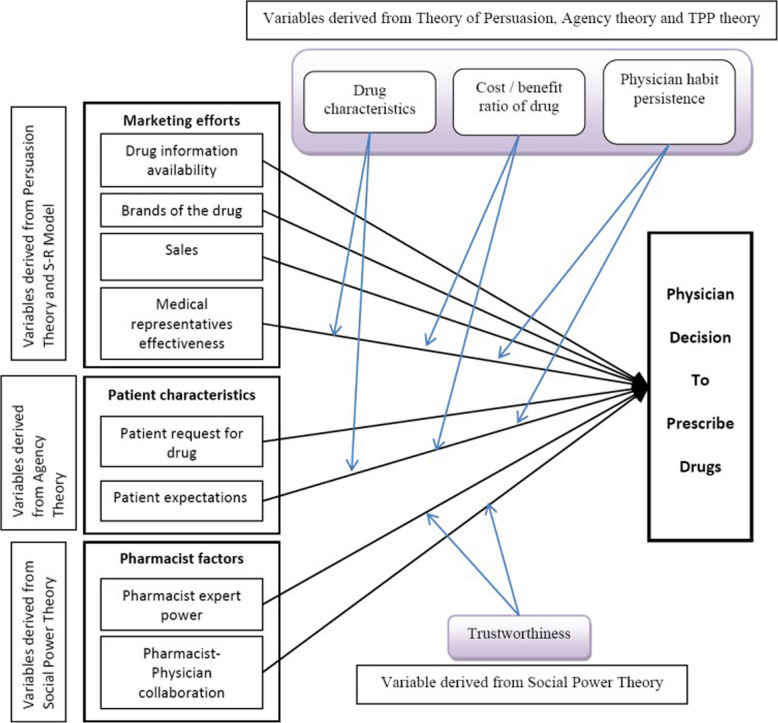
Background: Nearly half of all adults are affected by chronic conditions with long-term medications often being the primary intervention. Although models like that of Murshid and Mohaidin contribute to our understanding of prescribing behaviours, they are not specific to chronic conditions and may not reflect the full range of influencing factors relevant to long-term care. Better understanding the factors that may influence healthcare professionals' decision-making could help inform policy and guidelines as well as identify targets for future research and interventions.
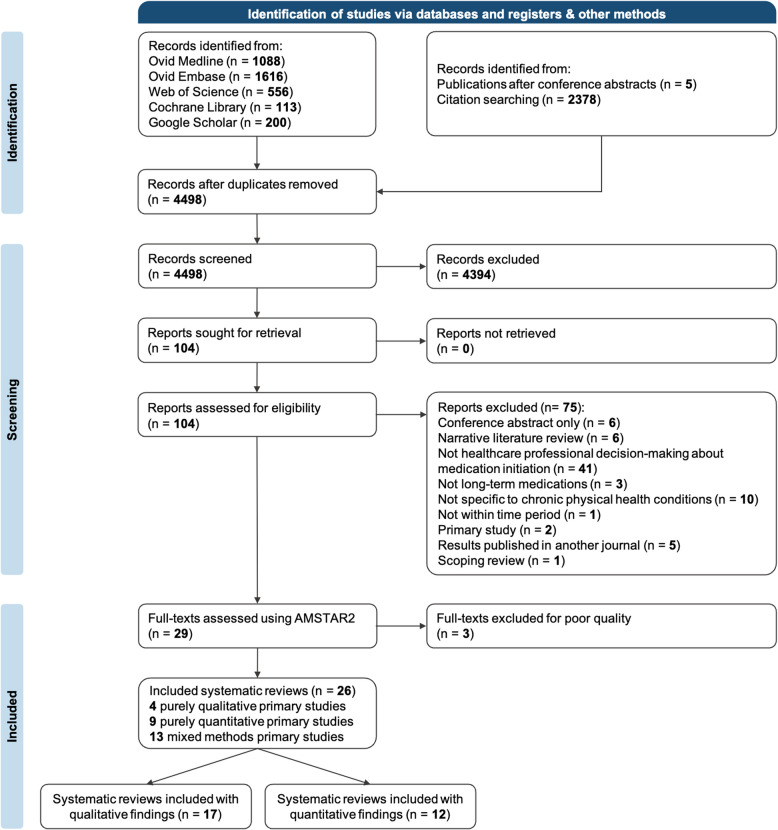
Methods: An overview of systematic reviews was undertaken, following the 2020 PRISMA guidelines. PubMed, Embase, Web of Science, Cochrane Library and Google Scholar were searched from 01/01/2013 to 7/11/2023. Quality assessment was undertaken using the AMSTAR 2 tool. Screening, data extraction and synthesis were conducted. Confidence in findings was assessed using the GRADE-CERQual tool. An existing generic conceptual model of prescribing was adjusted to specifically reflect chronic conditions.
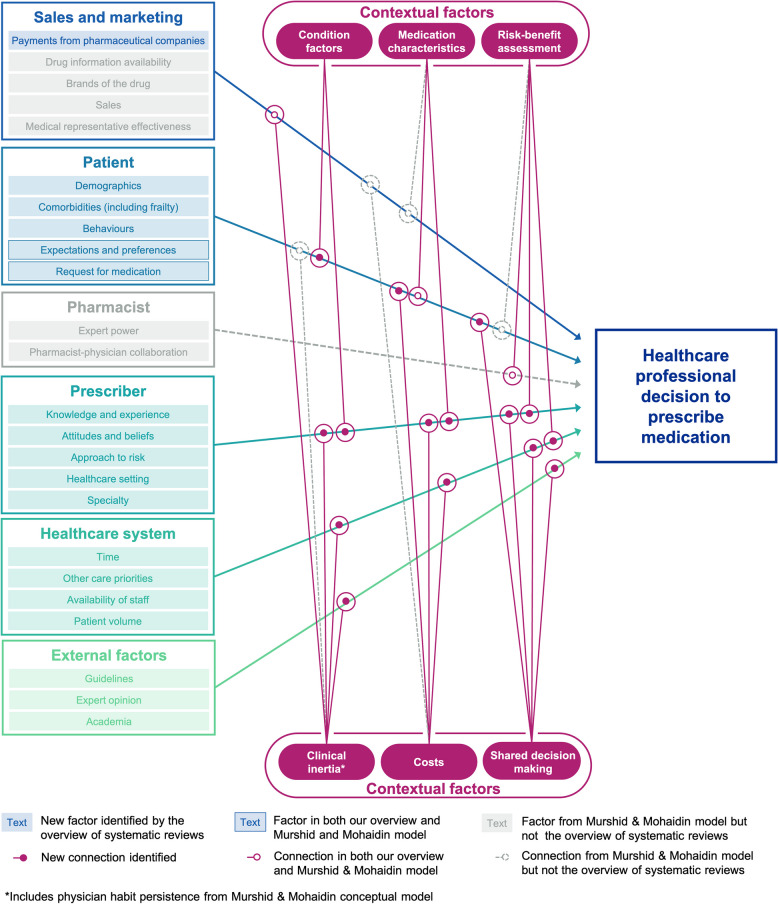
Results: Twenty-six reviews published between 2013 and 2023 were included, synthesising 689 primary studies. Patient factors that may influence prescribers' decisions included age, ethnicity, education and level of rurality of residence. Prescribers describe assessing individual patient characteristics when weighing the risks and benefits, with a tendency to prioritise risks-especially for patients with multiple comorbidities or complex needs. Prescribers' approach to risk may be influenced by their clinical experience, care setting and assessment tools. High workload and competing priorities may lead to clinical inertia in terms of delaying or preventing medication initiation. Shared decision-making may not always be shared equally between patients and prescribers. Beyond direct medication costs, prescribers may also consider broader healthcare costs, such as the need for monitoring and use of support staff for monitoring. External factors such as guidelines may be helpful in navigating risks, with their effectiveness potentially enhanced when they offer specific recommendations tailored to prescribers' population characteristics.
Conclusions: Prescribers may need to navigate multiple challenges when making prescribing decisions for people with chronic conditions. This overview of systematic reviews suggests possible interrelated factor categories influencing prescribing decisions. The conceptual model may be used as a framework for future research and development of interventions.
Keywords: Chronic conditions; Chronic diseases; Decision-making; Long-term medications; Prescribing.
© 2025. The Author(s).
Conflict of interest statement
Declarations. Ethics approval and consent to participate: Not applicable. Consent for publication: Not applicable, no individual’s data or images were used in this review. Competing interests: The authors declare no competing interests.
Figures
References
-
- Australian Government. Prevalence of chronic conditions 2023.
-
- World Health Organization. Noncommunicable diseases - key facts 2023.
-
- National Center for Chronic Disease Prevention and Health Promotion (NCCDPHP). About chronic diseases 2023. - PubMed
Publication types
MeSH terms
LinkOut - more resources
Full Text Sources
