


Synergistic effects of mesenchymal stem cells and their secretomes with scaffolds in burn wound healing: a systematic review and meta-analysis of preclinical studies
- PMID: 40598532
- PMCID: PMC12210777
- DOI: 10.1186/s12967-025-06712-y
Synergistic effects of mesenchymal stem cells and their secretomes with scaffolds in burn wound healing: a systematic review and meta-analysis of preclinical studies
Abstract
Background: Burn injuries cause severe physical and psychological challenges. Current treatments have limitations, such as incomplete skin regeneration and prolonged healing times, necessitating innovative solutions. Tissue engineering integrates mesenchymal stem cells (MSCs) and scaffolds in preclinical studies to enhance healing, reduce scarring, and regenerate skin. This study examines their combined effects to optimize burn wound therapies.
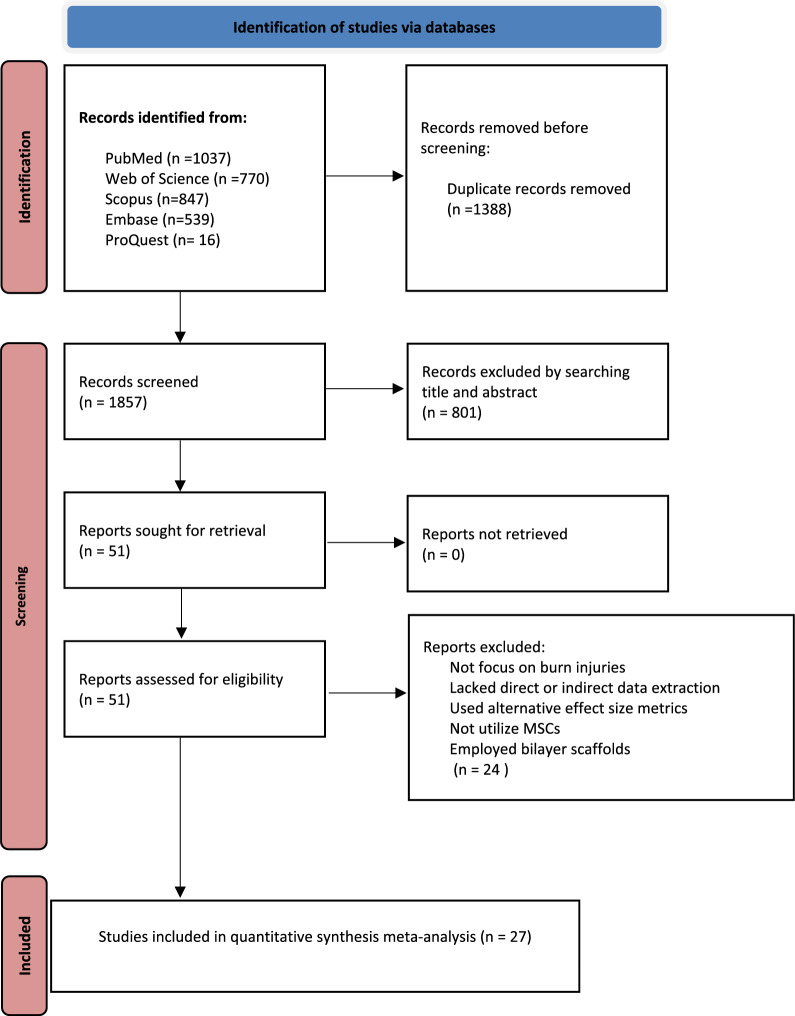
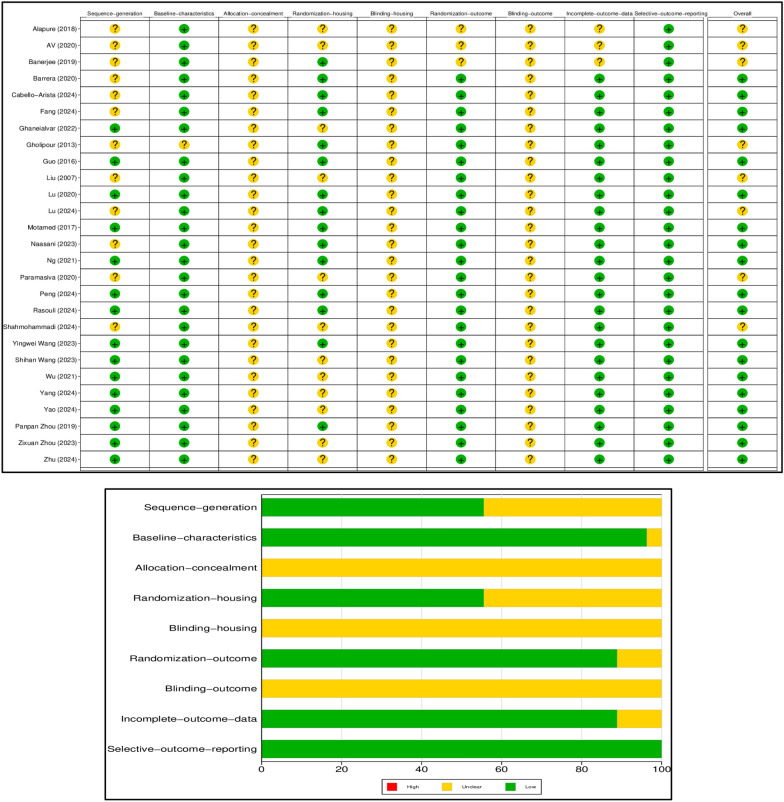
Methods: This systematic review and meta-analysis was conducted per PRISMA guidelines, with the protocol registered in PROSPERO. Databases (PubMed, Embase, Scopus, Web of Science, ProQuest) were searched for published studies.The SYRCLE tool assessed risk of bias. Standardized mean difference (SMD) evaluated the therapeutic effect of MSC-scaffold combinations. Statistical analysis employed a random-effects model. Sensitivity analysis, publication bias assessment, and subgroup analysis addressed heterogeneity.
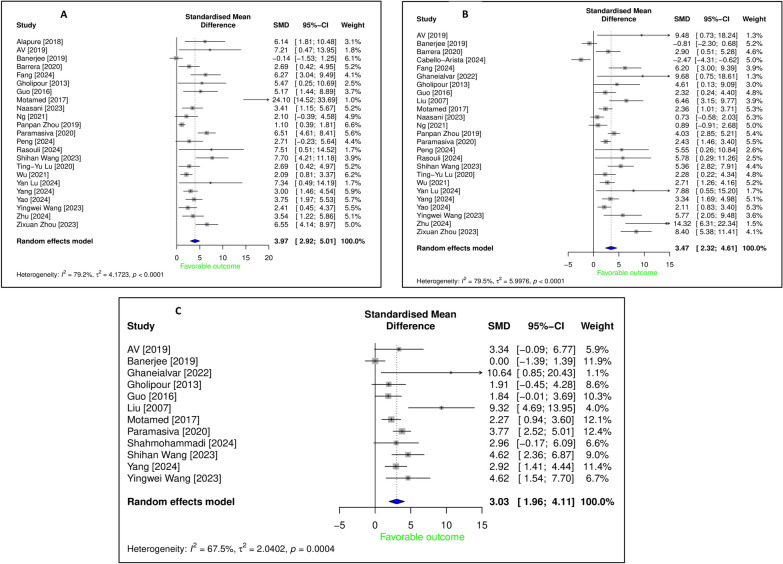
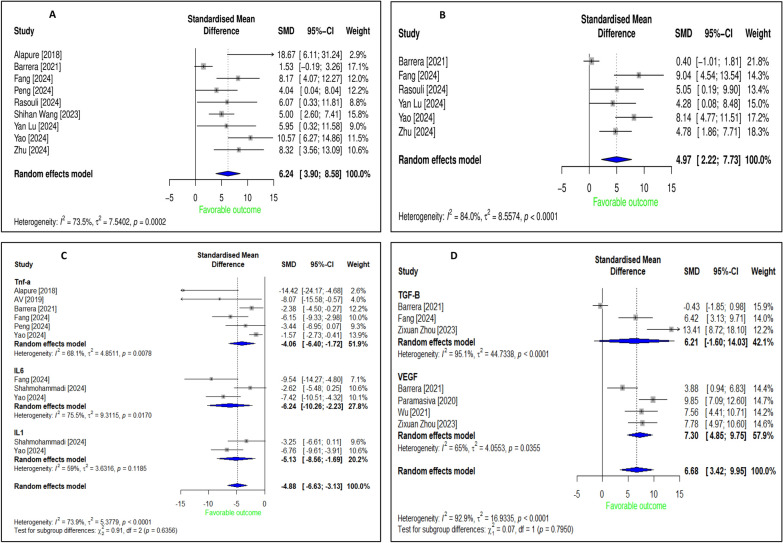
Results: Our meta-analysis reveals that animals treated with MSC-scaffold combinations exhibit enhanced wound closure compared to untreated controls across short-term (SMD = 3.97), mid-term (SMD = 3.47), and long-term (SMD = 3.03) timeframes. Additionally, MSC-scaffold combinations significantly improve angiogenesis (SMD = 6.24), collagen deposition (SMD = 4.97), and growth factor expression (SMD = 6.68), while effectively modulating inflammatory cytokine levels (SMD = -4.88).
Conclusion: Our research demonstrates that MSC-scaffold synergy in preclinical burn wound healing significantly improves wound closure, collagen deposition, angiogenesis, and growth factor expression, while effectively modulating inflammatory responses. Despite its potential as an adjunctive therapy, substantial study heterogeneity impedes clinical translation, necessitating standardized protocols to refine and validate this approach for efficacious clinical application.
Keywords: Burn; Cell therapy; Exosome; Hydrogel; Matrix; Mesenchymal stem cells; Scaffold.
© 2025. The Author(s).
Conflict of interest statement
Declarations. Ethics approval consent to participate: Not applicable. Consent for publication: Not applicable. Competing interests: The authors affirm that no conflicts of interest exist concerning this study.
Figures
References
-
- Peck MD. Epidemiology of burns throughout the world. Part I: distribution and risk factors. Burns. 2011;37(7):1087–100. - PubMed
Publication types
MeSH terms
LinkOut - more resources
Full Text Sources
Medical
