


Sociodemographic inequalities in the global burden trends and machine learning-based projections of periodontitis from 1990 to 2030 across different development levels
- PMID: 40599686
- PMCID: PMC12209297
- DOI: 10.3389/froh.2025.1609961
Sociodemographic inequalities in the global burden trends and machine learning-based projections of periodontitis from 1990 to 2030 across different development levels
Abstract
Introduction: Oral diseases affect billions globally, with periodontitis contributing to significant health disparities and systemic conditions like diabetes and cardiovascular diseases.
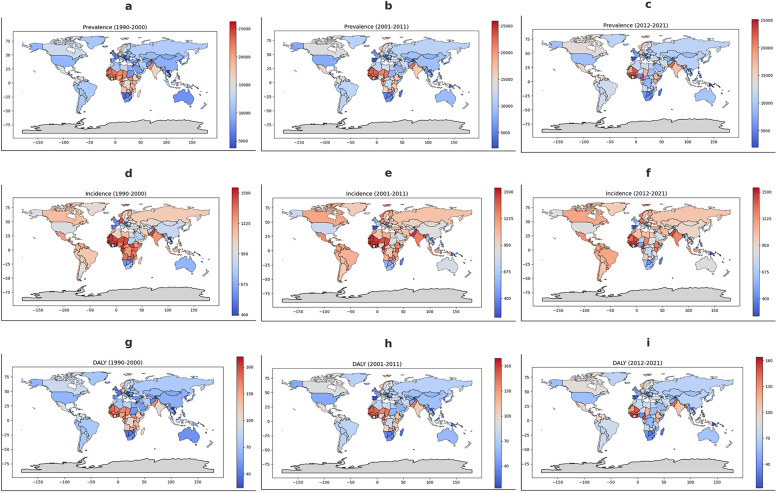
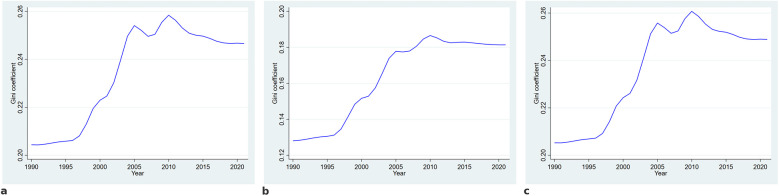
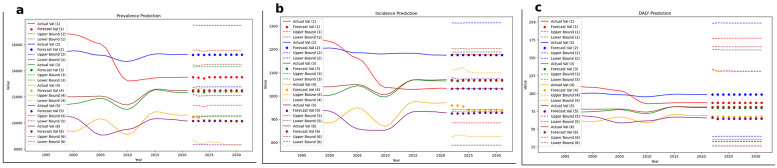
Methods: This study utilized the GBD 2021 dataset to assess the global burden of periodontitis across 204 countries, analyzing prevalence, incidence, and DALY rates. Socioeconomic disparities were examined using the Sociodemographic Index (SDI) and Gini coefficient, while time-series analysis, regression models, and Joinpoint regression identified trends. Machine learning predicted future burden, and geospatial mapping visualized global distribution.
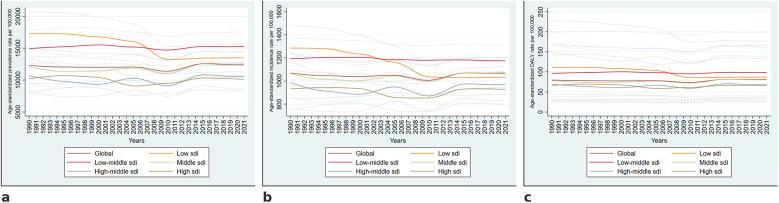
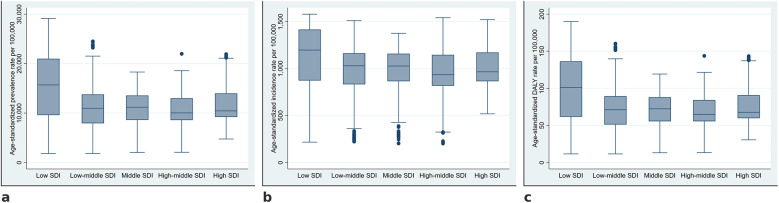
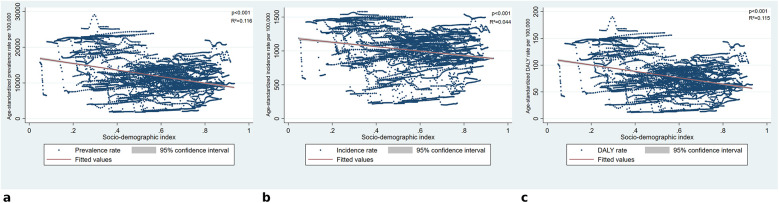
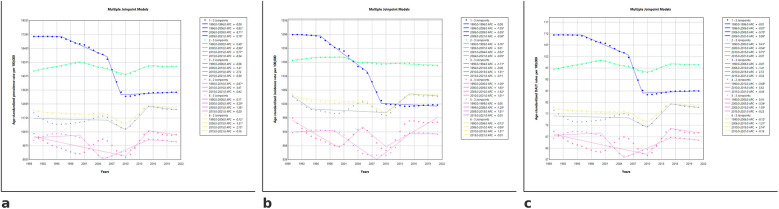
Results: Periodontitis burden remains highest in low-SDI regions, with significantly greater prevalence, incidence, and DALY rates compared to higher-SDI countries (p < 0.001). Global trends showed a decline until 2010 (AAPC: ASPR -0.792%, ASIR -0.719%, DALY -0.794%; all p < 0.05), followed by a temporary increase before stabilizing. Disparities widened over time, peaking around 2010. Projections suggest persistent inequalities, with low-SDI regions maintaining the highest burden and minimal expected reductions, while higher-SDI countries exhibit stable, lower rates.
Conclusion: Despite global declines, periodontitis disparities have widened, with low-SDI regions facing the highest burden and minimal improvements. Without strong public health policies integrating preventive oral health into diseases management, inequalities will persist, worsening systemic health outcomes. Urgent action is needed to ensure universal access to periodontal care and early interventions, especially in low-resource settings.
Keywords: disease burden; global burden of disease; inequalities; joinpoint regression; oral cavity; periodontal disease; periodontitis; sociodemographic.
© 2025 Ghanem, Bata, Kovács and Nagy.
Conflict of interest statement
The authors declare that the research was conducted in the absence of any commercial or financial relationships that could be construed as a potential conflict of interest.
Figures
References
-
- Global Oral Health status Report: Towards Universal Health Coverage for Oral Health by 2030. Geneva: World Health Organization; (2022). Licence: CC BY-NC-SA 3.0 IGO.
-
- Vos T, Lim SS, Abbafati C, Abbas KM, Abbasi M, Abbasifard M, et al. Global burden of 369 diseases and injuries in 204 countries and territories, 1990–2019: a systematic analysis for the global burden of disease study 2019. Lancet. (2020) 396(10258):1204–22. 10.1016/S0140-6736(20)30925-9 - DOI - PMC - PubMed
-
- Gasner NS, Schure RS. Periodontal disease. In: Schure RS, editor. StatPearls. Treasure Island, FL: StatPearls Publishing; (2025). Available at: http://www.ncbi.nlm.nih.gov/books/NBK554590/ (Accessed March 08 2025) - PubMed
LinkOut - more resources
Full Text Sources
