Microplastics and probiotics: Mechanisms of interaction and their consequences for health
- PMID: 40600211
- PMCID: PMC12207257
- DOI: 10.3934/microbiol.2025018
Microplastics and probiotics: Mechanisms of interaction and their consequences for health
Abstract
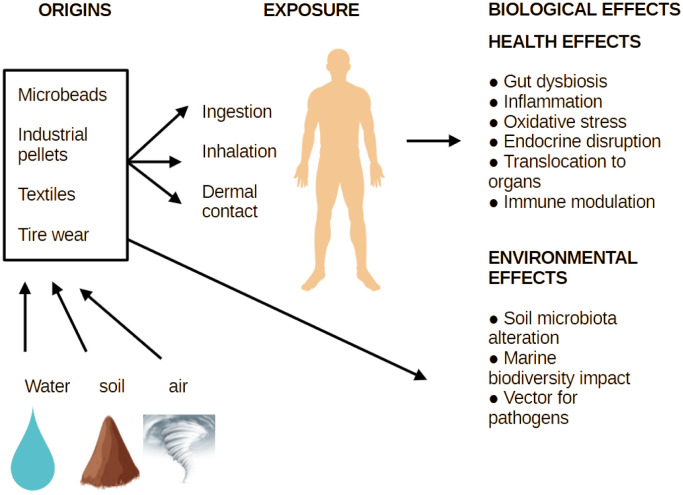
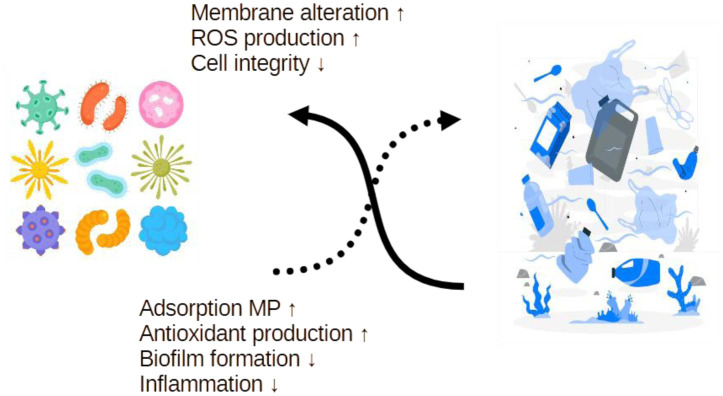
Microplastics (MPs), synthetic polymer particles less than 5 mm in size, are an emerging contaminant with implications for both human and ecosystem health. Being widespread in food and water sources, MPs can disrupt gastrointestinal integrity, alter the microbiota composition, and provoke oxidative and inflammatory responses. Probiotics, live microorganisms known for their gut health benefits, are now being explored for their ability to mitigate these effects. This review synthesizes evidence from in vitro and in vivo studies on how MPs impact probiotic viability, adhesion, and biofilm formation, and how certain strains may counter MP-induced toxicity by modulating oxidative stress, immune function, and the epithelial barrier integrity. Additionally, this manuscript discusses emerging applications in environmental microbiology, such as the potential use of native and engineered probiotics for microplastic bioremediation. Although the current data highlight promising avenues, key gaps remain in our understanding of strain-specific mechanisms, long-term efficacy, and real-world applicability. Addressing these will be essential to advance probiotic-based strategies in both human and environmental contexts.
Keywords: Microplastics; epithelial barrier integrity; gut microbiota; oxidative stress; probiotics.
© 2025 the Author(s), licensee AIMS Press.
Conflict of interest statement
Conflict of interest: The author declares no conflict of interest.
Figures